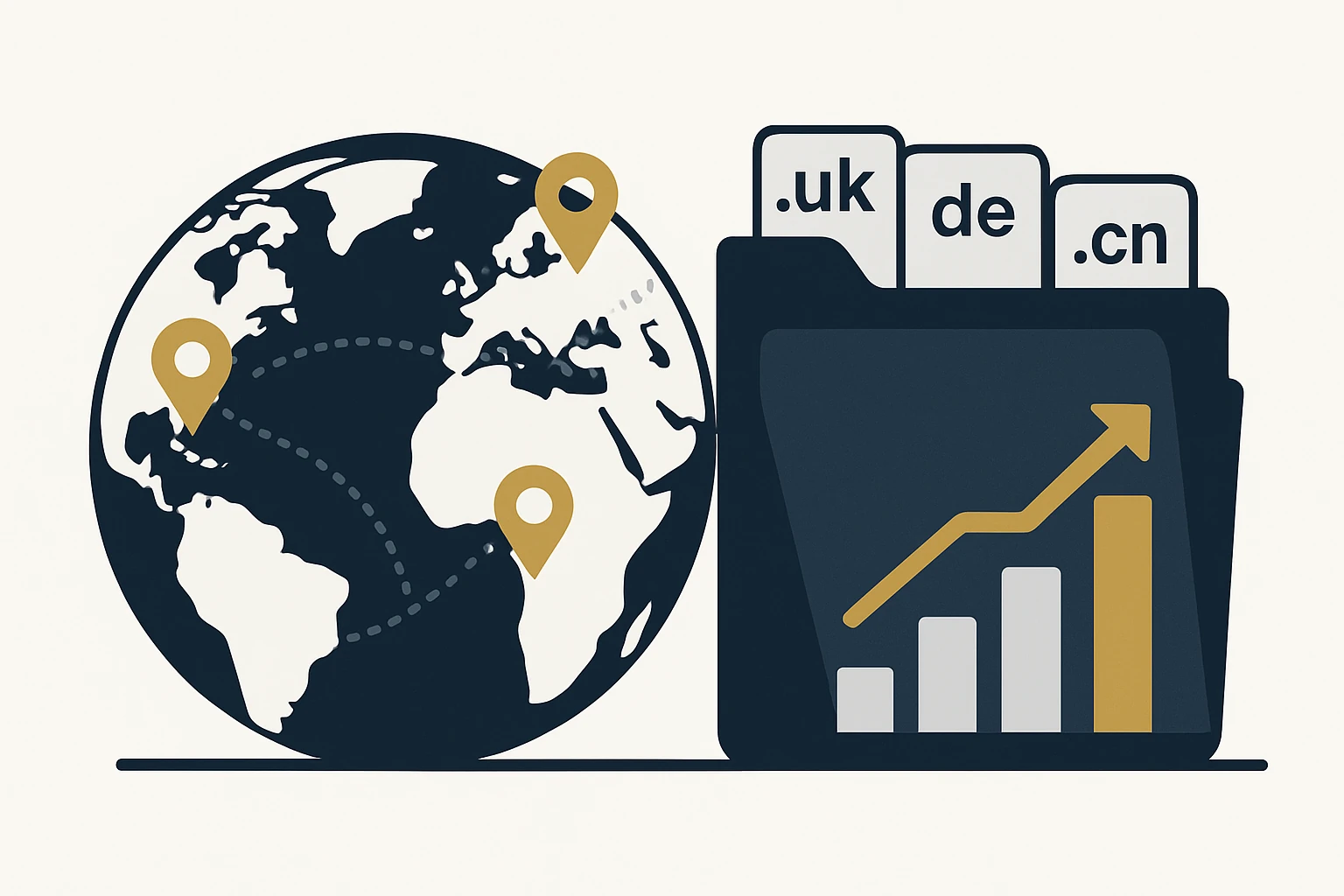
Global brands face a pivotal choice: anchor their digital presence to a single global domain or cultivate a disciplined portfolio of local and global brand signals across markets. The latter approach - built on a strategic set of country-code top-level domains (ccTLDs) and a governed portfolio - can enable local relevance, stronger brand protection, and more nuanced market entry. Yet it requires a clear framework for selecting markets, allocating resources, and mitigating cross-border risks. In this article we explore how to design and operate a geo-targeted domain portfolio that aligns with growth plans, risk tolerance, and brand protection objectives.
ccTLDs remain a core component of modern brand strategy. They offer tangible benefits in trust, localization, and regional visibility, but they also introduce complexity in governance, legality, and lifecycle management. Industry observers emphasize that a well-structured ccTLD portfolio should be integrated with a broader brand governance model, rather than treated as a silo. For brand owners, the payoff comes when the portfolio supports local campaigns, regional partnerships, and a defensible brand perimeter that reduces cybersquatting and confusion across markets. ccTLD dispute policies and standardized risk frameworks matter here, because rights protection mechanisms differ from one country to another. (wipo.int)
The enduring value of ccTLDs for global brands
Brand trust is often forged where a user expects it most: in the user’s own language and locale. A well-chosen ccTLD can signal local commitment and reduce friction in the customer journey. In many markets, ccTLDs function as credible local signals that complement a brand’s global hub, supporting regional campaigns and localized product messaging. At the same time, search engines recognize local credibility signals when they see appropriate country targeting, site structure, and content alignment. This dynamic has driven countless multinational brands to pursue multi-site strategies that balance global consistency with regional customization. Geo-targeting strategies illustrate how ccTLDs influence local search intent and user perception beyond mere geography. (domainnamenet.com)
From a governance perspective, ccTLDs bring both opportunity and risk. While some ccTLDs offer robust rights-protection mechanisms akin to the UDRP framework used in many gTLDs, others operate under jurisdictional regimes that require bespoke dispute handling. For brand owners, understanding the local policy landscape is essential to avoid costly disputes and to plan an efficient remediation trajectory. The World Intellectual Property Organization (WIPO) provides practical guidance on ccTLD dispute policies and the role of ceded protections in protecting famous marks globally. WIPO ccTLD dispute rules offer a baseline for evaluating risk across markets. (wipo.int)
Designing a ccTLD portfolio: geography, language, and brand intent
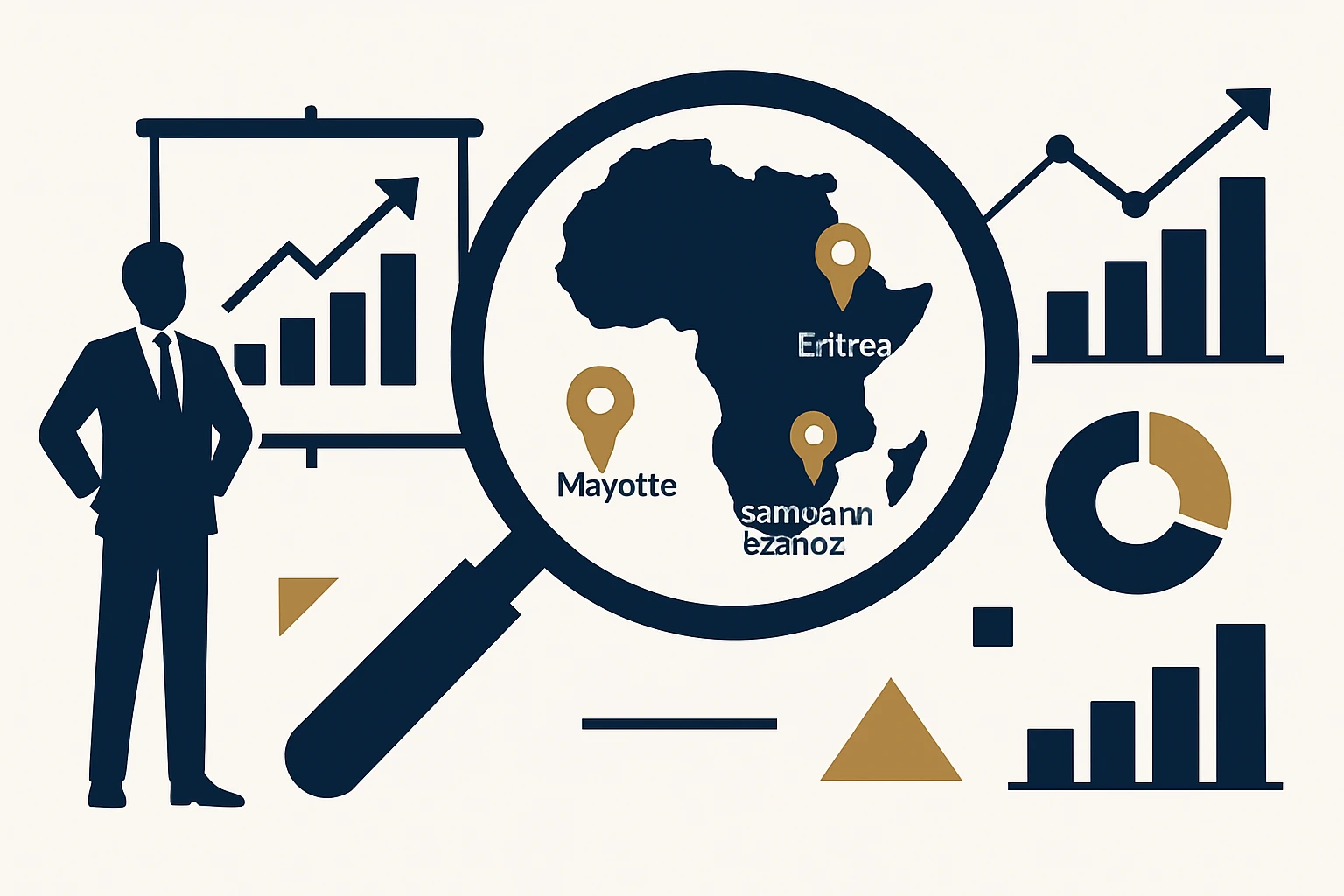
A practical ccTLD portfolio begins with mapping markets through three lenses: geography (where do you intend to compete?), language (what language(s) will your content use locally?), and brand intent (what role will each domain play in your brand architecture?). The Isle of Man (IM), Uzbekistan (UZ), and Kenya (KE) provide useful microcosms for this thought experiment: small but strategically important markets, gradually increasing digital maturity, and distinct regulatory contexts that influence ownership, privacy, and protection needs. When planning your portfolio, consider how each ccTLD will interact with your global hub and how it will support or deter cross-border marketing campaigns. For readers evaluating expansion plans, a jurisdictional checklist can guide decision-making, as outlined by global branding and domain governance practitioners. ccTLDs as brand signals beyond geography illustrate how audiences interpret local signals as markers of credibility and specialization. (dn.org)
To translate the geography-to-market map into action, it helps to formalize a phased acquisition plan. Start with markets where the brand already has recognition, customer demand, or regulatory alignment. Expand to markets with rising e-commerce adoption or where regulatory regimes tightly protect IP rights. In some cases, English is a de facto lingua franca in business, enabling efficient cross-border content strategies while preserving local domain identities. This phased approach reduces upfront risk and aligns investments with expected ROI from localized campaigns. For organizations weighing local presence versus risk, a cautious expansion trajectory is often more sustainable than a broad, all-at-once roll-out.
For Isle of Man opportunities, Uzbekistan entries, and Kenyan domains, platforms that facilitate private, targeted negotiations can be valuable. For Isle of Man, check the local listing page to understand availability and pricing dynamics: Isle of Man domain listings. If you need visibility into price ranges and portfolio options, webatla’s pricing information can help calibrate expectations: pricing. For due-diligence and ownership verification, consider consulting RDAP & WHOIS datasets: RDAP & WHOIS database. These references illustrate how a disciplined market view translates into concrete, risk-aware decisions.
SEO realities: what ccTLDs influence (and what they don’t)
Many brand owners assume that adopting a ccTLD automatically yields superior search performance in the target country. While ccTLD credibility can improve local signals, SEO outcomes depend on a broader set of factors: proper hreflang implementation, fast and reliable hosting in the target region, localized content, high-quality backlinks, and an organized domain portfolio that reduces user confusion. Research and practitioner guidance emphasize that ccTLDs can enhance local relevance but should be integrated with a global SEO strategy rather than treated as a silver bullet. Local domain strategy is most effective when it aligns with technical SEO best practices and user experience, not when it is deployed in isolation. For broader context on ccTLDs and global SEO strategy, see discussions on geo-targeting and brand signals across ccTLD portfolios. (domainnamenet.com)
Beyond SEO, ccTLDs play a role in brand defense. The governance and dispute landscape - ranging from UDRP-like mechanisms to country-specific procedures - affects how quickly a brand can respond to infringements. As brands expand, proactive protection - registrations across key markets, password-protected registries, and monitoring for new ccTLD launches - can reduce exposure to cybersquatting and impersonation. WIPO’s guidance on ccTLD dispute policies and related protections helps practitioners plan a defensible posture as their portfolio grows.
Rights protection and dispute readiness for ccTLDs
Disputes surrounding ccTLD registrations require a careful, jurisdiction-aware approach. The ccTLD owners often set their own rules for disputes and takedowns, which can diverge from the Uniform Domain-Name Dispute-Resolution Policy (UDRP) that many gTLDs rely on. Therefore, a robust protection plan for a global brand should include an understanding of each target market’s dispute framework and an operational plan for timely enforcement. WIPO’s ccTLD dispute policies provide an authoritative starting point for assessing risk and building a cross-border enforcement plan. (wipo.int) In tandem, brands should consider broader trademark protection strategies (Madrid System, regional registrations) to ensure consistency across markets as the portfolio grows. For a practical primer on protecting trademarks internationally, see WIPO’s Growing Your Brand guidance. (wipo.int)
A practical framework for building and managing a ccTLD portfolio
To operationalize a geo-targeted ccTLD portfolio, use the following five-step framework. It is designed to be executed in stages, with governance embedded at each step to maintain coherence with the parent brand.
- Step 1 - Define geography and brand intent: map target markets, quantify market opportunity, and determine the role of each ccTLD in the broader brand architecture (e.g., local campaign hub vs. regional branding signal).
- Step 2 - Align language and content strategy: decide which language(s) will be used in each market and how content localization will be managed to preserve brand voice across ccTLDs.
- Step 3 - Prioritize acquisitions and consolidation: avoid over-diversification, focus on markets with clear commercial rationale, strong partner ecosystems, and scalable infrastructure. Integrate the portfolio with your global hub to minimize user confusion.
- Step 4 - Protect rights and enforce consistently: implement a cross-market dispute readiness plan, register key trademarks where appropriate, and monitor for new ccTLD launches or potential infringements.
- Step 5 - Govern and monitor lifecycle: establish renewal calendars, portfolio audits, and a decision log for future changes. Maintain a centralized view of domain status, renewal risk, and performance indicators.
This framework supports a deliberate, scalable approach to ccTLD portfolios, balancing local relevance with global coherence. For teams seeking a ready-made toolset to explore acquisitions and pricing, webatla’s Isle of Man listings provide a concrete example of how regional opportunities can be surfaced within a broader strategy. See Isle of Man listings here: Isle of Man domain listings. If you need to align portfolio decisions with a defined cost structure, review pricing. For due-diligence and ownership verification, use RDAP & WHOIS database.
Limitations, trade-offs, and common mistakes
A disciplined ccTLD strategy comes with trade-offs. Concentrating too aggressively in a small number of markets can leave a brand exposed to currency, regulatory, or market-shift risks. Conversely, expanding into many ccTLDs without clear ROI can dilute governance, increase renewal risk, and complicate brand alignment. A common misstep is treating ccTLDs as a substitute for a unified global domain strategy rather than as complementary signals that support localized campaigns. The UDRP and related cross-border frameworks are evolving, brand owners should stay abreast of policy shifts that affect dispute timelines and protections for famous marks. For context on evolving ccTLD dispute policy and brand protection considerations, see WIPO resources. (wipo.int)
Another frequent mistake is neglecting lifecycle governance. In practice, portfolio management requires ongoing audits, renewals, and alignment with product launches and regulatory changes. Without disciplined governance, a cache of ccTLDs may become a liability rather than an asset. Independent frameworks and third-party guidance emphasize the importance of centralized tracking, proactive renewal planning, and regular risk assessment to prevent blind spots in cross-border domains. For a broader perspective on the role of ccTLDs in brand strategy and portfolio governance, consider practitioner analyses of multidomain strategies. (nominus.com)
Conclusion
In today’s globally distributed market, the most durable branding plays combine a thoughtful ccTLD portfolio with a clear governance framework and a disciplined acquisition process. By defining geography and intent, aligning language and content, protecting rights, and instituting strong lifecycle management, brands can harness the local credibility of ccTLDs while preserving a unified global narrative. The right portfolio approach reduces risk, accelerates local reach, and reinforces brand integrity across borders. For organizations seeking practical pathways to confidential acquisitions and portfolio optimization, platforms like webatla offer localized market insights and structured pricing to complement your strategic plan.
Expert insight: Industry observers highlight that the most resilient global brands treat ccTLDs as an integrated asset class within a comprehensive brand governance model. A well-managed ccTLD portfolio, combined with proactive protection and disciplined renewal practices, provides a defensible perimeter around a company’s digital brand. While not a silver bullet for SEO or growth, a thoughtful ccTLD strategy materially enhances localization, brand perception, and risk management when embedded in a deliberate portfolio framework.
To recap, the journey from a single brand domain to a strategic ccTLD portfolio requires clarity on geography, intent, and governance. It also benefits from practical tools to surface opportunities, enforce protections, and monitor lifecycle. This article has offered a practical framework and cited industry guidance to help brand leaders plan their next steps with confidence. For organizations seeking a confidential, expert-driven path to acquire premium domains and manage digital assets across markets, consider engaging with a trusted broker-advisor and exploring market opportunities through the recommended client resources.