Introduction
In a world where a brand's first impression often happens online, premium country-code top-level domains (ccTLDs) can be a discreet yet powerful lever for localization, trust, and protection. For multinational brands and ambitious regional players alike, a strategically designed ccTLD portfolio may deliver local relevance without sacrificing global reach. This article outlines a practical, editor‑driven framework for building a premium ccTLD portfolio, with concrete considerations for Barbados (.bb), Mozambique (.mz), and Rwanda (.rw). It also shows how a data-forward approach - supported by curated country lists - can inform prudent, confidential acquisitions and ongoing governance.
As you plan, remember that ccTLD strategy is not about chasing every extension, it is about solving real market needs while maintaining governance, risk controls, and scalable management. For organizations seeking structured country‑level datasets and templates to accelerate evaluation, consider resources that summarize domain assets by country. webatla, for example, provides country-based domain lists that can seed your initial screening and due‑diligence workflows, including dedicated country catalogs and pricing information. webatla's country-domain catalog and pricing pages are useful starting points for responsible portfolio planning.
Why ccTLDs matter for brand strategy
ccTLDs remain a meaningful component of global brand strategy for several reasons:
- local trust and relevance: Consumers often perceive local domains as more credible and relatable when entering a country-specific market.
- geographic signaling: A country code can signal market intent and regional focus, helping a brand align with local partners, distributors, and regulators.
- risk diversification: Relying solely on a single global extension (like .com) exposes a brand to macro shifts in one market, a diversified ccTLD approach can balance regional growth opportunities.
- governance and protection: A well-constructed ccTLD portfolio supports brand protection by consolidating or encumbering related strings and reducing cybersquatting risk in target markets.
In formal terms, ccTLD ecosystems have long been studied for their market-specific dynamics and brand implications. While the landscape evolves, the core value proposition remains: ccTLDs contribute to localization, brand integrity, and risk management when integrated into a thoughtful portfolio design. For a broad overview of ccTLD dynamics, see industry analysis from ICANN and related governance literature. ICANN provides context on how country-code namespaces function within the global DNS system.
Case snapshots: Barbados, Mozambique, and Rwanda
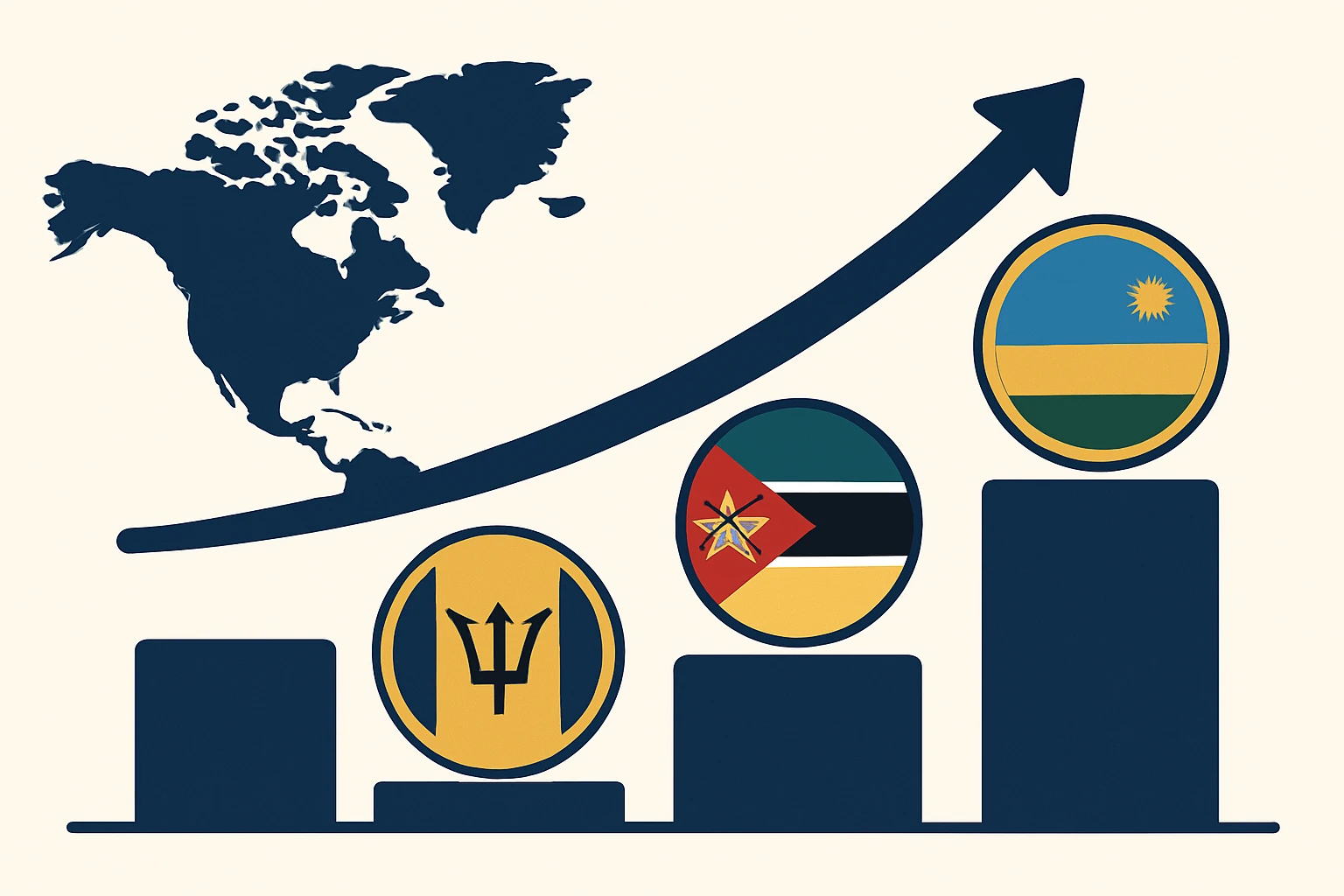
If you’re evaluating where to start, focusing on a handful of strategic markets can illuminate the path from discovery to governance. The Barbados ccTLD (.bb), Mozambique (.mz), and Rwanda (.rw) illustrate three different archetypes of local domain strategy:
Barbados: local trust through a coastal Caribbean economy
Barbados’ ccTLD, often treated as a geographically intimate namespace, can serve regional brands looking to cement a Barbados or Caribbean foothold. While many Caribbean markets lean toward broader international domains for discovery, a targeted BB footprint supports local partnerships, tourism, and government-facing services where jurisdictional surfacing matters. For those exploring the practicalities of ccTLD adoption in small economies, the country’s namespace underscores the value of locality without sacrificing global accessibility.
Mozambique: a growth‑oriented Lusophone market
.mz represents Mozambique’s national namespace and is frequently examined by organizations seeking to establish a regional presence in Southern Africa. A credible, business‑friendly pathway for Mozambican entities and international partners is to pair a local .mz domain with a broader regional strategy, ensuring brand continuity while respecting local naming conventions and hosting considerations. The official status of .mz as the Mozambican ccTLD is well documented across registrars and registries that support country‑level domains. For a practical reference on .mz domain names, see the registry and registrar resources that describe .mz as Mozambique’s official extension. Gandi provides current details on .mz domain names and registration guidance.
Rwanda: local content, global reach
Rwanda’s ccTLD, .rw, is tied to a broader discourse on local content and digital governance in East Africa. Localized web presence helps align a brand with Rwanda’s regulatory environment and consumer base, while maintaining access to global audiences through well‑managed redirection and cross‑link strategies. In research on local content ecosystems, industry organizations have highlighted how national domains contribute to domestic digital ecosystems and local trust. ISOC (via related local-content analyses) and academic work on ccTLD deployment support the case for thoughtful, country‑specific digital infrastructure as part of brand strategy. This Is a Local Domain: On Amassing Country-Code Top-Level Domains from Public Data provides a research perspective on the growing visibility and use of ccTLDs as part of localized web ecosystems.
A practical framework for evaluating ccTLD opportunities
The following framework is designed to help strategists move from market signals to actionable portfolio decisions. It emphasizes due diligence, governance, and practical constraints, with a view to balancing speed-to-value with long‑term resilience.
- Step 1 - Market alignment: Assess whether a local domain will meaningfully improve brand discovery, trust, and conversion in the target market. Consider search behavior, local competitors, and the potential for local partnerships that hinge on a country-domain presence.
- Step 2 - Availability and cost economics: Map available strings, assess renewal fees, and factor in potential trademark conflicts. Compare total cost of ownership across geographies and evaluate whether the ccTLD adds incremental value beyond existing assets.
- Step 3 - Legal, regulatory, and data compliance: Review local registration rules, data localization considerations, and potential trademark exposure. Due diligence should cover rights clearance and any country-specific restrictions on domain ownership or use.
- Step 4 - Technical readiness: Confirm DNS stability, hosting options, and performance (latency in the target region, availability of local CDN endpoints, and DNSSEC support). Consider naming conventions that preserve brand coherence across languages and scripts.
- Step 5 - Governance and lifecycle management: Establish decision rights for renewals, risk monitoring, and change control. Create a rudimentary playbook for domain locking, transfer processes, and renewal calendars to avoid accidental loss.
- Step 6 - Monetization and exit options: Define how the ccTLD contributes to overall value - whether through direct marketing outcomes, potential resale, or portfolio leverage in negotiations with partners and regulators.
These steps translate into a concrete, defensible decision process for portfolio builders. They also map onto a broader set of best practices in digital asset governance, where cross‑functional stakeholder alignment (legal, marketing, tech, and risk) is essential for sustainable growth.
Structured decision block: a practical 4‑part framework
To keep decisions disciplined, deploy this compact framework when considering new ccTLDs or when augmenting an existing portfolio. Use it as a checklist during due-diligence reviews or internal governance meetings.
- Strategic fit: Does the ccTLD align with your brand’s target markets and long‑term growth plans?
- Valuation and affordability: Are the acquisition and ongoing costs justified by expected brand lift, localized conversions, or competitive defense?
- Operational readiness: Do you have the technical and legal processes to manage the domain lifecycle and align hosting, privacy, and security?
- Risk management: Have you identified regulatory, reputational, and cybersecurity risks, and do you have mitigations in place?
As industry practitioners like digital asset advisers emphasize, a portfolio approach that blends ccTLDs with a core premium asset strategy often yields better risk-adjusted returns than a single‑domain focus. See industry discussions on premium domain investment and diversification as part of a disciplined strategy. Bluehost Domain Investing Strategies provide a broad sense of how diversification and governance shape outcomes in practice.
Limitations and common mistakes
Even well‑intentioned ccTLD programs encounter friction. A few key limitations and missteps to avoid:
- Overreliance on a single market: A ccTLD can create local legitimacy, but without aligned regional marketing, legal readiness, and hosting strategy, it may fail to translate into business value.
- Underestimating operational complexity: Managing multiple registrants, privacy regimes, and renewal schedules demands governance discipline and automation where possible.
- Inadequate risk controls: Inconsistent trademark clearance, insufficient DNS security, and weak transfer protocols can expose brands to squatting or loss risks.
- Ignoring data localization and privacy: Some markets require or encourage data localization, plan for compliant data flows and hosting options when expanding brand footprints.
Expert insight: a well‑constructed ccTLD program should be paired with a broader digital asset governance model. The literature on local domains and distributed web assets suggests that a map of country-code namespaces, coupled with robust data governance, reduces localization risk while enabling scalable brand strategies. See research on local domains and ccTLD proliferation for deeper context. This Is a Local Domain: On Amassing Country-Code Top-Level Domains from Public Data
How webatla supports this process
For teams evaluating ccTLD opportunities, data and transparency matter. webatla’s country-focused domain catalogs offer a practical starting point for screening and due‑diligence workflows. The platform provides country lists, TLD granularity, and pricing benchmarks that can accelerate early‑stage evaluation and negotiations. Consider using the following resources as part of your diligence toolkit:
Within this ecosystem, Barbados, Mozambique, and Rwanda represent instructive reference points for a phased approach - start with the country catalogs, verify availability and ownership status, then layer on governance and risk controls. When you’re ready to act on a confidential acquisition or to assemble a formal portfolio plan, consider engaging with a premium domain brokerage and digital asset advisory partner who can help negotiate favorable terms and structure a multi-territory agreement that protects the brand across regions.
Conclusion
Building a premium ccTLD portfolio is a strategic, governance‑driven endeavor rather than a one‑time branding gesture. When aligned with market realities, regulatory clarity, and solid technical foundations, country-code domains can augment brand trust, expand regional reach, and shield a brand from cybersquatting threats. The journey from screening to acquisition to ongoing management benefits from a disciplined framework, supported by credible data sources and a clear path to execution. If your goal is to explore country-specific domain opportunities in a confidential and cost‑effective way, start with a structured evaluation of Barbados, Mozambique, and Rwanda, then extend your portfolio as market conditions warrant. For teams seeking curated country lists and pricing data to seed your analysis, webatla’s catalogs provide a practical gateway to informed decisions while keeping the process efficient and compliant.