Introduction: the hidden real estate of the web and the need for a confidential country-domain strategy
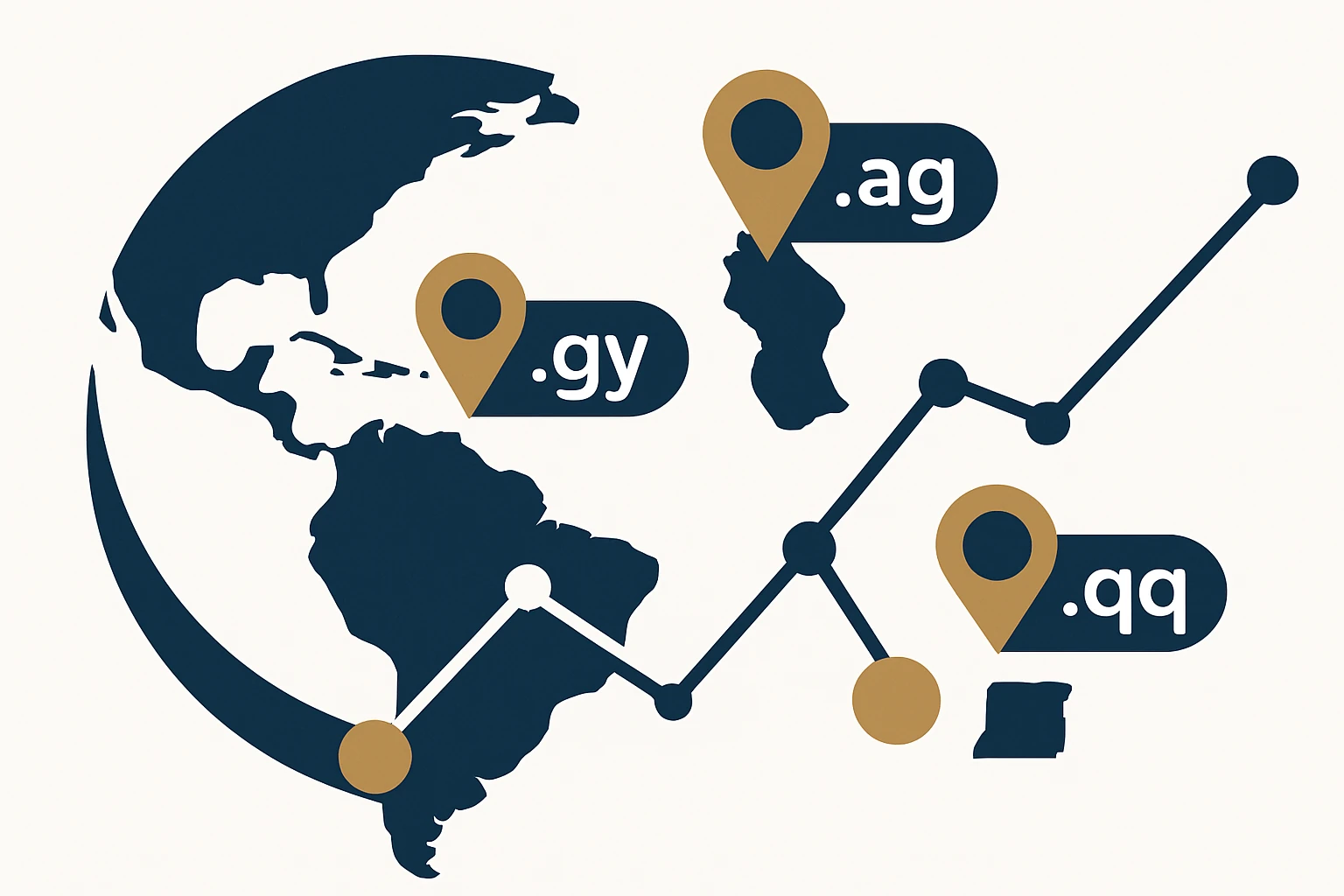
In a world where brands compete for attention across markets large and small, the value of a well-chosen country-code domain (ccTLD) extends beyond local audiences. For multinational brands, a thoughtful country-domain strategy protects brand integrity, supports local SEO signals, and enables region-specific campaigns without diluting the core brand identity. Yet, acquiring and managing ccTLDs - especially in smaller markets - demands discipline, privacy, and a clear governance framework. This article offers a practical, non-salesy playbook for confidential country-domain acquisitions in small markets, with concrete considerations for Antigua and Barbuda (AG), Guyana (GY), and Equatorial Guinea (GQ). We ground the discussion in credible industry practices and point to data sources that help you move from intent to secure execution.
Key for any strategic effort is knowing where to source reliable information, how to respect privacy regimes, and how to structure the process so your organization remains discreet while achieving negotiated outcomes. The landscape has evolved: the internet registry and governance community is increasingly formal about registration data access, privacy, and compliance. For domain brokers and brand teams, this translates into a more rigorous due-diligence rhythm and a clearer pathway from discovery to DNS hygiene. As part of this shift, we also reference credible, primary sources that shape how modern domain acquisitions are conducted, including registry operators and the industry-standard Registration Data Access Protocol (RDAP). webatla's RDAP & WHOIS Database provides practical insight into how data access is evolving for buyers and brokers alike. (nic.ag)
Why ccTLDs matter for brands in small markets
Country-code top-level domains, such as .ag for Antigua and Barbuda, .gy for Guyana, and .gq for Equatorial Guinea, are not merely vanity domains. They influence local signaling, trust, and search visibility, and they can serve as strategic assets in a brand's portfolio. The registry for .ag is operated by NIC AG, which confirms Antigua and Barbuda’s ccTLD status and the registry’s role in managing registrations. Understanding the registry's rules - and how registries balance openness with privacy - helps buyers assess risk and opportunity when considering acquisitions. (nic.ag)
The broader ecosystem is moving toward RDAP (Registration Data Access Protocol) as the successor to the traditional WHOIS data model, with ICANN leading the transition. RDAP provides a modern, standardized way to access registration data and is designed with privacy controls in mind. As of early 2025, industry observers note the sunset of the legacy WHOIS in favor of RDAP for many gTLDs, which has implications for how buyers verify ownership, renewal, and transfer terms. Organizations that rely on domain data - whether for due diligence or portfolio management - should build RDAP-informed workflows into their acquisition playbooks. (icann.org)
A practical discovery and due-diligence workflow for AG, GY, and GQ
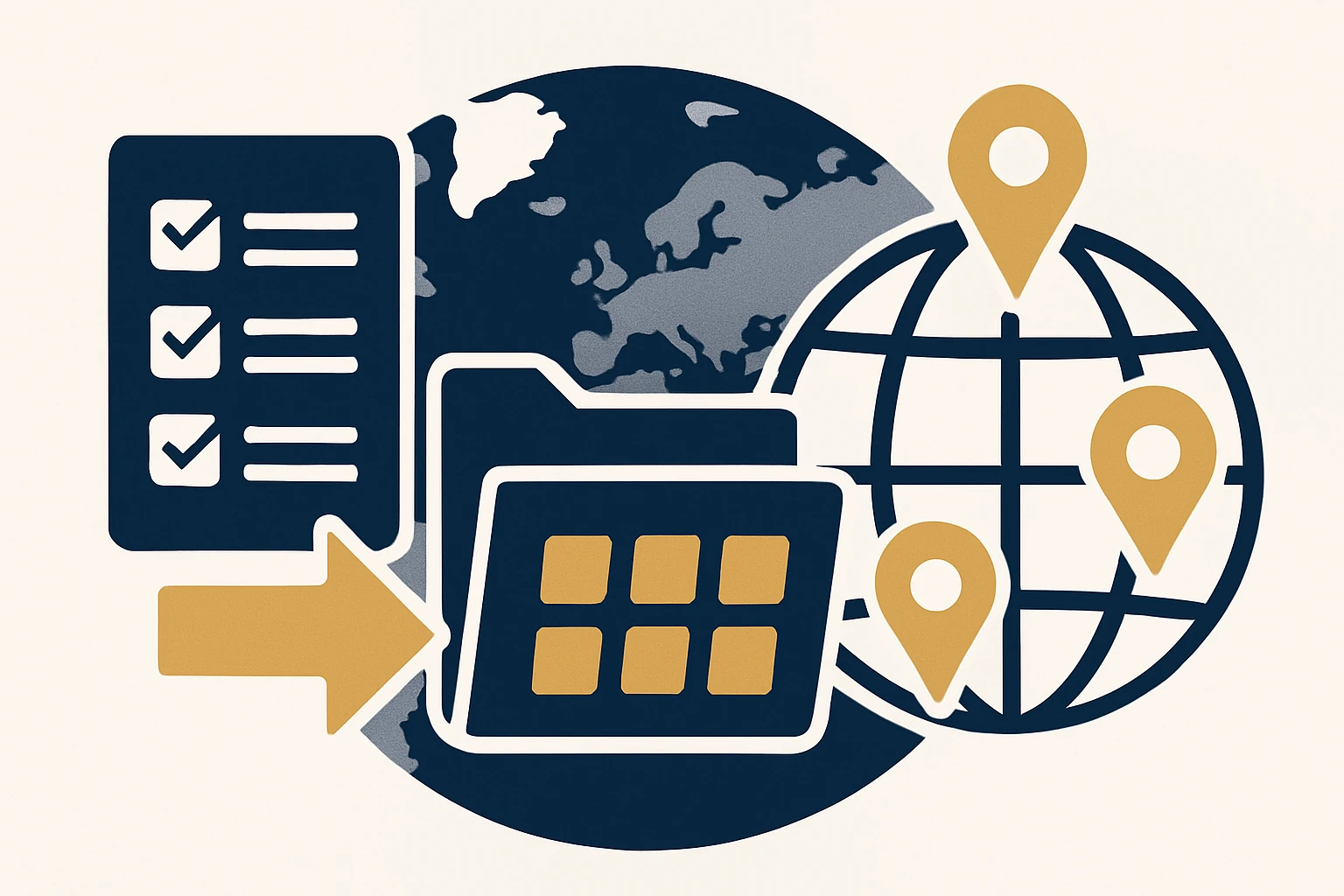
Effectively building a country-domain portfolio starts with disciplined discovery and due diligence. The workflow below translates the abstract idea of “download lists of websites” into a rigorous process that respects registry rules, privacy constraints, and business objectives. While the exact targets will vary by market, the same core steps apply across AG, GY, and GQ, and the framework scales for broader country coverage as needed. The workflow also emphasizes the importance of using credible data sources and corroborating findings with multiple references. For practitioners, this means combining publicly visible domain data with registry guidance and privacy-compliant data services. Note: the example phrases below mirror common long-tail searches used in initial discovery, such as downloads or directories for Antigua and Barbuda (AG), Guyana (GY), and Equatorial Guinea (GQ). Examples include phrases like Download list of Antigua and Barbuda (AG) websites, Download list of Guyana (GY) websites, and Download list of Equatorial Guinea (GQ) websites, which reflect a typical intent to collate candidate domains for assessment. These terms are illustrative for the discovery phase and should be used in a compliant, privacy-respecting manner. (nic.ag)
Step 1 - Define objectives and governance
- Clarify business goals: Are you expanding into a market where regional domains boost credibility, or are you assembling a global portfolio that leverages local signals?
- Set governance and approvals: Decide who may authorize acquisitions, how confidentiality is preserved, and what thresholds trigger involvement of senior leadership or the board.
- Align with brand architecture: Ensure a country-domain decision aligns with existing brand strategy and SEO plans to avoid internal conflicts later on.
Step 2 - Source credible country-domain lists and registries
- Registry awareness: Identify the official registry for each ccTLD you consider. For example, NIC AG is the registry operator for .ag (Antigua and Barbuda), which clarifies who manages registrations and the applicable rules. (nic.ag)
- Primary data sources: Cross-check data with registry pages and accredited registrars to validate registration terms, eligibility, and any local restrictions (e.g., local presence rules or governmental protections).
- RDAP-aware workflows: Build RDAP checks into your discovery to align with current data access practices and privacy controls. ICANN’s RDAP framework provides the official guidance for these workflows. (icann.org)
Step 3 - Verify ownership, risk, and renewal posture (due diligence)
- Ownership verification: Use RDAP/registry data to confirm current registrant organization, if publicly available, and the registrar of record. Where privacy controls apply, use authorized data access channels through the registry or RDAP-based services.
- Renewal risk assessment: Examine renewal histories, expiry dates, and auto-renewal practices to avoid accidental lapses that could fragment brand reach in critical markets.
- Trademark and local law considerations: Run parallel trademark clearance and local regulatory checks to avoid infringing on local rights or triggering disputes post-acquisition.
Step 4 - Confidential bidding and transfer readiness
- Discreet negotiations: Engage brokers or legal counsel with NDA provisions and a clear bid framework to protect sensitive information during negotiations.
- Transfer mechanics: Plan for registry- and registrar-specific transfer procedures, including authorization codes, ownership changes, and DNS service continuity.
- Privacy-conscious approach: Given privacy regimes and RDAP data controls, establish a workflow that minimizes exposure while meeting due-diligence requirements.
Step 5 - DNS hygiene and post-acquisition integration
- DNS configuration: Immediately audit DNS records, ensure DNSSEC where available, and align authoritative nameservers with governance policies.
- Brand alignment: Update redirects, canonical signals, and local landing pages to reflect the new ownership while preserving user experience for local audiences.
- Security posture: Implement monitoring for domain expiry, DNS tampering, and unauthorized transfers to safeguard the investment.
Step 6 - ongoing monitoring and market adaptation
- Portfolio governance: Regularly audit the portfolio against evolving brand strategy and market dynamics.
- Regulatory vigilance: Stay ahead of changes in data privacy and registry policies that affect RDAP availability and data exposure.
- Performance metrics: Track traffic, SEO impact, and conversion signals from country-domain assets to ensure the investment remains aligned with ROI expectations.
A structured framework block: a quick-reference for teams
- Framework Step A - Objectives and governance - clear brand objectives and approval flow to guide decisions about AG, GY, and GQ domains.
- Framework Step B - Credible data sources - registry data, RDAP checks, and registrar validations to confirm current state.
- Framework Step C - Due diligence - ownership verification, renewal risk, and local regulatory checks.
- Framework Step D - Confidential bid process - NDA-driven negotiations and controlled information sharing.
- Framework Step E - Transfer readiness - process mapping for registry and registrar transfer steps.
- Framework Step F - Post-acquisition DNS hygiene - immediate DNS audit and security hardening.
Understanding and applying this six-step framework lets brand teams approach AG, GY, and GQ with confidence, ensuring that confidentiality remains intact while the portfolio advances toward practical use. For those who want to see a working data backbone in practice, webatla offers data services that reflect the practical realities of RDAP/WHOIS data today and how it’s evolving. RDAP & WHOIS Database illustrates how data access is changing for buyers and brokers, and the Antigua-and-Barbuda country page provides market-context for the AG ccTLD ecosystem.
Discovery, data sources, and the role of downloadable lists
In the discovery phase, many teams historically used downloadable lists as a starting point to identify potential targets. The practical challenge is to move from a generic list to a credible, privacy-safe target set. For small markets like Antigua and Barbuda, Guyana, and Equatorial Guinea, this means combining publicly accessible domain directories with registry guidance and data-access tools that respect local privacy norms. When you see prompts like Download list of Antigua and Barbuda (AG) websites or Download list of Guyana (GY) websites, treat them as initial inputs rather than final assets. Validate each candidate with RDAP/registry data, check for ongoing ownership or renewal risk, and assess whether a target domain will meaningfully contribute to your brand strategy. For reference, the AG registry is operated by NIC AG, which defines the applicability and governance of .ag registrations. (nic.ag)
Limitations, trade-offs, and common mistakes
- Over-reliance on lists: A downloaded list is only as useful as its data quality and currency. Always corroborate with registry data and RDAP records to avoid acting on stale or invalid information.
- Underestimating local rules: ccTLD registration policies vary by country. For AG, GY, and GQ, you may encounter local ownership requirements, restricted second-level registrations, or government-influenced policies that can affect acquisition timelines and post-transfer control.
- Privacy and data exposure: RDAP privacy controls and GDPR-era data protections affect how you validate ownership and contact details. Plan for compliant data access channels and avoid bypassing protections that regulators expect to be in place. ICANN provides guidance on RDAP as the modern standard for registration data access. (icann.org)
- SEO and brand alignment risks: Owning a ccTLD without integrating it into the brand architecture or SEO strategy can lead to misaligned signals across markets. A ccTLD should support a coherent regional strategy, not operate as a standalone vanity asset.
- Transfer and DNS continuity: The transfer process for ccTLDs can involve registrar-specific steps. Plan for DNS continuity and monitoring to prevent downtime or misconfiguration after acquisition.
Conclusion: a disciplined path to valuable, confidential country-domain assets
For brands operating in or expanding to smaller markets, ccTLD assets can be meaningful strategic levers when acquired and managed with discipline. The pathway from discovery to transfer is not a linear sprint but a governed process that respects registry rules, data privacy, and brand strategy. By combining credible data sources, RDAP-informed verification, and a clear six-step framework, teams can pursue confidential country-domain acquisitions that deliver durable value. For organizations seeking practical, market-aware data and governance support, webatla’s country- and registry-focused data services offer a pragmatic companion to the internal playbook. Explore AG country context at webatla Antigua and Barbuda country page and consider RDAP-driven data tools at webatla RDAP & WHOIS Database as part of your due-diligence infrastructure.