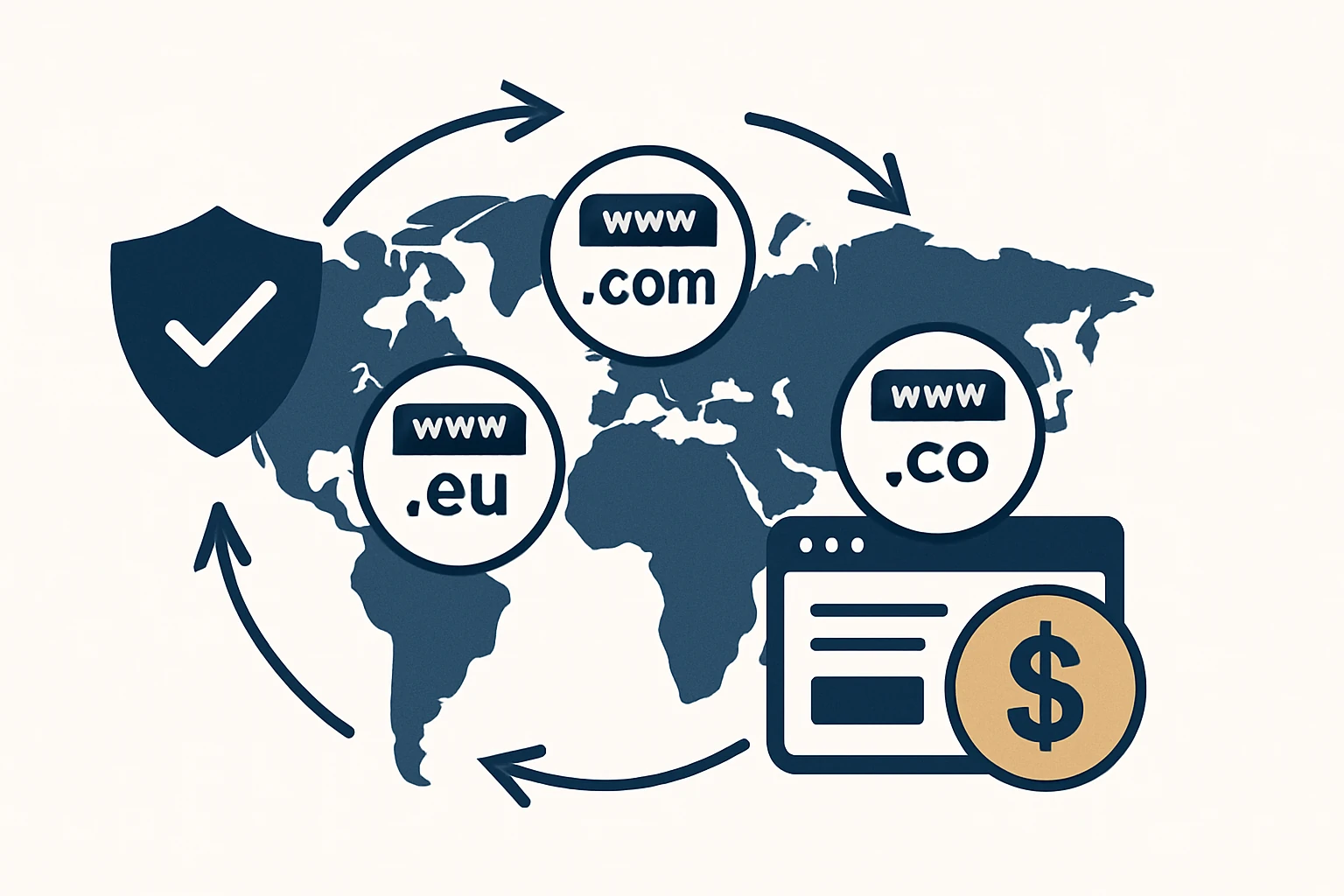
Introduction: The domain as a strategic asset in 2026
In today’s digital-first economy, a domain name is more than a URL, it is a strategic asset that signals credibility, anchors brand presence, and can accelerate growth. Premium domain names, in particular, offer immediate brand equity, memorability, and often a stronger signal to both users and search engines. Yet acquiring and stewarding these assets requires disciplined processes, market insight, and careful governance. As demand for premium domains continues to rise and the market evolves, brands increasingly rely on specialized guidance for confidential acquisitions and ongoing portfolio management. This article synthesizes market observations and practical methods used by leading brokers to illustrate a disciplined path to building a premium domain portfolio aligned with brand strategy, budget, and risk appetite. Note: the perspectives here draw on industry benchmarks and market data from credible industry sources.
For practitioners and in-house teams, the takeaway is straightforward: approach premium domain acquisitions as strategic investments, supported by data, governance, and a clear route from discovery to integration. This mindset underpins the services offered by domain advisory firms, including confidential acquisition, risk assessment, and ongoing portfolio stewardship. Why investing in a premium domain name matters provides a useful frame for why brands pursue these assets beyond mere novelty. (namecheap.com)
What makes a domain premium in 2026?
Premium domains are prized for three core attributes: brandability (easy recall and strong market fit), relevance (direct alignment with business or category keywords), and extension context (a domain extension that reinforces trust and reach). A growing portion of the market now prizes descriptive, multi-word names that articulate a clear value proposition, rather than a single ultra-short word alone. Market data from reputable sector analyses show that long-tail brandable domains are increasingly prevalent in transaction activity, underscoring the shift toward practical, problem-solving domains that resonate with end users. This trend does not negate the value of classic single-word premium names, but it does broaden what counts as a premium asset under current market dynamics. Premium domains and market dynamics help explain why buyers increasingly seek assets that combine memorability with explicit relevance. (domainnamewire.com)
Credible benchmarks also reflect a liquidity consideration: while headline sales for top one-word premiums grab attention, the bulk of market activity tends to occur in descriptive, multi-word domains that address specific business needs. This reality informs how brands should think about building a diversified portfolio that balances iconic brandability with tactical, category-focused names. For context on market composition and sales dynamics, see industry analyses and the longer-running NameBio data summaries discussed in trade publications. Premium domain revenue and market signals provide a useful frame for expectations. (domainnamewire.com)
A practical framework for acquiring premium domains
The process of acquiring premium domains should be treated as a structured, cross-functional program. Below is a pragmatic, repeatable framework that teams can adopt to reduce risk and improve outcomes. It is designed to be device- and channel-agnostic, so it can work whether you engage a broker, operate with internal counsel, or partner with a trusted adviser. The framework emphasizes alignment, market intelligence, economic justification, disciplined negotiation, and clean integration into the brand portfolio.
- Clarify objectives and governance guardrails - Define the strategic role of premium domains in your brand strategy, including target categories, acceptable price ranges, and renewal risk tolerance. This step reduces impulsive buys and aligns stakeholders across marketing, product, and legal.
- Map market signals and comps - Use credible market data to establish a price baseline and identify comparable sales. Industry reports and sales data from reputable marketplaces help set realistic expectations and strengthen negotiation positioning. DomainNameWire: premium-domain market signals (domainnamewire.com)
- Assess brand-fit and risk - Evaluate domain fit against brand architecture, trademarks, and expansion plans. A domain should extend, not complicate, your brand posture. For broader context on brand protection and risk considerations, see industry guidance on brand-domain alignment. Namecheap on brand considerations (namecheap.com)
- Source opportunities through disciplined channels - Identify owner directories, broker networks, and reputable marketplaces that specialize in premium inventory. Working with brokers can yield access to assets not publicly listed and improve confidentiality. See guidance on broker engagement and timing. DN.org: working with brokers (dn.org)
- Build a compelling, data-backed offer - Prepare an offer that includes market comps, brand justification, and a clear use-case for the asset. A well-supported offer reduces bid-driven guesswork and signals seriousness to the seller. For negotiation philosophies, see practical guides on domain offers. Bluehost: how to make the perfect domain offer (bluehost.com)
- Negotiate with credibility and confidentiality - Leverage market data, a credible rationale, and, when appropriate, a broker who understands the seller’s objectives and constraints. Engagement timing matters, the best results often occur when the seller is motivated and market conditions are favorable. See broker engagement notes from industry practitioners. DNpost: the art of negotiating a domain deal (dnpost.com)
- Close, secure, and integrate - Upon agreement, ensure secure transfer, proper escrow arrangements, and a seamless handoff into your brand ecosystem, including internal naming conventions and access controls. Aftercare planning is essential to protect ongoing value.
Within this framework, practical signals such as cost transparency, renewal economics, and a clear integration plan become as important as the initial price. For teams seeking data-driven signals around cost and availability, consult the pricing page and the RDAP & WHOIS database to inform due diligence and portfolio governance. Pricing | RDAP & WHOIS Database. (namecheap.com)
Negotiation strategies and broker dynamics
Negotiation for premium domains is as much about market intelligence as it is about price. A skilled broker can bridge gaps between buyer and seller, translating brand value into credible offers, managing information asymmetries, and guiding the process toward a favorable outcome while maintaining confidentiality. Empirical guidance from industry practitioners emphasizes its effectiveness when timing, market signals, and objective criteria align. For buyers who do not require a broker, preparedness, credible comps, and a well-structured offer remain essential. Bluehost: how to make the perfect domain offer, DN.org: broker engagement best practices. (bluehost.com)
Key negotiation considerations include: anchoring on a defensible price based on comparables, requesting appropriate contingencies (e.g., use-case proof, branding alignment), and selecting the right channel (private negotiation vs. marketplace listing). Industry literature also highlights that a broker’s value extends beyond price to market intelligence and timing, which often accelerates closing and reduces risk. DNpost: art of negotiating a domain deal (dnpost.com)
Portfolio management and governance
Once a premium domain is acquired, disciplined portfolio management sustains value over time. The most effective programs integrate renewal risk assessment, category diversification, and brand governance. A mature portfolio supports brand protection and growth by ensuring domain assets stay aligned with evolving business goals, are protected from misuse, and are monitored for availability and renewal economics. Market participants increasingly describe portfolio-centric approaches as foundational to brand strategy, rather than ad-hoc, one-off acquisitions. For context, industry discussions emphasize the long-term value and liquidity advantages of curated premium holdings. DomainNameWire: portfolio management insights (domainnamewire.com)
From a practical standpoint, successful portfolio management emphasizes ongoing brand protection, renewal management, and strategic rebalancing as markets shift. As part of governance, teams may implement internal thresholds for new opportunities, document rationale for acquisitions, and coordinate with legal counsel on trademark clearance and licensing considerations. For guidance on how brand protection and governance intersect with premium domains, see industry thought leadership and practical reports. Namecheap: brand protection and governance framing (namecheap.com)
Limitations, trade-offs, and common mistakes
- Overpaying for marginally premium assets - Premium pricing can reflect scarcity, but the value must be justified by brand-fit, market reach, and renewal economics. A data-backed offer helps mitigate this risk. See market data and guidance from industry sources. (Cited sources below)
- Neglecting trademark clearance and brand-fit - Even a high-sounding name can trigger trademark conflicts or misalignment with product strategies. A disciplined due-diligence process is essential. Namecheap: brand considerations (namecheap.com)
- Relying on a single channel or a single asset class - Diversification across domains that address distinct business needs reduces risk and improves resilience in changing markets. Market practitioners emphasize the value of a balanced mix of iconic and descriptive assets. DomainNameWire: portfolio diversification (domainnamewire.com)
Putting it all together: a cohesive approach to premium domain strategy
Strategic domain acquisition is most effective when it is treated as a program rather than a single event. The combination of market intelligence, brand alignment, disciplined negotiation, and ongoing governance creates a pipeline of value across a brand’s life cycle. This approach also reinforces confidentiality - an important consideration for brands engaging in strategic acquisitions. For organizations seeking to explore practical options and compare different service models, a trusted domain advisor can help tailor a program to your unique needs while maintaining discretion and governance controls.
Conclusion: A disciplined path to future-proof branding
Premium domains remain a powerful lever for branding, user trust, and market positioning. By combining data-driven sourcing, careful evaluation, and disciplined portfolio management, brands can realize meaningful, durable value from their domain assets. The process outlined here is designed to be implemented within existing governance structures, with optional support from specialized advisory services as needed. As markets continue to evolve, the discipline of strategic domain acquisition will increasingly differentiate brands that think of domains as an integral asset class - one that earns its keep through clarity of purpose, governance, and ongoing optimization. For teams seeking curated opportunities and data-informed guidance, partner with reputable firms that offer confidential acquisition, brand protection, and portfolio management capabilities.
Structured quick-reference: the 7-step acquisition framework
- Clarify objectives and governance guardrails
- Map market signals and comps
- Assess brand-fit and risk
- Source opportunities through credible channels
- Build compelling, data-backed offers
- Negotiate with credibility and maintain confidentiality
- Close, secure, and integrate into governance
Internal governance and access to data sources underpin successful implementation. For teams evaluating opportunities, the following client-centric resources can be useful references: Pricing and RDAP & WHOIS Database, which support due diligence and informed decision-making as you build your portfolio. Note: these resources illustrate practical data inputs used by professional buyers and brokers to calibrate offers and monitor renewals. (ebrand.com)