
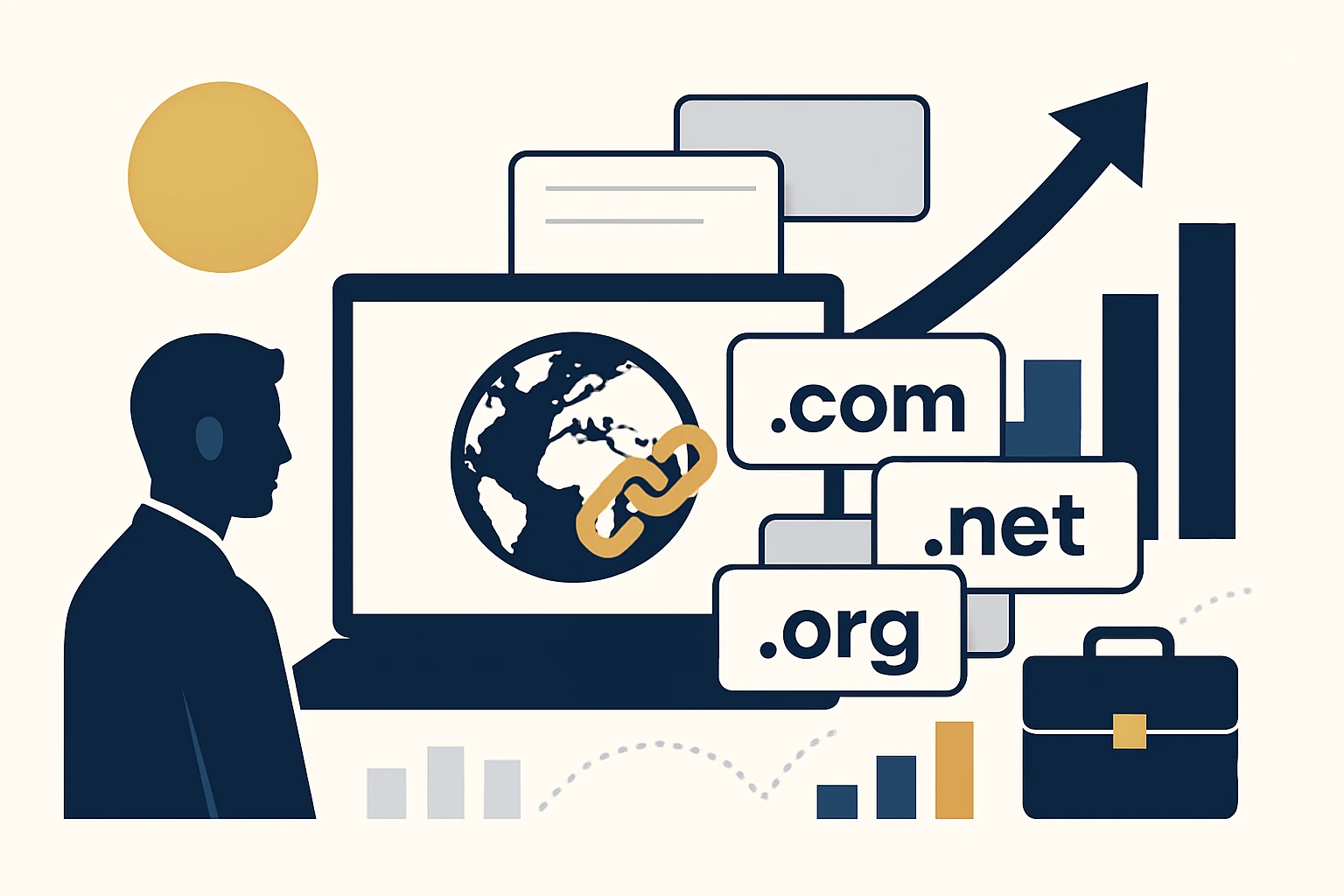
Introduction: The strategic value of premium domain real estate in 2026
In a world where first impressions happen in milliseconds, a domain name is more than a web address - it is a fundamental asset that signals credibility, signals intent, and can drive direct traffic. For brands aiming to protect their identity while pursuing rapid growth, premium domains offer measurable advantages in trust, recall, and conversion. Research compiled by industry observers notes that premium domains can deliver meaningful performance uplifts, often justifying the cost of acquisition and ongoing ownership. For example, studies summarized by PILLAR Media indicate conversion-rate improvements in the range of 14% to 40% when using premium domains, underscoring that the investment can pay for itself through incremental revenue. (pillarme.com)
The premium domain market in 2026: signals from the data
Market data across 2024–2025 shows a two-tier dynamic: a broad base of everyday registrations alongside a frothy subset of premium names commanding outsized attention and values. In early 2025, the H1 Premiums report highlighted notable momentum for niche gTLDs, including a surge in premium .tech registrations and high-ticket examples within the premium domain ecosystem. These trends illustrate that location on the internet - whether a well-known .com or an optimized niche TLD - continues to matter for branding and performance. (domainnamewire.com)
Beyond headlines, the broader domain base has continued to grow. Verisign’s Domain Name Industry Brief data for 2025 shows hundreds of millions of domain registrations across all TLDs, underscoring the scale of the market and the continued relevance of strategic domain ownership for brands navigating digital identity. While the overall base expands, the premium segment - short, memorable, highly searched names - remains the most dynamic part of the market. (blog.verisign.com)
Why niche TLDs matter: evidence, risk, and opportunity
While .com remains a dominant force, data and market observations show rising interest in non-.com domains, particularly as AI and specialized industries drive demand for brands that can be signaled quickly by a concise, relevant TLD. For example, the H1 2025 Premiums Report documents strong growth in premium domains for trending extensions, including .tech, and highlights the rising value of visually distinctive, short strings in premium domains. This signals an ongoing opportunity to diversify a premium portfolio beyond the traditional .com, while still balancing risk and brand fit. (H1 2025 Premiums Report) (domainnamewire.com)
In parallel, niche domains such as .ai are increasingly mainstream in branding and product strategies. By late 2025, the .ai namespace had grown dramatically, with credible industry commentary noting registrations approaching the high hundreds of thousands and premium aftermarket sales reaching six- to seven-figure figures in some cases. This underscores the potential to capture adjacent markets or product categories with carefully chosen TLDs. (dot.asia)
The Asia-Pacific and other regional markets also demonstrate a growing appetite for diversified domain portfolios. Industry observers point to Asia-Pacific adoption trends and the role of regional registries in expanding the digital identities available to brands operating across multiple markets. This broadens the toolkit for brand managers seeking to tailor domain presence by geography, product line, or audience. (dot.asia)
A practical framework for evaluating premium domains across TLDs
To translate market signals into actionable decisions, use a framework that combines brand alignment, market potential, ownership risk, and financial viability. The four-step framework below is designed for in-house teams and external brokers alike, helping you move from discovery to confident acquisition with structure and discipline.
- Brand alignment and audience fit: Does the domain name clearly reflect your offering, audience, and value proposition? Short, memorable, and keyword-relevant domains tend to perform best for direct navigation and trusted perception, particularly when used for branded products or services with high purchase intent. Evidence-based research suggests premium domains improve trust signals and can lift conversions when aligned with the user’s search intent. (pillarme.com)
- Market demand and direct navigation potential: Analyze domain search interest, potential for direct navigation, and brand recall. Premium domains in hot categories (e.g., tech, AI, finance) often attract more direct traffic and better CTR, which can yield meaningful downstream effects on paid and organic channels. The H1 2025 data illustrates how premium names in hot segments can command attention and higher renewal demand. (domainnamewire.com)
- Ownership legitimacy and risk profile: Confirm registrant legitimacy, assess renewal risk, and evaluate potential trademark issues. The legal framework around domains - ACPA cybersquatting protections and UDRP dispute resolution - shapes how you approach an acquisition and manage risk post-ownership. Confident buyers vet trademark landscapes and maintain governance to minimize disputes. (en.wikipedia.org)
- Financial viability and total cost of ownership: Consider the purchase price, renewal costs, escrow/transfer fees, and broker commissions. In premium-domain markets, brokers can add value that exceeds their fee when negotiations unlock favorable terms and protect brand equity. Market data indicates broker activity is a substantial and legitimate channel in premium-name acquisitions, though costs vary by deal. (dabrokerage.com)
Structured decision block: a concrete 4-step framework in practice
- Step 1 - Brand fit review: Assemble a one-page brief mapping the domain to product lines, audience segments, and brand voice. If the domain name communicates the core value proposition succinctly, it earns a higher weight in the decision matrix.
- Step 2 - Market signal checks: Cross-check search demand, direct-navigation potential, and category momentum. Use publicly reported market data and broker market intelligence to estimate potential lift in direct traffic and conversions.
- Step 3 - Risk due diligence: Run a trademark risk scan, assess potential cybersquatting concerns, and map the transfer risk with reputable escrow and transfer partners. Consider pre- or post-purchase protections like registry locks and domain-management governance to safeguard the asset.
- Step 4 - economic balance: Build a total-cost-of-ownership model, including any broker commission, transfer fees, and renewal costs over a 5–10 year horizon. Compare expected incremental revenue from improved conversions and direct navigation to the total cost to determine the investment’s value.
Putting the framework to work: how to approach CFD, space, and Asia-Pacific domain targets
The client landscape often includes niche or emerging TLDs that carry distinct branding advantages. For example, CFD-related branding can benefit from clean, direct associations when the domain sits at the intersection of finance and technology, while space-themed or Asia-centric domains can power marketing campaigns with regional resonance. When evaluating these targets, prioritize clarity, defensibility, and alignment with product naming conventions. In practice, buyers often begin with a curated shortlist and then engage a domain broker to conduct targeted outreach, perform confidential negotiations, and handle escrow and transfer, preserving confidentiality and reducing time-to-close. For teams exploring niche assets, reputable brokers can help you access a broader pool of registrants and negotiate terms that preserve brand control. webatla pricing and the broader webatla TLD listings pages provide context on how a brokered approach can integrate with your internal governance and cost constraints. For direct access to CFD-focused opportunities, see the CFD page at https://webatla.com/tld/cfd.
Market data also confirms a robust premium-domain market in 2025–2026, underscoring that premium names remain a rational investment category when paired with disciplined due diligence. The H1 2025 Premiums Report highlights a surge in premium registrations and significant price anchors in high-signal extensions like .tech, while DNIB data through late 2025 shows sustainable growth in global domain registrations, reinforcing the importance of strategic ownership decisions. (domainnamewire.com)
Limitations, trade-offs, and common mistakes to avoid
While premium domains offer clear advantages, several caveats deserve careful consideration:
- Price versus value: Premium domains can command high upfront prices, ensure the expected lift in conversions and direct navigation justifies the total cost of ownership. The conversion uplift reported by industry analyses is compelling, but ROI is sensitive to category, audience, and site experience. (pillarme.com)
- Trademark risk and cybersquatting exposure: Acquiring a domain that overlaps with existing trademarks can trigger disputes or enforcement actions. Conduct due diligence on trademark rights, and plan for post-acquisition risk management including UDRP/ACPA considerations. (en.wikipedia.org)
- Renewal and ownership costs: The long-tail cost of ownership - especially renewal fees and potential registry-reclassification dynamics - can erode ROI if not planned for in finance and budgets. Stay informed about changes in premium-domain classifications and renewal pricing across registries. (domainnamewire.com)
- Overreliance on single-name performance: A domain’s strength depends on how well it’s integrated into the broader branding and marketing strategy. Domain attributes should be complemented by strong landing-page design, value proposition clarity, and a aligned customer experience.
In addition, the market has evolved to emphasize confidential, broker-assisted acquisitions to reduce leakage and mispricing. While confidentiality is a legitimate preference for many buyers and sellers, it requires careful workflow, escrow controls, and governance to ensure a clean transfer. For more on the regulatory and risk landscape, consider sources covering trademark law and transfer protections as you plan your strategy. (en.wikipedia.org)
Editorial perspective: insights from the field
From an editorial and practical perspective, the most successful premium-domain programs treat domain names as strategic assets that support growth, not just as marketing placeholders. The data suggests that premium domains can unlock higher engagement and performance, but only when the investment is grounded in brand strategy, audience targeting, and lifecycle governance. An expert takeaway is that the ROI of a premium domain is most meaningful when it is embedded in a broader portfolio strategy, with ongoing management, renewal discipline, and clear integration with brand protection practices. Pillar Media highlights the real-world nature of this ROI through measured conversion improvements. (pillarme.com)
Integrating webatla into a premium-domain program
For organizations seeking confidential, discrete domain acquisitions and ongoing portfolio support, engaging a trusted broker can reduce risk and accelerate execution. webatla offers a spectrum of services aligned with premium-domain strategy: confidential acquisition, portfolio evaluation, and ongoing domain-management guidance. In the brokered model, clients gain access to targeted outreach, professional negotiation, and secure transfer arrangements - without exposing internal timelines or budgets. If you’re evaluating a path to expand into niche TLDs like CFD-driven domains or cross-regional assets, webatla’s TLD listings and pricing pages provide a structured way to explore options and model your cost-of-ownership. Explore the CFD-focused page at https://webatla.com/tld/cfd, or browse the broader TLD listing at https://webatla.com/tld/, and review pricing at https://webatla.com/pricing.
Conclusion: a disciplined path to premium-domain value in 2026
Premium domains remain a potent lever for brand protection, growth, and customer acquisition when pursued with rigor: a clear brand fit, evidence-based market signals, due diligence on ownership and risk, and a credible business case that accounts for total cost of ownership. The data confirms ongoing demand for premium and niche-domain assets, and the strategic value of combining broker-driven execution with a disciplined governance framework. As you chart your 2026 roadmap, consider how a premium-domain portfolio - curated with a view to geography, category signaling, and brand architecture - can become a durable part of your digital identity and revenue engine. For teams ready to begin, webatla offers a mature, privacy-preserving path to explore these opportunities and translate them into tangible business value.