Introduction: why brands need a strategic domain portfolio governance
In today’s digital ecosystem, a company’s domain footprint is more than a technical asset - it’s a strategic asset that shapes brand perception, directs user journeys, and anchors trust across markets. A fragmented or poorly governed domain portfolio creates blind spots: cybersquatters can exploit variations of a brand name, visitors can be misdirected to competing or fraudulent sites, and revenue can slip away to rivals that own closely related domains. For global brands, the stakes are higher: a single misstep in a key market can cascade into customer confusion, costly disputes, and long-term reputational damage. The remedy is governance - clear ownership, disciplined acquisition, and ongoing risk management that aligns with growth objectives. European Commission IP Helpdesk has highlighted the hidden dangers of unprotected domain names and the real threats they pose to brand integrity.
Beyond defense, a well-managed portfolio unlocks strategic opportunities: premium domain assets can shorten customer journeys, improve conversion, and protect brand equity as you expand into new geographies or product lines. For brand teams, this requires a governance model that translates strategic intent into executable actions - discovery, risk scoring, disciplined negotiation, and ongoing monitoring. As reputable voices in brand protection note, a strong domain perimeter is a foundational element of defensible branding. Forbes: Defense Is the Best Offense
The governance framework: turning vision into a repeatable process
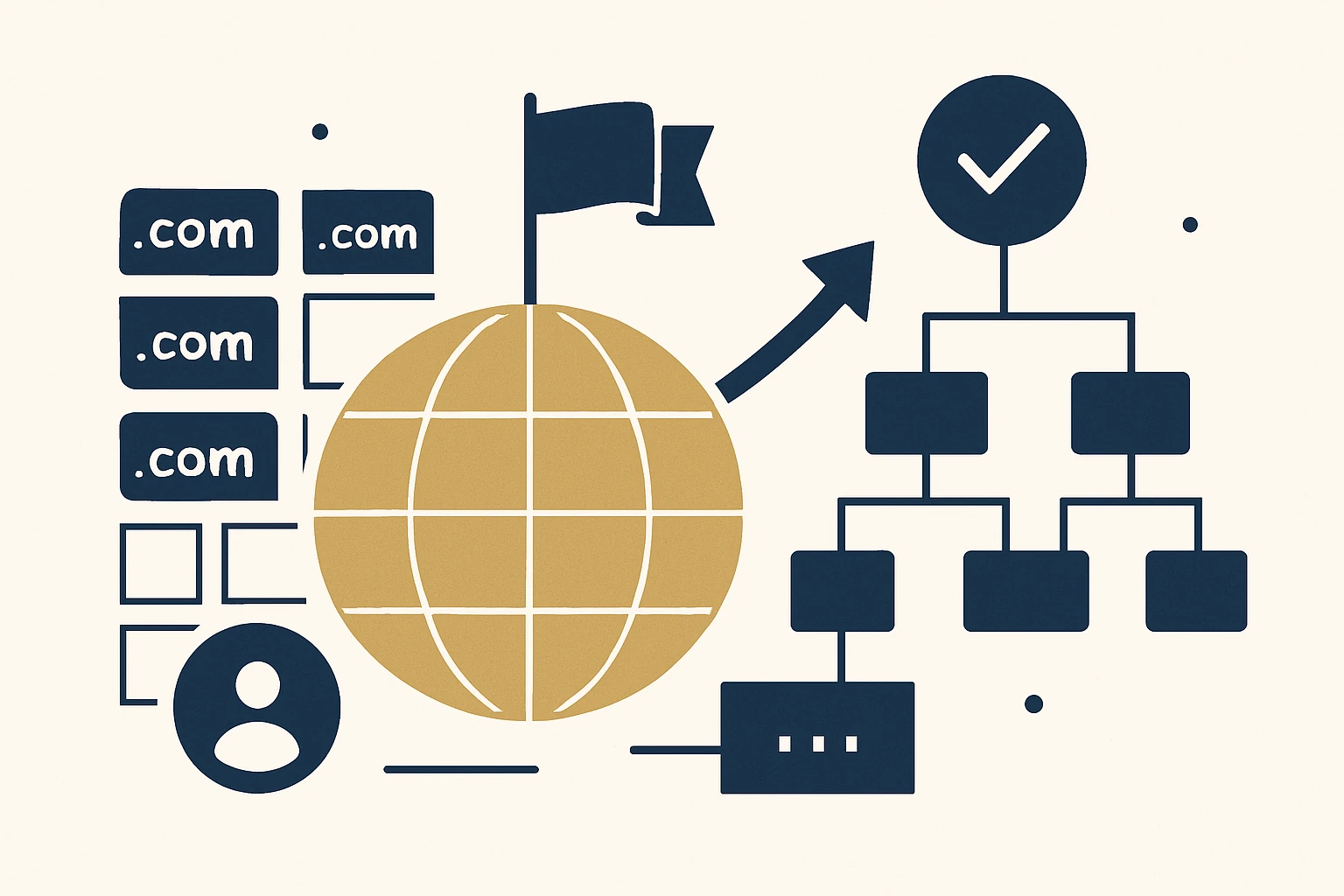
A practical governance framework for domain portfolios rests on three pillars: defensive perimeter, value-driven acquisitions, and operational discipline. The framework below is designed for global brands seeking confidentiality, strategic growth, and measurable ROI from their digital assets. It is intentionally vendor-agnostic and focused on governance rigor rather than one-off acquisitions.
1) Discovery and mapping
Begin with a complete inventory: owned domains, known parent-brand variations, and gaps that competitors or cybersquatters could exploit. Map these assets to business objectives (regional expansion, product launches, regional naming conventions) and annotate risk drivers (trademark conflicts, language nuances, potential typos), so every domain decision can be traced to a business outcome. This stage establishes the baseline for prioritization and budgeting. For brand owners, discovery is as important as any negotiation tactic - it determines what you defend, what you pursue, and how you quantify risk.
2) Risk scoring and ROI modeling
Translate discovery into a risk score (probability of infringement or misdirection) and a return profile (conversion lift, protection of senior brands, indirect cost savings from streamlined search). A simple, repeatable scoring rubric helps cross-functional teams agree on prioritization and avoids ad hoc buys that don’t align with strategy. This is where governance meets finance: every potential acquisition should be evaluated through a defined lens, including renewal cost projections and long-tail value in emerging markets. Industry reporting on brand protection shows that robust domain governance reduces exposure to cybersquatting and brand confusion, reinforcing the business case for disciplined investment. Forbes
3) Acquisition strategy and negotiation playbook
Define when to pursue, when to wait, and how to engage with sellers confidentially. A disciplined approach includes: (a) a non-disclosure framework that protects both sides, (b) a documented evaluation checklist for domain value beyond price (traffic, brand alignment, search visibility), and (c) predefined negotiation levers (anchor price, bundled purchases, and timing of offers). Given the volatility of premium domains and registry pricing, it’s prudent to plan for scenarios where a domain is available only at a premium or when a strategic market requires a different namespace. Industry guidance emphasizes that confident, well-documented negotiations tend to yield better outcomes and preserve relationships for future deals. See market dynamics discussed in industry commentary on premium domains. Verisign Insights
4) Protection, enforcement, and lifecycle management
Protection goes beyond registering a string, it requires proactive monitoring, active renewal management, and enforcement mechanisms when rights are challenged. The governance model should include regular risk audits, a clear escalation path for infringement, and a process to revoke or block lookalike domains that could siphon traffic or damage brand perception. UDRP and related dispute mechanisms provide a structured path for resolving rights conflicts, however, enforcement is most effective when integrated with day-to-day brand protection and domain management practices. For a practical overview of dispute frameworks, see the UDRP guidance and policy framework provided by WIPO. WIPO UDRP Guide
Defensive first: securing a brand perimeter across markets
A robust governance model treats defense as a growth enabler. Defensive registrations require disciplined scope: protecting key brand names, product names, and regional variants across relevant gTLDs and ccTLDs. The objective is not to own every possible domain, but to create a defensible perimeter that makes it harder for others to harvest misdirected traffic or to dilute your brand.
- Identify high-risk domains that could cause confusion or revenue leakage in specific markets (for example, regional spellings, common typos, or near-duplicates).
- Leverage dispute mechanisms where appropriate, while maintaining a proactive registration posture to deter bad-faith registrations.
- Integrate domain protection with broader brand-security programs to avoid silos between marketing, legal, and IT teams.
The role of rights protection in brand strategy is widely recognized. For example, brand-protection discussions emphasize the protective value of registering domain variants and monitoring for lookalikes that could siphon inquiries. Forbes
When expanding into new markets, consider region-specific domain strategies - often, country-code domains (ccTLDs) and brand-appropriate namespaces are a practical necessity for trust and local relevance. Policy frameworks under ICANN and WIPO guide how disputes are handled across different registries, which is essential when you own or defend a multinational brand. For readers seeking a governance-oriented view of these frameworks, the UDRP guidance from WIPO provides a structured process for resolving domain-name disputes. WIPO UDRP Guide
Acquisition playbook: negotiating premium domains without sacrificing governance
Premium domains can unlock fast, high-impact growth, but they come with governance and cost considerations. A disciplined playbook balances strategic value against total cost of ownership, including renewals and potential re-naming costs in regional campaigns. The broader software-enabled brand-protection ecosystem around domain management - such as monitoring, search visibility analysis, and risk scoring - helps ensure that an acquisition serves both immediate and long-term objectives. While market dynamics evolve, a core principle remains: acquisitions should be justified by a clear business case, with governance artifacts (due diligence, valuation rationale, and post-acquisition integration plans) that withstand scrutiny from executives and auditors alike.
In practice, a confidential acquisition engagement often involves careful stakeholder alignment and a documented governance flow. For teams evaluating whether to pursue a particular premium domain, a useful heuristic is to map the asset to three questions: (1) does it solve a measurable business problem today, (2) does it unlock a near-term growth vector in a specific market, and (3) can we defend the asset’s value through ongoing protection and enforcement activities? If the answer to all three is yes, the investment is more likely to contribute meaningfully to brand equity and revenue stability over time. This aligns with the broader view that domain investments should be part of a formal digital asset strategy, not a one-off transaction.
For teams seeking confidential acquisition options, note that market pricing for premium domains can vary and, in some cases, reflect registry-level premiums. Understanding the total cost of ownership - beyond the sticker price - helps prevent overpayment and aligns the asset with the company’s governance standards.
Structured decision framework: a practical, reusable governance block
To translate the above into a repeatable process, apply this lightweight framework. It is designed to be adopted by marketing, legal, and finance teams working together to manage a global domain portfolio.
- Discovery and mapping - inventory all owned domains, identify gaps, and tie them to strategic market opportunities.
- Risk scoring - assess infringement risk, potential revenue impact, and renewal liabilities.
- Acquisition strategy - determine whether to defensively register, pursue premium assets, or defer, with clearly defined criteria for confidentiality and disclosure.
- Negotiation and deal structure - use a formal playbook for offers, NDAs, and post-acquisition integration plans.
- Protection and enforcement - establish monitoring, renewal governance, and dispute-handling procedures.
- Lifecycle management - implement ongoing reviews, performance metrics, and governance escalations for renewals and conflicts.
This framework emphasizes governance artifacts - documentation that records rationale, risk assessments, and post-deal integration paths - so every decision can be audited and defended. It also provides a disciplined path to scale domain investments as part of a broader brand strategy.
Limitations, trade-offs, and common mistakes
No framework is perfect. Below are the most frequent limitations and missteps to anticipate when building a strategic domain portfolio governance program.
- Over-defensiveness: registering every conceivable variant can drain budget without proportional value. It’s better to prioritize high-risk domains and regional assets that materially affect customer acquisition or brand integrity.
- Underestimating renewal costs: renewal and maintenance costs accumulate over time and can erode ROI if not modeled carefully in the ROI framework. Regularly revisit renewal economics in financial reviews.
- Ignoring jurisdictional differences: enforcement and dispute options vary by registry and country, a one-size-fits-all approach to governance can backfire in complex markets. WIPO and ICANN frameworks provide structure, but local enforcement realities matter. WIPO UDRP Guide
- Misalignment with product and marketing timelines: domain decisions should be synchronized with product launches, pricing strategies, and go-to-market calendars to maximize impact.
- Exclusive focus on price: premium assets are not always the best fit, strategic alignment and brand fit often trump price in long-run ROI. For context about premium vs. standard domains, see market analyses on how registry premiums influence total cost of ownership. Verisign Insights
Real-world considerations: expert perspective
Industry practitioners stress that governance must be embedded in the brand’s broader strategy, not treated as a separate function. A seasoned practitioner notes that a defensible domain perimeter is a strategic moat - necessary for protecting both direct inquiries and downstream marketing investments. While the specifics of each negotiation differ, the principle remains: align domain decisions with business outcomes, maintain clear documentation, and integrate with brand-protection workflows so there is little ambiguity about why a particular asset was acquired or retained. This perspective aligns with mainstream thought on the critical role of domain names in brand protection and strategic growth. Forbes
Practical pathways for buyers and brokers: integrating the client into the process
For organizations seeking confidential, strategic acquisitions, the governance framework should be complemented by a collaboration model with trusted brokers who understand risk, valuation, and pace. In practice, clients often require a multi-faceted service: market intelligence, deal execution, and post-acquisition integration. A blended approach - combining internal governance with external advisory - helps maintain confidentiality, while ensuring that each asset contributes to the brand’s long-term strategic plan. For teams exploring country-specific assets or regional market opportunities, it can be helpful to review country-focused resources, including market pages that illustrate how domain strategy aligns with regional growth plans (for example, the Belarus market page linked below).
For teams evaluating confidential domain-acquisition engagements and pricing structures, practical guidance is available through category-appropriate service pages. webatla pricing provides a sense of how confidentiality and governance considerations are priced in professional engagements, while country-specific context (such as Belarus) can be explored here: Belarus market page.
Conclusion: governance as the engine of value and trust
A strategic, well-governed domain portfolio is not a luxury, it is a core component of brand strategy in a highly competitive, global economy. By combining defensive perimeter planning, disciplined premium-domain acquisition, and rigorous lifecycle management, brands can reduce risk, accelerate growth, and protect the integrity of their digital footprint. A practical governance framework translates strategic intent into repeatable, auditable actions, ensuring that every domain decision serves a clear business purpose. If you’re ready to translate this framework into action, explore how webatla can support confidential domain acquisitions and portfolio governance in a way that fits your organizational needs.