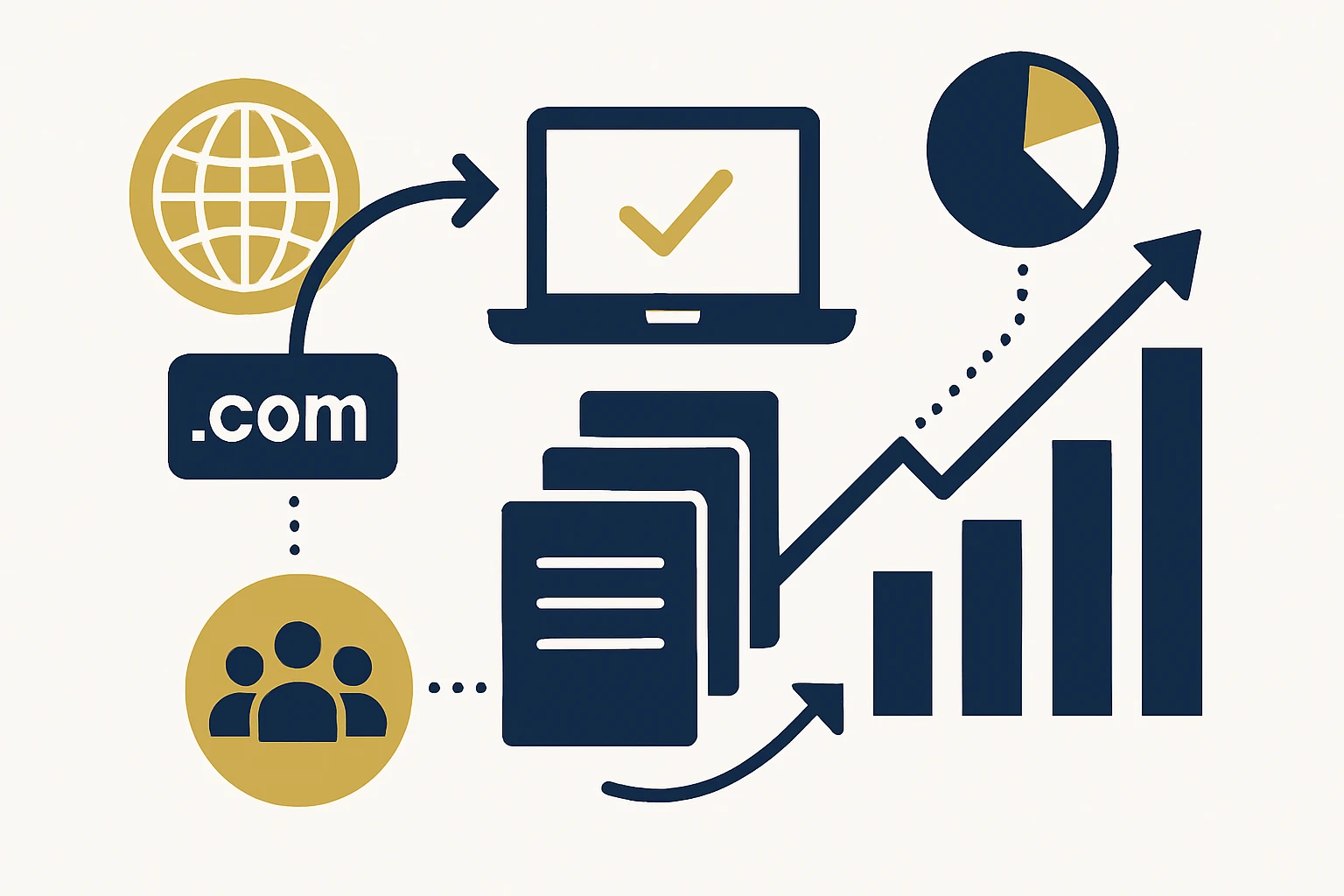

In a world where a brand's identity stretches beyond a logo to a series of digital touchpoints, premium domains act as strategic assets that influence perception, trust, and growth. Yet acquiring, stewarding, and scaling these assets requires more than a transaction. It demands a disciplined, confidential approach to brokerage, negotiation, and ongoing digital asset advisory. This guide outlines a practical framework for building and managing a strategic domain portfolio - one that aligns with brand strategy, mitigates risk, and scales with business goals.
Why a strategic domain portfolio matters in today’s brand landscape
Worldwide domain registrations continue to expand, creating both opportunity and complexity for brands seeking to secure meaningful digital real estate. The Domain Name Industry Brief (DNIB) reports ongoing growth across all TLDs, with hundreds of millions of domains registered globally and a steady rise in new registrations year over year. For example, Q1 2025 data show cumulative domain registrations in the hundreds of millions, underscoring the market's vitality and the need for strategic stewardship rather than ad-hoc acquisitions. This context matters for any brand, because premium domains - short, memorable, and aligned with core offerings - often translate into stronger brand recall and higher organic visibility. (blog.verisign.com)
Beyond sheer volume, the aftermarket for premium domains has warmed in recent years, driven in part by AI and tech-enabled branding needs. Market analyses point to growing demand for high-value domains and increasingly sophisticated negotiation dynamics in the aftermarket. For brand owners, this reinforces the value of a formal, data-driven domain program rather than isolated, opportunistic buys. A disciplined framework helps teams avoid chasing vanity assets and instead prioritize domains that genuinely advance brand strategy and measurable outcomes. (domainnamewire.com)
Brand protection remains a core rationale for a formal domain program. As companies diversify into new markets and product lines, the risk of cybersquatting, impersonation, or poor brand alignment grows. Digital asset advisory includes monitoring, risk assessment, and governance to ensure that every domain in the portfolio supports the brand’s protective posture. In practice, that means a portfolio designed for resilience: clear ownership, renewal discipline, and alignment with trademark strategies. (defenddomain.com)
What premium domain brokerage and digital asset advisory actually deliver
A robust domain program combines several capabilities - each essential to building a scalable asset that supports growth while reducing friction in negotiations and transfers. The core services include premium domain brokerage, confidential domain acquisition, domain negotiation, and ongoing digital asset advisory. Consider how these components fit together within a formal framework - and how they can be integrated with a broader brand strategy rather than treated as isolated purchases.
Premium domain brokerage and confidential acquisition
Premium domain brokerage is not merely about finding available assets, it is about identifying domains that resonate with a brand’s positioning, negotiating favorable terms, and facilitating a confidential (and legally sound) transfer. Confidential acquisition is particularly valuable when a target name is owned by a private seller or a competitor-aligned entity. The process emphasizes discretion, compliance, and risk management, helping clients avoid reputational or regulatory pitfalls while preserving negotiation leverage. Industry observers note that the premium domain market remains competitive, with price dynamics influenced by branding value, domain length, and market demand. (domainnamewire.com)
Incorporating a formal broker function reduces deal risk and accelerates closing timelines. It also enables more sophisticated structures - such as escrows, structured payments, or joint-venture-style arrangements - that align incentives between buyer and seller. These arrangements are standard in mature brokerages and are a key reason brands engage at a strategic level rather than pursuing one-off acquisitions. (domainnamewire.com)
Domain negotiation and post-acquisition governance
Negotiation is a subtler discipline than price discussion. It requires market knowledge, valuation discipline, and clear criteria for acceptance. Skilled negotiators balance price with terms that protect ongoing value - such as renewal schedules, DNS controls, and trademark alignment. After acquisition, governance becomes critical: ownership records, contract terms, renewal alerts, and possession of the domain’s escrow and transfer documentation. Effective governance reduces the risk of future disputes and ensures the asset remains aligned with the brand’s evolving strategy. Experts emphasize that ongoing management, not a single transaction, determines long-term ROI for premium domains. (dynadot.com)
Digital asset advisory and brand protection
Digital asset advisory extends beyond domain purchases to include strategy for use, protection, and optimization. This includes domain portfolio management - tracking renewals, evaluating lifecycle pricing, and identifying opportunities to consolidate, divest, or acquire related assets. Brand protection is another pillar: monitoring for impersonation, typos, or look-alike domains that could erode brand equity or misuse trademarks. A proactive posture helps brands defend integrity across the digital ecosystem and maintain control over the narrative surrounding their products and services. (defenddomain.com)
A practical framework for building and governing a premium domain portfolio
To translate these capabilities into measurable value, adopt a six-step framework that integrates discovery, evaluation, acquisition, governance, and growth. The following framework is designed to be actionable for executive teams, marketing leaders, and in-house legal functions alike.
Framework: Six steps to a strategic domain portfolio
- Step 1 - Discover and map brand goals: Align domain strategy with product roadmaps, geographic expansion plans, and brand storytelling. Clarify how each domain asset will support SEO, protection, and customer experience.
- Step 2 - Benchmark against peers: Analyze competitors’ domain portfolios, including country and industry-specific channels, to identify gaps and opportunities. This informs which assets deserve premium consideration.
- Step 3 - Identify candidate domains (shortlist): Compile a targeted list of domains that match brand intent, focusing on memorability, simplicity, and relevance to core offerings. Consider variations in spelling, regional language, and local market relevance.
- Step 4 - Valuation and risk assessment: Run a disciplined valuation that considers branding value, historical traffic, SEO potential, and renewal costs. Include a risk scan for trademark conflicts and potential cyber risk.
- Step 5 - Confidential acquisition plan: Develop a buy-sell plan with a non-public negotiation track, escrow arrangements, and contingency terms to protect both buyer and seller interests.
- Step 6 - Governance and ongoing optimization: Establish ownership, renewal triggers, and performance metrics. Regularly review portfolio alignment with brand strategy and adjust holdings as markets evolve.
Evidence-based decision-making matters here: industry data suggests a growing premium domain market with selective, strategically acquired assets delivering outsized branding and SEO benefits. For teams that treat domain assets as core to brand strategy, the payoff is a portfolio that scales with corporate priorities rather than a patchwork of opportunistic bets. (domainnamewire.com)
Region-focused considerations: Australia, Lithuania, and Singapore
Global brands often pursue region-specific opportunities to support localization, regional SEO, and legal branding requirements. A disciplined approach to regional domain strategy considers both global assets and local identifiers. For example, expanding into markets like Australia, Lithuania, or Singapore may involve evaluating top-level domains (like country-code TLDs) and local branding implications. To illustrate practical resources, consider examining webatla’s country-focused and TLD listings to map opportunities and due-diligence requirements: webatla Australia page and webatla country-domain catalog. These resources help teams assemble a geographically aware domain plan that complements broader digital strategies. If pricing and portfolio scope are also a consideration, webatla’s pricing page provides a framework for evaluating cost and return on investment. webatla pricing.
On the topic of data-driven prospect lists, a practical editorial focus is to explore how teams can assemble targeted lists - such as a “Download list of Australia (AU) websites” or equivalents for LT and SG - to anchor due-diligence and negotiation defensibly. While the list itself is a research artifact, the disciplined process of curating such lists informs domain selection criteria, risk scoring, and portfolio governance. This approach is consistent with best practices for digital asset management and brand protection. For readers seeking broader context on how to manage portfolios in the era of new gTLDs and regional branding, consult industry reports and white papers that discuss governance and risk in corporate domain portfolios. (dynadot.com)
Limitations, trade-offs, and common mistakes to avoid
Even with a well-designed framework, domain portfolios present trade-offs. For one, premium assets command premium prices, and ROI hinges on active governance and usage rather than ownership alone. Renewal costs, privacy considerations, and evolving market dynamics can erode value if not managed with discipline. A measured approach that couples strategic intent with rigorous due diligence helps teams avoid overpaying for speculative assets or accumulating domains that never contribute to business goals. Practical guidance from industry practitioners cautions against treating domain acquisition as a one-off event, rather, it is an ongoing program that requires governance, audits, and a clear exit or rotation strategy. (dynadot.com)
Common mistakes you’ll want to sidestep include underestimating renewal costs for long-tail domains, neglecting to check for trademark conflicts in multiple jurisdictions, and failing to integrate domain strategy with brand protection practices. A well-documented portfolio governance policy - grounded in white papers about corporate domain management - helps ensure consistent decision-making and reduces the risk of misaligned holdings. For further reading on best practices and governance in corporate portfolios, see the foundational guidance from credible industry sources. (authenticweb.com)
Expert insight
Expert insight: A seasoned brand strategist notes that the most valuable premium domains are those that fit naturally into a company’s product taxonomy and storytelling. Domains should be evaluated not just for click-through or traffic, but for how they cue consumer expectations and perceptions about quality, trust, and relevance. This perspective reinforces the idea that domain strategy is a facet of brand architecture and should be treated as a core governance discipline within marketing and legal teams.
Conclusion: integrate, evolve, and protect your premium domains
Building and managing a premium domain portfolio is a strategic, cross-functional initiative. It requires a disciplined brokerage approach, confidential acquisition capabilities, thoughtful negotiation, and ongoing digital asset advisory to optimize ROI and brand protection. By aligning domain decisions with broader brand strategy and governance, organizations can create a scalable portfolio that supports regional growth, protects against risks, and enhances long-term value. If you are ready to translate this framework into action, consider engaging a domain program that combines market insight, confidentiality, and governance discipline. For readers seeking regional strategies and country-specific domain insights, webatla offers resources and services designed to support strategic domain portfolios across markets.