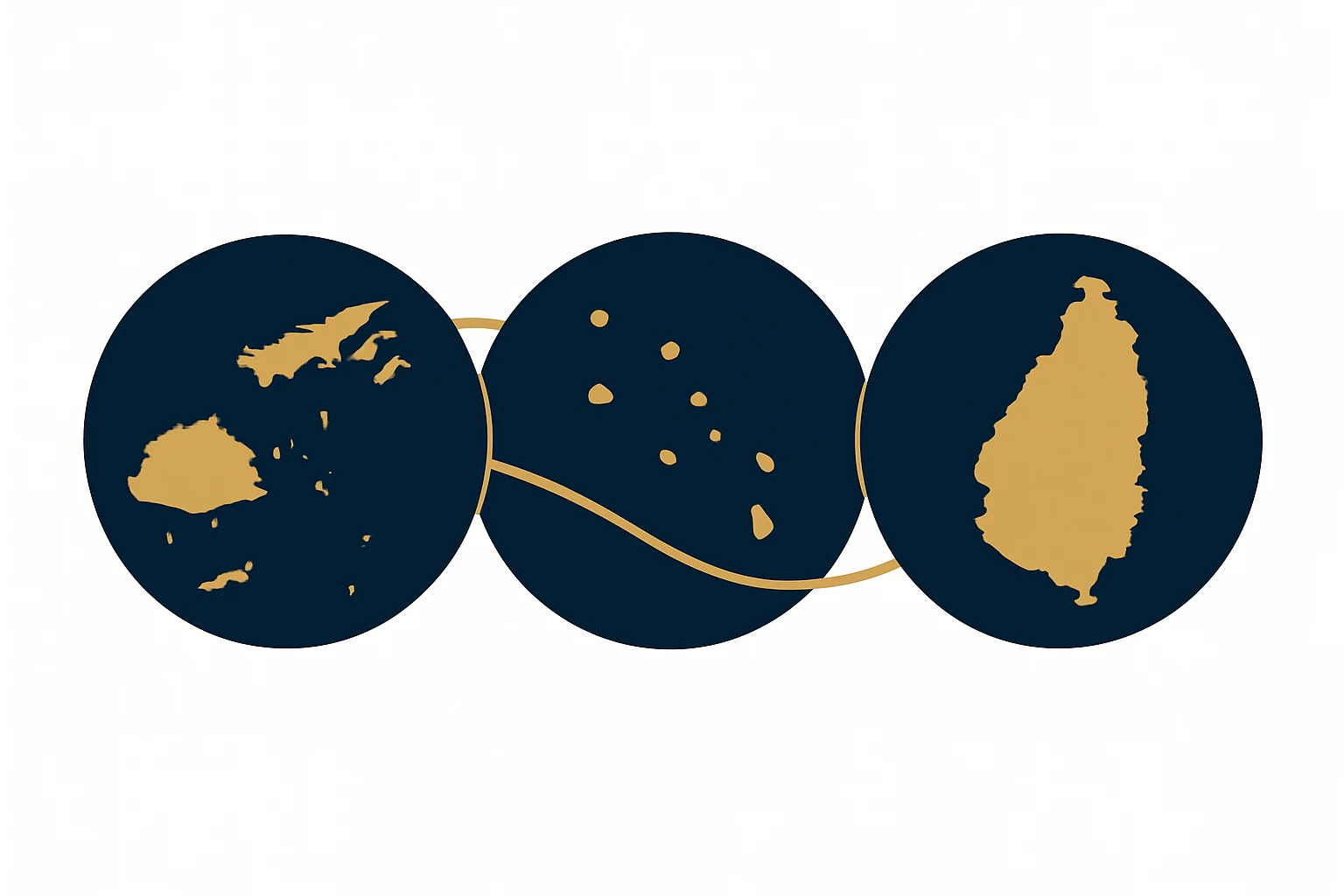
In a crowded digital marketplace, brands increasingly seek geographic clarity and trust through country code top-level domains (ccTLDs). For brand owners aiming to defend and extend their reach, a targeted ccTLD portfolio is not merely a vanity asset, it is a strategic lever for risk management, local credibility, and regional growth. This guide offers a practical path to building and governing a ccTLD portfolio focused on three island nations with distinct digital ecosystems: Fiji (.fj), Cook Islands (.ck), and Saint Lucia (.lc). We blend actionable playbooks with a governance mindset designed for premium domain strategies and brand protection.
Why should island-market ccTLDs matter to a broader brand strategy? First, ccTLDs carry intrinsic geographic signals that can help signal intent to users and search engines. While the SEO impact of ccTLDs is nuanced and depends on content, hreflang, and geotargeting settings, many credible studies and official guidelines emphasize that ccTLDs can serve as a strong geographic cue when used as part of a balanced international strategy. For a global brand exploring entry or defensive positioning in Pacific or Caribbean markets, an intentional ccTLD approach can complement other localization tactics. Google's guidance on managing multi-regional sites outlines how geotargeting signals interact with domain structure and localization efforts, providing a practical framework for decision-making.
From a governance perspective, understanding who operates each registry, what acquisition options exist, and how privacy and confidentiality are managed is essential. For Fiji, the ccTLD is administered by the FJ Domain Name Registry, with active communications and policy updates available through the registry’s announcements page. Saint Lucia’s .lc is managed by NIC.LC and has a distinct naming convention that can unlock brand-formation opportunities in regional markets. The Cook Islands’ domain administration policy provides a clear blueprint for management and compliance in that jurisdiction. FJ Domain Name Registry · NIC.LC · Cook Islands domain administration policy.
Island Domain Portfolio Framework: a practical 5-step playbook
To move from concept to a defensible, value-driven ccTLD portfolio, use a structured framework that aligns with brand objectives, risk tolerance, and operating realities. The five-step framework below encapsulates core actions and decision points you can adapt to Fiji, Cook Islands, Saint Lucia, or similar markets.
- Define market relevance and messaging. Map target regions, customer segments, and brand narratives that will resonate with local audiences. Decide which country-code extension (or combination) best signals your regional intent without compromising global branding.
- Audit existing assets and defensible gaps. Inventory current domains owned or controlled by your brand and identify high-risk gaps (e.g., near-miss domains or common misspellings) that competitors could exploit. This step informs ruthless prioritization for acquisitions and defense.
- Prioritize premium ccTLDs and attainable alternatives. Focus on primary country codes with real-market relevance (for example, .fj, .ck, .lc) and identify high-value second-best opportunities (near-misses, common misspellings, or strategic second-level domains) that protect your brand.
- Design a defensible, staged acquisition plan. Build a phased approach that starts with core assets, expands to defensive holdings, and adds regionally meaningful domains as budgets permit. Consider confidentiality needs and structured deal terms to reduce exposure during negotiations.
- Governance, monitoring, and ongoing optimization. Establish ownership, renewal schedules, and monitoring processes. Regularly reassess the portfolio against evolving business goals, market entry plans, and regulatory developments.
Structured as a framework, this five-step approach helps ensure disciplined execution while preserving flexibility for future opportunities. It also supports responsible disclosure and confidentiality practices - critical when negotiating premium assets in niche markets.
Country playbooks: Fiji, Cook Islands, and Saint Lucia
The following country-level perspectives synthesize regulatory context, typical considerations for brand strategy, and practical integration tips for portfolio development. While each registry operates according to local rules, the overarching discipline remains consistent: a clear ownership model, defensible asset allocation, and alignment with broader brand objectives.
Fiji (.fj): governance, opportunities, and practical considerations
The Fiji ccTLD is administered by the FJ Domain Name Registry, with periodic policy updates and announcements that influence registration practices and governance. For brands seeking a foothold in Fiji or nearby Pacific markets, targeting .fj domains can reinforce regional credibility and support geotargeting strategies when paired with localized content and mappings. For more context on Fiji’s ccTLD governance, refer to the registry announcements page. FJ Domain Name Registry.
Cook Islands (.ck): domain policy and brand strategy implications
The Cook Islands domain space is governed with policies that matter for brand protection and domain management, including registrar rules and reserved subdomains. When considering a footprint in Cook Islands markets, it is important to review government and industry guidelines to avoid conflicts and ensure compliant registrations. Learn more about Cook Islands domain administration policies from the registry and relevant policy pages. Cook Islands domain administration policy.
Saint Lucia (.lc): positioning and practical benefits
.lc is Saint Lucia’s ccTLD, offering opportunities to create locally resonant brand presences or regional campaigns. Saint Lucia’s registry, NIC.LC, provides information on eligibility and registration processes, which can shape defensive and expansion strategies for brands targeting Caribbean markets. NIC.LC.
Limitations, trade-offs, and common mistakes
- Overreliance on ccTLDs for SEO signals. While ccTLDs offer geographic signals, search engines evaluate a broad set of signals, including content localization, hreflang, and local link portfolios. Blindly chasing ccTLDs without adequate local optimization can yield diminishing returns. See Google’s international targeting guidance for a nuanced view of how these signals interact. Google's guidance on managing multi-regional sites.
- Complexity of governance and confidentiality. Narrow jurisdictions and local regulations require careful governance models, renewal discipline, and careful handling of confidential deals to avoid leakage. A disciplined framework reduces risk but may slow immediate acquisitions.
- Costs and availability constraints. Premium ccTLDs in smaller markets may come at premium prices or limited availability, a staged approach helps balance speed with defensible investment.
- Geographic signals are just one piece of the puzzle. To optimize impact, pair ccTLD strategy with localized content strategy, localization assets, and user-experience alignment across markets.
Expert insight: a well-structured island-domain portfolio blends defensible ownership, thoughtful geotargeting, and content localization. In practice, this means prioritizing core country-code domains first, while building a network of strategic domain names that supports brand protection and growth. As with any international strategy, continuously validate assumptions against business goals and market signals.
Practical steps and client resources
For readers evaluating practical next steps, the following actions help translate strategy into action without sacrificing confidentiality or strategic focus:
- Assess the current asset baseline. Inventory owned domains and assess exposure to potentially confusingly similar names. This informs defensive purchases and risk mitigation.
- Draft a phased acquisitions plan. Prioritize core extensions (.fj, .ck, .lc) and a set of high-potential near-miss domains that support brand protection and marketing experiments.
- Leverage curated lists for initial outreach. In some cases, teams benefit from structured download-ready lists of country-specific websites to inform outreach or due diligence. This approach can be integrated into a broader enterprise workflow for brand protection and growth.
To begin exploring country-specific options and to access domain portfolios, you can explore webatla’s country-domain resources, including jurisdictional lists and pricing information:
webatla Fiji country-domain resource · webatla country-domain overview · webatla pricing.
For readers who want to supplement this approach with a broader portfolio strategy, consider integrating the following actions into your workflow:
- Build a defensive layer across related second-level domains (for example, brand-name variants and common misspellings).
- Set up geo-targeting and hreflang configurations to ensure localized impressions align with user intent and language preferences.
- Establish ongoing monitoring for renewals, expirations, and domain-risk alerts to protect your brand over time.
Conclusion
Islands and island-adjacent markets offer unique branding and growth opportunities for savvy domain portfolios. A disciplined, framework-driven approach to Fiji, Cook Islands, and Saint Lucia can unlock regional credibility, defend against brand misuse, and enable strategic experimentation. By combining robust portfolio governance with careful, selective acquisitions - and by integrating strong localization practices - you create a resilient digital asset base that supports both global ambition and local relevance. If you are ready to translate this approach into a concrete plan, consider engaging with premium domain brokerage and advisory services that specialize in confidential acquisitions and strategic domain consulting to steward your brand’s most valuable digital assets.
Note: The content and regulatory context above reflect current understandings of ccTLD governance and international targeting principles. For the latest guidance on geotargeting signals and ccTLD usage, refer to official resources such as Google’s international targeting documentation and registry announcements as cited above.