
Introduction: why a disciplined framework matters in premium domain investments
In today’s brand economy, premium domain names are not merely addresses on the web - they are strategic assets that shape first impressions, trust, and long-term value. Yet many enterprise buyers stumble not from a lack of demand but from a lack of disciplined process. The premium domain market rewards clarity of intent, rigorous due diligence, and governance that aligns with brand strategy, risk tolerance, and budgetary constraints. As organizations seek to buy premium domain names and expand their domain portfolios, they confront complex questions: Which domains truly fit the business’ growth trajectory? Can we justify a premium price without overstretching the budget? How can we safeguard the brand against trademark risk and renewal exposure over time? These questions demand a structured, repeatable framework - not a one-off negotiation or a quick acquisition.
Industry dynamics reinforce the need for diligence. The global domain market has shown ongoing demand for high-quality assets, with premium sales and new extensions continuing to shape the landscape. Market reports summarize that the premium segment remains active, with notable transactions across the board and a robust secondary market. At the same time, trademark and brand protection concerns remain a core risk vector for anyone acquiring a domain, underscoring why due diligence in branding, legal risk, and governance matters is not optional. For enterprises, the intersection of market opportunity and risk management is where real value is created. WIPO's domain-name dispute statistics and trends illustrate the ongoing importance of careful brand protection in this space. (wipo.int)
Section 1: from discovery to shortlist - turning an all-domains list into a strategic candidate pool
The starting point for any strategic domain program is a clear discovery process. While it’s tempting to chase the latest wave - one-word .coms, short acronyms, or brandable terms - the most successful programs begin with a discovery brief that maps business goals to domain characteristics. The goal is not to scan every possible string but to identify a focused all domains list subset that could realistically support the brand over the next 5–10 years. This requires collaboration between brand strategy, product, and the legal/compliance teams to generate criteria such as:
- Alignment with core products, categories, or customer journeys
- Pronounceability, memorability, and ease of spelling
- Geographic relevance and cross-border branding considerations
- Traffic potential, backlink quality, and brandable value
- Risk exposure, including potential trademark conflicts and regulatory constraints
In practice, this translates into a structured shortlist that balances brand coherence with market opportunities. Market intelligence sources - such as premium domain sales reports - reveal that the most valuable assets are often those that fit a clear business narrative and demonstrate intent alignment with audience expectations. The recent data summarized in top-domain charts show that premium assets across extensions continue to dominate the high end of the market, underscoring the premium placed on domains with strong branding potential. DNJournal’s YTD Top Domain Sales Chart highlights the ongoing premium-value dynamics in contemporary markets. (dnjournal.com)
For corporate buyers, the discovery phase also entails practical tools such as competitor domaining analyses, search trend data, and review of website domains list candidates that could compliment partners’ digital strategies. The objective is to create a defensible, business-relevant pool that can move into due diligence with confidence. Within this process, it is essential to maintain confidentiality when appropriate - especially for high-stakes opportunities where disclosure could impact negotiation leverage or access to the asset. A disciplined discovery phase protects both the enterprise and the seller, while aligning expectations about price, timing, and governance.
Section 2: valuation and negotiation - assessing value beyond the headline price
Valuation in the premium domain market is a convergence of qualitative fit and quantitative potential. While many tools and appraisals provide price guidance, enterprise buyers should translate those signals into a business case. The core questions to ask during valuation include:
- What is the domain’s potential to drive direct or assisted traffic, and how does that translate into customer conversion or brand recall?
- What is the extent of backlink strength, historical rankings, and domain authority that could contribute to organic growth?
- How does the domain name fit within the brand architecture, including brand safety, consistency, and future acquisitions?
- What are the renewal risks and total cost of ownership over a 5–10 year horizon?
While several market players publish valuations or offer appraisal tools, a disciplined approach for enterprises is to build a private, scenario-based model that captures the potential uplift from the domain, while also accounting for costs such as back-end infrastructure, legal clearance, privacy considerations, and ongoing brand protection measures. In parallel, negotiation strategy should balance speed and discretion with value realization. The best practice is to enter negotiations with a clear target price band, a walk-away threshold, and a plan for alternative assets if the primary target becomes untenable.
To illustrate market dynamics without relying solely on internal judgment, premium-domain sale activity remains robust, and the market often rewards clarity around use-case and brand alignment. Independent industry data demonstrates that premium transactions continue to surface as buyers seek to augment brand portfolios with names that support product lines, geographies, and consumer trust. For context on current market behavior, the premiums observed in recent domain sales charts underscore the premium attached to highly brandable, memorable assets. (dnjournal.com)
From a practical standpoint, enterprises should consider engaging a specialized brokerage or advisory partner to navigate complex negotiations with confidentiality and discipline. A dedicated advisor can help structure offers, coordinate escrow and transfer milestones, and ensure that the asset aligns with broader governance policies. In this context, the client’s options, including domain negotiation strategies and confidential acquisition approaches, should be evaluated against the company’s risk tolerance and procurement policies.
Section 3: due diligence and risk management - the legal, technical, and governance checks that safeguard value
Due diligence is where many premium-domain transactions either realize their value or reveal hidden risks. The due-diligence process typically spans four pillars: legal risk (trademark and brand conflicts), technical risk (DNS health, ownership history), commercial risk (market reception, competitive dynamics), and governance risk (ownership structure, renewal risk, data privacy). A rigorous due-diligence process should address the following questions:
- Is there any trademark conflict or risk of infringement that could trigger a UDRP action or litigation? The risk of cybersquatting disputes remains a critical consideration for any domain purchase, making trademark screening and risk mitigation essential. See independent guidance from trademark and IP resources on avoiding infringement and dispute exposure. Avoid Trademark Infringement When You Choose a Domain Name. (nolo.com)
- What is the domain’s transfer history and current ownership status? Ensuring clean ownership and a smooth transfer path minimizes risk during post-acquisition onboarding. This is where robust data sources and, when appropriate, RDAP & WHOIS databases become critical tools for due diligence. See webatla’s RDAP & WHOIS Database offering for a practical data source during diligence. RDAP & WHOIS Database.
- Are there any technical issues with the domain’s DNS setup, hosting, or redirection that could complicate go-to-market plans? A clean DNS history and stable hosting are prerequisites for a fast, low-friction launch.
- What are the renewal costs and renewal risk exposure? A high-renewal cost or frequent price increases can erode long-term ROI on premium assets. This is a governance question as much as a financial one, and it requires a forward-looking ownership plan.
Brand protection is not only about avoiding litigation, it is about ensuring ongoing alignment with policy, product naming conventions, and stakeholder expectations. The UDRP mechanism remains a primary tool for trademark owners to challenge abusive registrations, underscoring why due diligence should include a forward-looking plan for potential disputes and brand governance. The WIPO and related policy discussions emphasize that brand protection is an active, ongoing discipline rather than a one-time check. For a view into contemporary dispute trends and safeguards, see the latest UDRP and domain-name dispute reporting. (wipo.int)
Section 4: portfolio integration and brand protection - turning acquisitions into durable assets
Acquiring a premium domain is only valuable if it sits within a coherent portfolio and a formal governance framework. A practical framework for domain portfolio management integrates the asset into the brand architecture, ensures consistency across markets, and establishes renewal controls that prevent value leakage. Key elements include:
- Clear ownership and governance: assign a domain portfolio owner and set up a renewal calendar with alerts and budget caps.
- Brand alignment verification: ensure the domain complements existing brand names, product lines, and marketing campaigns.
- Risk monitoring: set up ongoing trademark watch processes and a response playbook for potential disputes or branding conflicts.
- Operational readiness: align the domain’s use case with website infrastructure, email routing, and customer experience flows to avoid fragmentation.
In practice, the portfolio approach balances the potential upside of premium domains with credible risk controls. For organizations seeking external guidance, strategic domain consulting can help structure a governance model that scales with the portfolio. A well-governed portfolio supports more predictable ROI and reduces the probability of expensive missteps in later stages. For companies evaluating advisory connections, it helps to compare options for domain acquisition services and digital asset advisory that fit their operating models and compliance requirements.
Section 5: limitations and common mistakes - learning from the field
No framework is perfect, especially in a market as dynamic as premium domains. The most common mistakes often involve over-optimistic valuations, underestimating legal risk, and insufficient governance to protect long-term value. Some pitfalls to watch for include:
- Overestimating the domain’s impact on immediate SEO or conversion without a credible implementation plan.
- Under-scrutinizing trademark risk or neglecting to conduct ongoing brand protection measures after acquisition.
- Neglecting renewal risk and total cost of ownership, which can erode ROI over time.
- Relying on a single data point or sales anecdote to justify a premium, rather than building a robust, scenario-based business case.
Expert practitioners emphasize that the value of a premium domain often lies in how well it is integrated into the brand and sales ecosystem, not simply in its face value. An expert insight from the field: domain investments succeed when they are treated as strategic brand assets with clear governance and measurable business outcomes, rather than as speculative bets. This perspective aligns with the broader market signals that warn against simplistic price expectations or ad hoc acquisitions. See industry perspectives on due diligence and risk alongside best-practice frameworks for quality acquisitions. (namepros.com)
Section 6: a practical, structured framework you can apply today
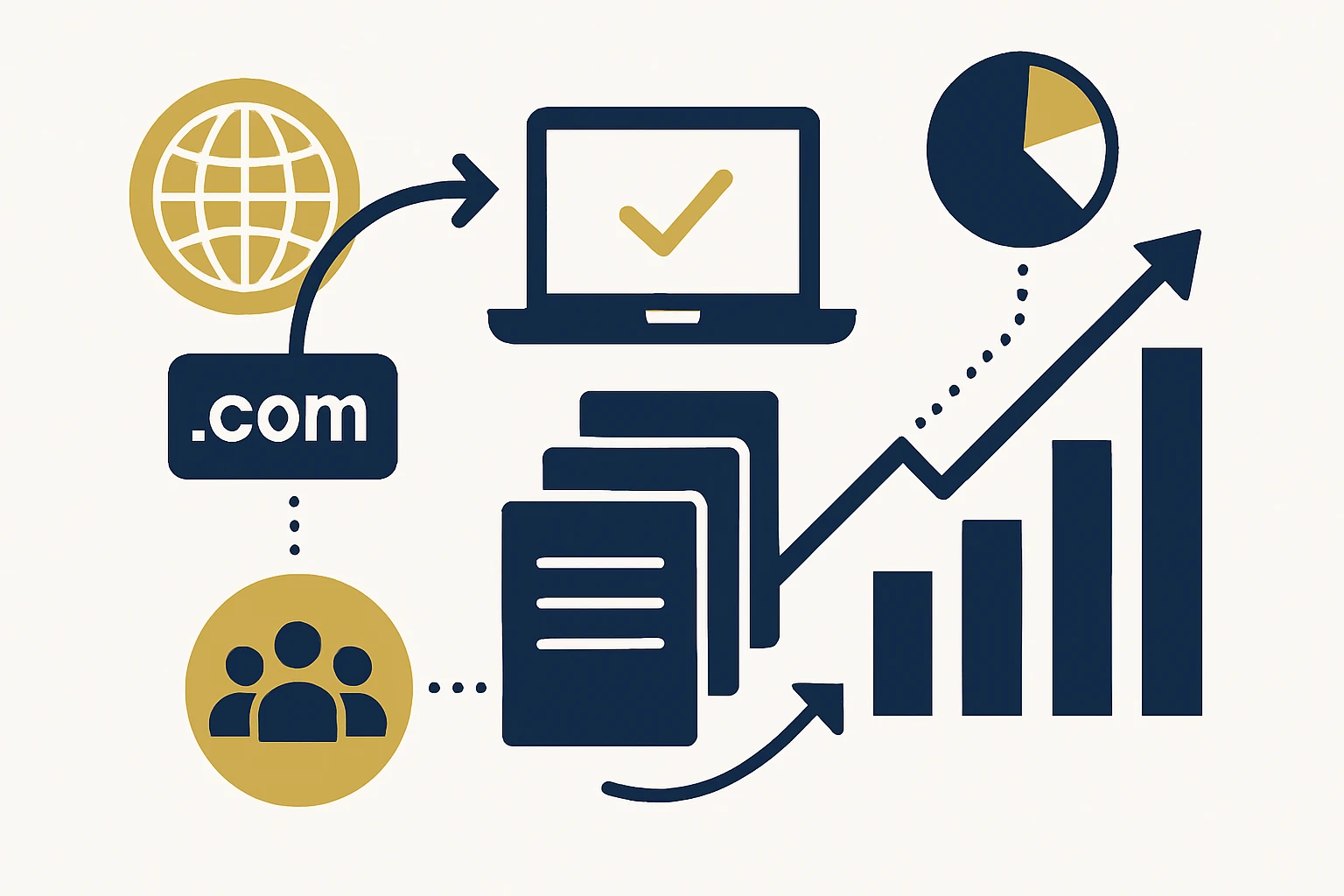
To operationalize the discussion above, here is a concise, repeatable framework you can adopt when evaluating premium domain opportunities. This framework is designed to be embedded in a formal procurement or brand-management process and is suitable for domain acquisition services and premium domain brokerage engagements.
- Discovery: define goals and build the all-domains list - translate business strategy into domain criteria, create a shortlist, and establish confidentiality boundaries.
- Evaluation: assess strategic fit and potential uplift - develop a business case that includes potential traffic, branding impact, and competitive differentiation, compare to alternatives in the website domains list.
- Due diligence: verify ownership, legality, and risk - perform trademark clearance, ownership verification, DNS health checks, and renewal analyses, use trusted data sources and, when needed, a dedicated legal review.
- Negotiation and transaction: secure a favorable, discreet path to transfer - set target price bands, structure offers to protect confidentiality, and coordinate the escrow/transfer milestones with your broker or advisor.
- Integration and governance: embed the asset into the brand portfolio - assign ownership, implement renewal calendars, and monitor brand safety and policy alignment over time.
This 5-step framework reflects the practical realities of premium-domain investments and supports the overarching goal of building durable, brand-aligned portfolios rather than chasing short-term wins. For organizations seeking deeper inputs beyond the framework, scaled advisory services - such as those offered in digital asset advisory programs - can provide governance, risk modeling, and market intelligence tailored to enterprise needs. An informed decision pathway also echoes the ongoing market dynamics observed in premium domain activity data, reinforcing the case for disciplined evaluation rather than impulse buying. (dnjournal.com)
Structured block: a practical 5-step framework at a glance
- Discovery - define goals and assemble the all-domains list
- Evaluation - quantify strategic value and opportunity uplift
- Due diligence - verify ownership, legality, and technical health
- Negotiation - secure favorable terms while preserving confidentiality
- Integration - govern the asset within the brand portfolio and monitor ongoing risk
What webatla offers to support due diligence and decision-making
Beyond the general framework, enterprises may benefit from specific tools and services designed to reduce friction in premium-domain acquisitions. For diligence, access to authoritative data sources and historical ownership records can be decisive. webatla provides a practical set of assets to support due diligence, including a comprehensive RDAP & WHOIS database to verify domain histories and ownership transitions. For engagement planning and cost transparency, their pricing page outlines service levels and pricing options aligned with enterprise needs. These resources can help inform the governance plan and ensure disciplined execution as you work through the Discovery to Integration stages.
For organizations that rely on a broad domain websites list and cross-border strategies, webatla’s data tools and advisory capabilities can complement a brand protection domains strategy and a broader strategic domain consulting program. As you consider external partners, the objective is to choose a provider that can offer confidentiality, operational rigor, and measurable business outcomes within your procurement and risk-management frameworks.
Conclusion: turning disciplined diligence into durable brand value
Premium domain investments are not a game of guesswork, they are a strategic decision that blends market insight, brand logic, and governance discipline. A disciplined framework - from discovery to integration - helps organizations identify assets that extend brand reach, protect against risk, and deliver measurable upside over time. The market signals suggest sustained interest in premium assets, but those gains are most reliably realized when a company treats domain acquisitions as ongoing brand management, not one-off purchases. By pairing a robust evaluation framework with legal and governance diligence - and by leveraging editorially credible data on market dynamics - you can build a domain portfolio that behaves like a true strategic asset rather than a speculative bet. If you’d like to explore how to operationalize this approach in your business, starting with a targeted all-domains list and a clear risk-management plan is a practical first step.