Introduction: Rethinking TLDs as Strategic Assets
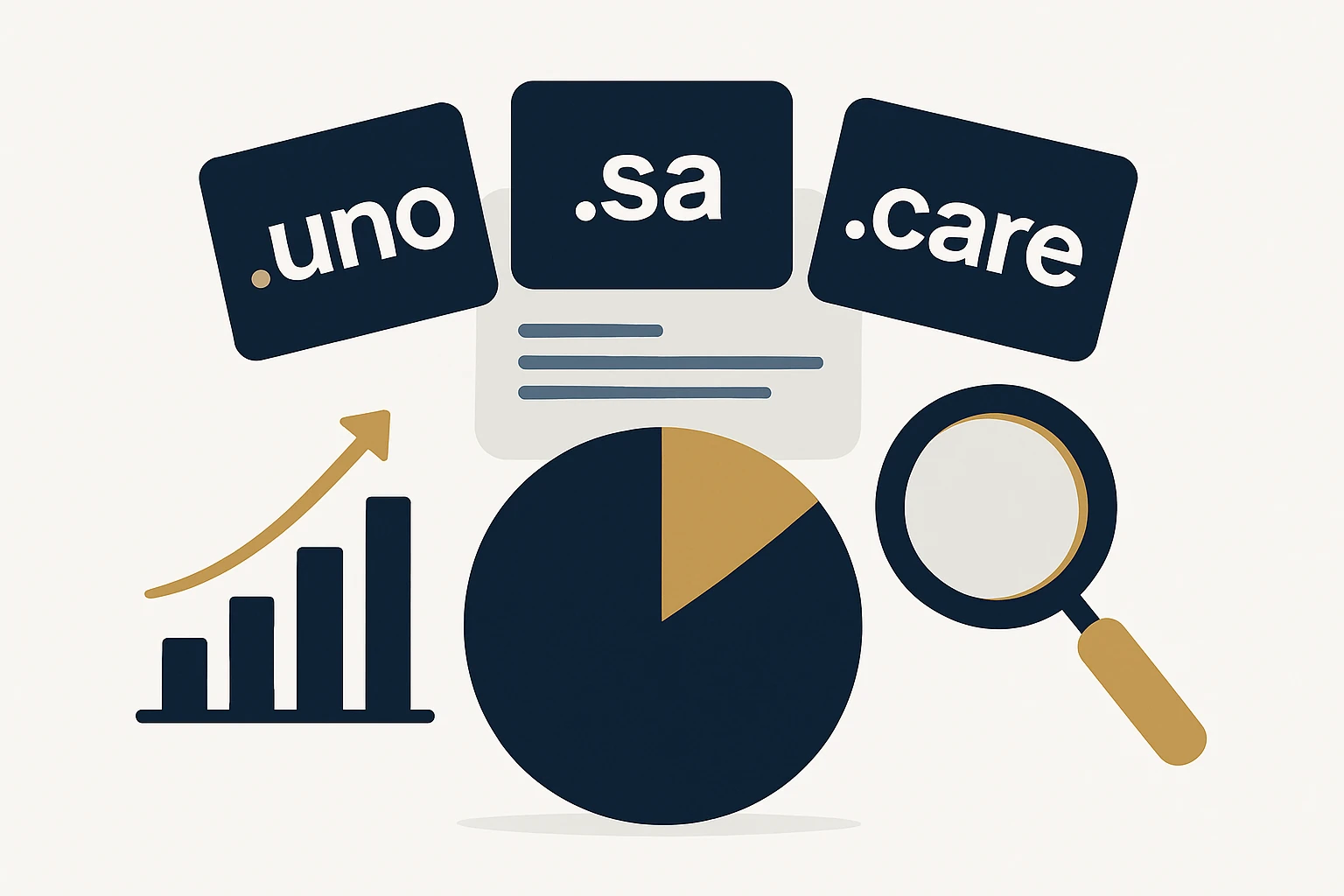
For many brands, premium domains are no longer just digital real estate, they are strategic assets that influence perception, trust, and growth. The expansion of the domain namespace, including niche gTLDs, has opened new avenues for regional branding, sector-specific positioning, and shorter, memorable URLs. But opportunities come with complexity: overlooked risk, hidden renewal costs, and the potential for brand confusion. This article offers a practical, decision-focused approach to evaluating niche TLDs such as .uno, .sa, and .care, framed for brand owners and the teams that manage domain portfolios. It also shows how a disciplined, advisory-led sourcing process can translate these opportunities into durable brand value. Expert insight: experienced practitioners in premium-domain brokerage emphasize that niche TLDs pay off when they align with a brand’s market, audience, and enforcement strategy, not when they’re pursued in isolation. Expert perspective synthesized from industry practice in premium domain strategy.
Why Niche TLDs Matter for Brand Strategy Today
The domain landscape has evolved beyond the traditional triad of .com, .net, and .org. Since ICANN's New gTLD Program began, thousands of new top-level domains have been delegated, creating a broader spectrum of branding options and potential risks. This expansion has been a double-edged sword: it can unlock localized or vertical-specific branding, but it also increases the surface area for trademark conflicts, cybersquatting disputes, and governance considerations. For brand custodians, the key is to integrate niche TLDs into a broader governance and risk framework, rather than treating them as isolated experiments. ICANN’s New gTLD Program has been a central reference point for understanding why new extensions exist and how they are managed across registries and registrants. (newgtldprogram.icann.org)
As the ecosystem matured, the industry also recognized that not every niche TLD is suitable for every brand. The same forces that make a TLD appealing - targeted branding, local relevance, or sectoral signaling - can also complicate search engine optimization, user trust, and brand enforcement. The outcome depends on disciplined assessment, clear objectives, and a plan to integrate the domain with a broader brand strategy. For context, ICANN’s historical overview shows how the program evolved and why a second or third round of expansions may be anticipated in the future. (icann.org)
The Case for .uno, .sa, and .care: What They Could Mean for Your Portfolio
Names in niche TLDs can offer compelling branding angles:
- .uno can signal a fresh, modern identity - potentially useful for digital-native brands or campaigns that seek a distinctive brand voice.
- .sa (Saudi Arabia ccTLD) may enable regionally focused campaigns and partnerships in the Middle East, while signaling local market commitment.
- .care can imply sector-specific trust and clarity for health, welfare, or service-oriented brands where care is a central value proposition.
However, each TLD carries specific governance, policy, and enforcement considerations. Registries may have different registration requirements, and brand owners must assess: renewal economics, registry policies, privacy and data-protection implications, and potential SEO implications tied to the TLD in question. The broader market context is important: new gTLDs were introduced to expand consumer choice and competition, but they also introduced new risk vectors - especially around trademark enforcement and domain disputes. See ICANN’s program overview and dispute mechanisms for context. (newgtldprogram.icann.org)
How to Approach Nielsen-Style Data: Download Lists and Real-World Value
Providers across the industry sometimes surface lists such as “download list of .uno domains,” “download list of .sa domains,” or “download list of .care domains” as a starting point for portfolio assessment. These lists can be useful for initial screening, but they are just the first step. The practical value comes from converting raw lists into actionable due diligence: identifying domain quality, ownership status, registration history, and alignment with a brand’s risk profile. In other words, a raw download is not enough, you need a curated workflow that adds context, filtering, and governance checks before any acquisition consideration. Industry best practice emphasizes starting with a clear objective, then applying a structured evaluation framework to any list you obtain. For a deeper look at how the industry handles new gTLDs and potential disputes, refer to ICANN’s and WIPO’s resources. (newgtldprogram.icann.org)
A Practical 5-Step Evaluation Framework for Niche TLDs
Below is a compact, repeatable framework you can use to evaluate niche TLDs for brand strategy. It’s designed to be used with a curated domain list (not raw dumps) and to feed into a broader domain-portfolio plan.
| Step | What to Assess | Key Questions | Deliverable |
|---|---|---|---|
| 1. Strategic fit | Brand alignment, market signals, local/sector emphasis | Does this TLD reinforce our positioning? Is there a defined use case (campaign, product line, regional presence)? | Strategy memo detailing alignment with brand goals and an intended usage plan |
| 2. Risk & enforcement | Trademark conflicts, registry policies, dispute risk | What is the likelihood of trademark disputes? What are the registry’s dispute-resolution processes? | Risk register with likelihood, impact, and mitigation actions |
| 3. Quality & availability | Domain quality, ownership status, renewal economics | Are the proposed names high-value and relevant? What are renewal costs and price volatility? | Shortlist of candidate domains with ownership verifications and renewal projections |
| 4. SEO & user experience | Impact on search rankings, branding perception, and user trust | Will a .uno/.sa/.care domain affect click-through and trust signals? How will this integrate with existing domains? | SEO impact notes and integration plan |
| 5. economics & governance | Acquisition cost, renewal risk, regulatory/compliance considerations | What is the total cost of ownership over 5–10 years? Are there regional data-privacy implications? | Cost model and governance guidelines |
Structured output from this framework should feed into a formal decision document reviewed by a cross-functional team (brand, legal, IT, and security). It’s not enough to collect domain names, you must translate them into a portfolio plan with risk controls and clear ownership. For reference, ICANN’s literature on the New gTLD Program and the history of the program illustrates why a disciplined approach is necessary when considering new extensions and their governance. (icann.org)
Practical Examples: How the Framework Plays Out
Example A: A consumer-tech brand considers a .uno domain for a regional product line. Application of the framework might reveal:
- Strategic fit: Strong alignment with a campaign targeting a younger demographic that responds to bold, short URLs.
- Risk & enforcement: Moderate risk - registry policies are favorable, but trademark checks across markets are essential.
- Quality & availability: A short, memorable combination is available, some hyphenated variants exist but are less brand-consistent.
- SEO & user experience: Mixed evidence on SEO impact, emphasis on canonicalization and consistent cross-domain signals.
- Economics & governance: Moderate upfront cost with predictable renewal fees, implement budgetary controls and renewal alerts.
Example B: A regional retailer explores .sa for a Gulf Cooperation Council expansion. Findings could include:
- Strategic fit: Clear regional signaling and local relevance, with potential to support localized campaigns.
- Risk & enforcement: Higher regulatory and privacy considerations, ensure compliance with local data rules and registry terms.
- Quality & availability: Local-language assets may be compelling, due diligence on ownership and history is critical.
- SEO & user experience: Users in the region may prefer local domains, but search engines can vary by market, plan for hreflang and geo-targeting.
- Economics & governance: Higher acquisition cost if premium names exist, plan for longer-term renewal budgeting.
These imaginative scenarios show how the same framework can yield concrete insights rather than vague recommendations. The end-to-end process should be anchored by a domain portfolio strategy and an ongoing governance routine that aligns with brand risk management practices. For authoritative context on how new gTLDs emerged and interact with enforcement and governance, visit ICANN’s program history and dispute resources. (icann.org)
Limitations, Trade-offs, and Common Mistakes to Avoid
Even well-structured, niche-TLD strategies encounter limitations. A few common pitfalls to anticipate include:
- Overemphasis on novelty over fit. A flashy TLD can attract attention, but without strategic alignment, it may fail to deliver durable brand value.
- Underestimating renewal costs and policy changes. Renewal economics vary by registry and can compound over a portfolio, neglecting this can erode ROI.
- Insufficient trademark risk management. The expansion of the TLD universe has correlated with higher dispute activity. WIPO’s dispute data illustrate growth in online misappropriation and enforcement actions. (wipo.int)
- Fragmented governance. Without cross-functional ownership, niche TLDs may exist in a vacuum, increasing governance and security risks.
Additionally, the broader industry narrative around new gTLDs has been shaped by policy and governance considerations. ICANN’s documentation and timelines show that new rounds of gTLDs are part of an ongoing evolution of the DNS namespace, with implications for strategy, risk, and investment. While this is an opportunity, it requires disciplined integration into a brand’s overall risk framework. (newgtldprogram.icann.org)
How to Source and Interpret TLD Data Responsibly
While search results and lists like “download list of .uno domains” can be a starting point, responsible sourcing goes beyond raw data. Here are practical steps to turn data into decisions:
- Validate ownership and registration history using reliable RDAP/WHOIS data and official registries whenever possible. This reduces the risk of engaging with untrustworthy registrants or stale data.
- Cross-check registry policies and dispute mechanisms. Different TLDs may have varying requirements for eligibility, protection of well-known brands, or mandatory privacy considerations.
- Integrate with brand governance - ensure your chosen domains complement your existing portfolio and do not create conflicting signals for users or search engines.
- Anchor decisions in a formal business case that includes risk exposure, budget impact, and a clear path to implementation across marketing, product, and IT teams.
For those seeking a curated, credible catalog, the UNO-focused catalog and other TLD listings offered by webatla provide a structured entry point into niche domains without sacrificing governance safeguards. For a broader view of available domain classifications, you can explore the list of domains by TLDs directly on the provider’s site. Uno domain catalog and List of domains by TLDs offer context that complements the insights above.
Integrating the Client: How webatla Supports Niche TLD Decisions
Domain sourcing for niche TLDs benefits from a disciplined advisory approach. webatla’s UNO catalog and its broader TLD listings provide a practical, data-informed starting point. A balanced approach treats niche extensions as one tool among many in a brand’s portfolio strategy, not a stand-alone solution. The integration process typically involves:
- Discovery and objective alignment with brand goals
- Due diligence and risk assessment using a standardized framework
- Structured negotiations and transparent pricing considerations
- Ongoing portfolio management and governance to maintain alignment with brand risk policies
For readers exploring specific domain catalogs, the UNO catalog is a direct resource, and broader lists by TLDs can be reviewed at the provider’s TLD index. These resources are part of a broader strategic workflow that combines due diligence, governance, and expert counsel to maximize value while keeping risk in check.
Conclusion: A Disciplined Path to Niche TLD Valuation
Niche TLDs like .uno, .sa, and .care can be powerful levers for brand strategy when used with discipline and governance. The keys are alignment with strategic objectives, rigorous risk management, and integration into a broader domain-portfolio approach. A validated framework, disciplined data sourcing, and expert advisory input can transform a raw list of candidate domains into a defensible, growth-oriented portfolio. For brands seeking a structured, credible path to niche TLDs, partnering with a trusted advisor - one that can deliver both strategic insight and practical execution - can be a critical differentiator. If you’re starting your journey, consider drawing from a curated data source and a framework that ensures every domain decision is anchored in brand value and risk discipline.
For a curated catalog of niche domains and a disciplined, strategy-led approach to acquisition, explore Uno domain catalog and other TLD lists from webatla:
Uno domain catalog - for a focused set of .uno opportunities
List of domains by TLDs - broader scope to compare TLD options within a governance framework