Introduction: why all TLDs matter in brand strategy
For modern brands, a domain is more than a storefront address, it is a strategic asset that shapes trust, discoverability, and risk posture. The expansion of the domain namespace - led by ICANN’s New gTLD Program - opened the door to thousands of new top-level domains (TLDs), allowing brands to tailor their digital architecture across languages, geographies, and use cases. This shift creates both opportunity and complexity: a carefully chosen mix of TLDs can reinforce brand protection and marketing, while a scattershot approach can dilute equity and invite security risks. ICANN explains how the program broadened competition and choice in the DNS, introducing a wider set of generic and brand-specific extensions. (newgtlds.icann.org) In practice, leading brands are experimenting with TLDs not just to park domains, but to structure sub-brands, campaigns, and regional identities - an approach supported by industry observers as part of a mature branding ecosystem. A 2025 snapshot notes real deployments like .channel and other brand-adjacent TLDs that are being leveraged for content hubs, campaigns, and storefronts. (snapshot.internetx.com)
Section 1: The all-TLD landscape in 2026 - what brands need to know
The domain namespace today includes a spectrum of TLDs: legacy country-code and generic TLDs, new gTLDs (including brand TLDs), and geo-targeted extensions. The New gTLD Program, launched to increase competition and linguistic diversity, ultimately expanded the universe of available extensions and introduced governance considerations for brand owners. ICANN New gTLDs provides the program’s scope and objectives, including how brands can participate in a more expansive namespace. (newgtlds.icann.org) As brands evaluate this landscape, observers highlight practical deployments - such as Google Registry’s ongoing exploration of dot-brand strategies and the performance considerations associated with those domains. Recent industry analyses summarize the trajectory of new gTLD adoption and the strategic value of brand TLDs in 2025–2026. (newgtldprogram.com)
Key takeaways for brand portfolios in 2026 include: - A wider set of long-tail, language-specific, and branded extensions that can support local markets and campaigns. - The importance of governance, security, and user experience as TLDs become embedded in enterprise-grade digital architectures. - The need for disciplined ROI thinking: how many TLDs are worth the cost, and how should they be integrated with existing assets? Industry sources emphasize that dot-brand deployments can deliver brand visibility and trust when executed with a clear long-term plan. (newgtldprogram.com)
Section 2: A practical framework to evaluate all TLDs for a brand
Below is a structured framework designed to help brand owners, marketers, and portfolio managers reason about the entire TLD spectrum. The goal is not to chase every new extension, but to craft a resilient digital architecture that aligns with business goals, risk appetite, and operational constraints.
- Clarify objectives and constraints. Define what you are trying to protect (brand integrity, geographic reach, campaign agility) and what constraints you must respect (budget, privacy, regulatory requirements). This sets the baseline for all subsequent TLD decisions.
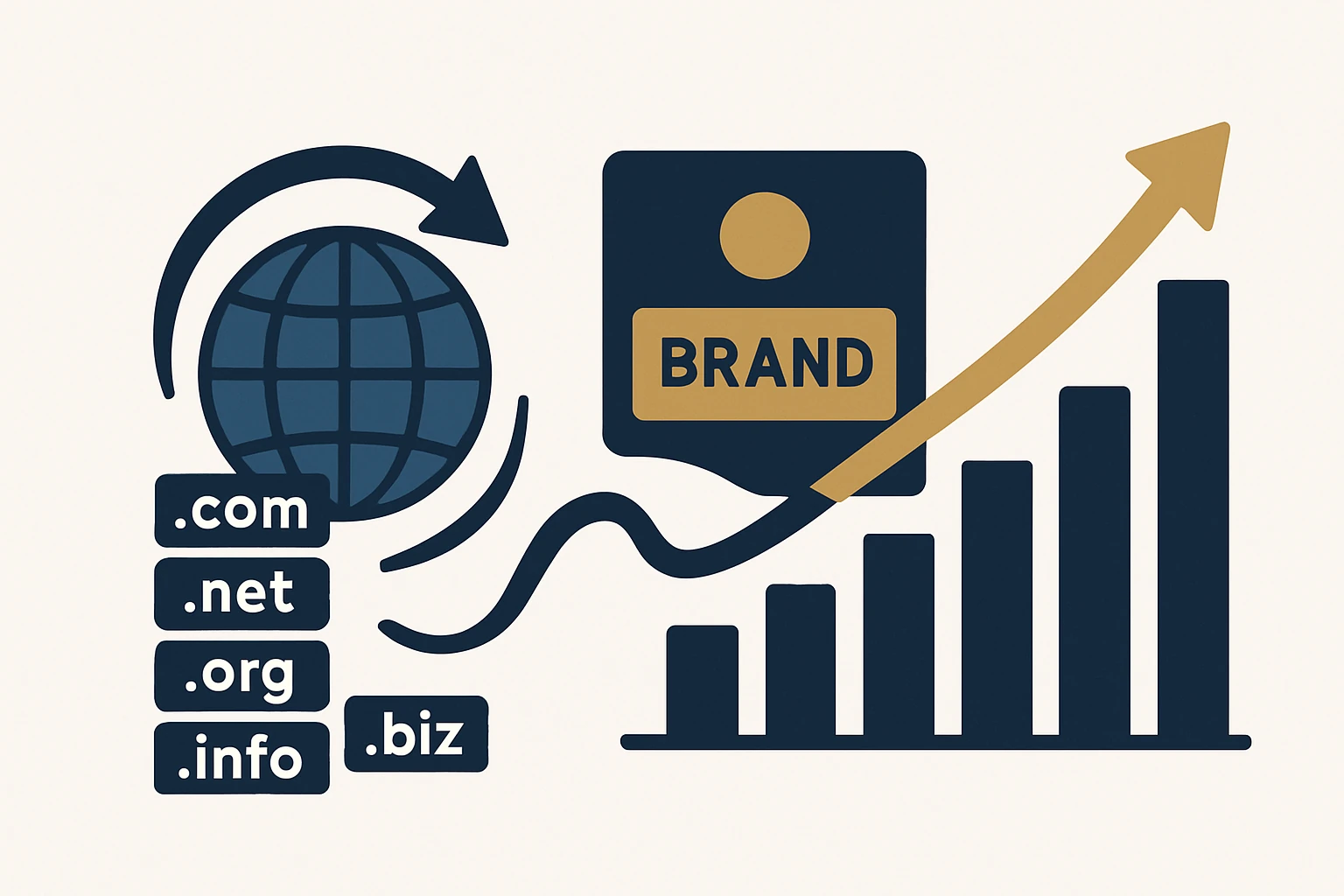
- Map the universe of relevant TLDs. Distinguish among legacy TLDs (e.g., .com, .net), country-code TLDs (ccTLDs such as .uk, .de), generic new gTLDs (such as .shop, .tech), and dot-brand TLDs (such as .brand). Reference lists of domains by TLD can help you visualize coverage across markets. For example, the webatla catalogs domains by TLD to illustrate breadth and specialization, which can inform portfolio construction. webatla: List of domains by TLDs (snapshot.internetx.com)
- Assess brand protection and risk exposure. Evaluate phishing risk, domain squatting, and the potential for spoofing across extensions. Brand security considerations are amplified as more TLDs exist, so a risk map that scales with the portfolio is essential. ICANN’s framework for new gTLDs includes governance and policy dimensions that brands should understand as they expand. ICANN New gTLDs (newgtlds.icann.org)
- Prioritize extensions by tiered value. Create a tier system (Must-Have, Nice-to-Have, Caution) based on strategic relevance, regional presence, and user experience. This helps avoid over-allocating resources to low-ROI extensions while preserving agility for core markets.
- Plan acquisition and negotiation with guardrails. When a desired domain is unavailable, a structured approach to confidential acquisition and negotiation can yield outcomes with privacy and speed advantages. While each broker will approach a deal differently, a formal playbook reduces surprises and protects brand equity. For brands exploring this path, partner selection matters as much as process.
- Design a deployment plan that ties to brand architecture. Align TLD usage with sub-brands, markets, and campaigns. A clear governance model ensures consistency, reduces confusion, and preserves domain value over time.
- Establish ongoing governance and renewal discipline. Regular reviews of portfolio health, renewal risk, and performance metrics prevent value leakage and ensure the portfolio remains aligned with evolving business priorities.
To illustrate, a practical portfolio map might pair geotargeted ccTLDs with a small, high-ROI set of generic extensions for regional campaigns, plus a dot-brand for core corporate identity. The exact mix depends on market presence, regulatory exposure, and the cost of ownership. For context, 2025–2026 developments show that new gTLDs are reaching general availability in waves, with some extensions carving out meaningful branding and campaign roles in the right contexts. (snapshot.internetx.com)
Section 3: a structured framework block - applying the framework in practice
The following framework block translates theory into actionable steps that can be used in meetings, strategy documents, or procurement briefs. Use it as a repeatable template for new markets, product lines, or campaigns.
- Step A - Discovery and goal alignment: Build a concise brief that maps business goals to domain needs, including privacy, security, and localization requirements.
- Step B - Universe scoping: Generate a candidate list by category (legacy, ccTLDs, generic new gTLDs, dot-brand). Use portfolio examples from trusted catalogs to validate coverage and overlap risks.
- Step C - Risk and ROI analysis: Quantify potential risk reductions (brand protection, phishing shielding) and ROI (brand recall, regional reach). Include estimated costs for acquisition, renewals, and potential migrations.
- Step D - Tiered prioritization: Assign Must-Have, Nice-to-Have, and Caution labels, with clear go/no-go criteria for each tier.
- Step E - Acquisition strategy: For must-haves, pursue through direct purchase, broker-assisted confidential acquisition, or pending negotiations. Ensure guardrails on confidentiality and data handling.
- Step F - Architecture and deployment: Map each extension to a portion of the brand experience, whether as a sub-brand hub, a regional landing page, or a marketing campaign destination.
- Step G - Governance and review: Establish cadence for renewals, security reviews, and performance reporting to keep the portfolio aligned with strategy.
Section 4: limitations, trade-offs, and common mistakes
Even well-conceived plans encounter friction. The following checklist helps teams anticipate challenges and avoid common missteps:
- Overextension risk: Acquiring many new TLDs can strain budgets and governance. A staged approach focused on must-haves typically yields better long-term outcomes than a portfolio sprint.
- Misalignment with business units: Domain strategy must reflect actual usage scenarios (marketing hubs, product families, regional sites). Without cross-functional alignment, some TLDs may become underutilized or confusing.
- Underestimating operational burden: More extensions require more security, monitoring, and renewal discipline. A lack of ongoing governance can erode value quickly.
- Inconsistent user experience: Fragmented user journeys across TLDs can dilute brand equity unless site architecture and redirects are thoughtfully designed.
- Under-recognizing opportunities in dot-brand: Brand-specific TLDs can offer strategic advantages if integrated into a broader digital architecture, but missteps in governance or migration can backfire. Industry analyses show dot-brand strategies as a growing but nuanced area of deployment. (newgtldprogram.com)
Section 5: a practical, editorially rigorous framework in action
Consider a multinational consumer brand planning a regional expansion and a product-line relaunch. The framework would guide decision-making as follows:
- Must-Have TLDs: a globally recognized extension for core brand identity (for example, a widely adopted generic or brand TLD, depending on availability and alignment with the brand’s naming strategy).
- Nice-to-Have TLDs: regional or language-specific extensions that help localize campaigns and minimize misdirection (for example, country or language-targeted domains that improve user trust and SEO signal relevance).
- Caution TLDs: extensions with ambiguous value or high cost-to-benefit ratio, to be revisited after initial pilot deployments.
In practice, this approach supports a robust brand protection posture while enabling flexible marketing channels. The framework also accommodates confidential acquisition when needed, a common practice in premium domain brokerage to preserve deal integrity and brand privacy during negotiations. When in doubt, collaborating with a trusted broker who understands brand strategy and governance can help translate a vision into a durable, economized portfolio. For teams evaluating options, webatla offers a broad view of available domains and tiered pricing - see their TLD catalog for a quick sense of breadth, pricing, and availability. webatla: List of domains by TLDs (snapshot.internetx.com) If you need a transparent pricing framework to compare options, their pricing page provides structured guidance. Domains in .com TLD can serve as a baseline when evaluating competing extensions. (snapshot.internetx.com)
Section 6: how webatla supports premium domain acquisition and portfolio strategy
While the framework emphasizes disciplined evaluation and governance, real-world execution often benefits from partnership with specialized brokers who can deliver discreet acquisition, negotiation, and portfolio management services. webatla’s domain catalog and advisory resources align with the framework by offering: - A broad view of all TLDs and country-specific portfolios that help identify gaps and opportunities. - Structured pricing and confidential negotiation capabilities to protect brand interests during transactions. - Guidance on integrating new domains into a coherent, brand-aligned architecture that supports risk management and growth. For readers evaluating options, you can start with the TLD catalog, pricing, and related domain lists on webatla’s site: tld catalog, pricing, and .com TLD inventory. (snapshot.internetx.com)
Conclusion: future-proofing your brand with a disciplined all-TLD approach
In a domain landscape that continues to diversify, the most durable brand strategies are built on disciplined governance, a clear ROI-oriented framework, and a judicious mix of TLDs tied to business objectives. The expansion of all top-level domains (including brand and geographic extensions) creates meaningful opportunities to position your brand more effectively, while also introducing new risk surfaces that must be managed with robust processes and expert guidance. The practical framework outlined here provides a repeatable method to evaluate, acquire, and deploy TLDs in a way that strengthens brand equity and reduces exposure. To explore how these principles apply to your organization, consider starting with a structured discovery of your TLD needs and then engaging with a partner who can translate strategy into action. For a closer look at the breadth of options and a pathway to execution, webatla’s TLD catalog and pricing pages offer a practical starting point: tld catalog, pricing, and .com TLD inventory.