Introduction
Global brands face a strategic question that goes beyond merely selecting a few desirable domains. To secure a dominant, local-ready digital presence, they need a deliberate, country-by-country plan that integrates brand protection, regulatory nuances, market opportunity, and premium domain economics. A website database by country - effectively a country-level website list - becomes the backbone of informed decision‑making for domain acquisitions, portfolio management, and risk mitigation. This article lays out a practical approach tailored for brand owners and premium domain brokers, with an editorial lens on how to translate country-level insights into a coherent acquisition and governance strategy.
Why a country-by-country approach matters
The landscape of country-code top-level domains (ccTLDs) is distinct from the generic space. Each ccTLD is managed by a country’s own registry and policy framework, which means a brand must navigate local governance, availability, and regulatory constraints that differ by market. Authoritative overviews explain that ccTLDs are country‑coded parts of the domain namespace, governed by local operators, and documented in the IANA Root Zone Database and ICANN’s ccNSO resources. This local stewardship matters for brand protection, localization, and risk management across a multinational footprint. IANA Root Zone Database and ccNSO explain how ccTLDs are structured and governed, underscoring that no global shortcut exists for country-specific domains.
From a risk perspective, the volume of domain-name disputes is substantial and rising, underscoring the value of a country-by-country approach to brand protection. WIPO’s annual domain-name dispute reports show sustained activity under the UDRP and ccTLD variants, with 2024 recording 6,168 disputes and 2025 marking a record‑level surge (the most recent public figures show more than 6,200 disputes in 2025). These trends highlight why a proactive, country-focused domain strategy matters for large brands. WIPO Domain Name Disputes 2024 and WIPO 2025 Domain Name Statistics.
Designing a practical country-by-country website list
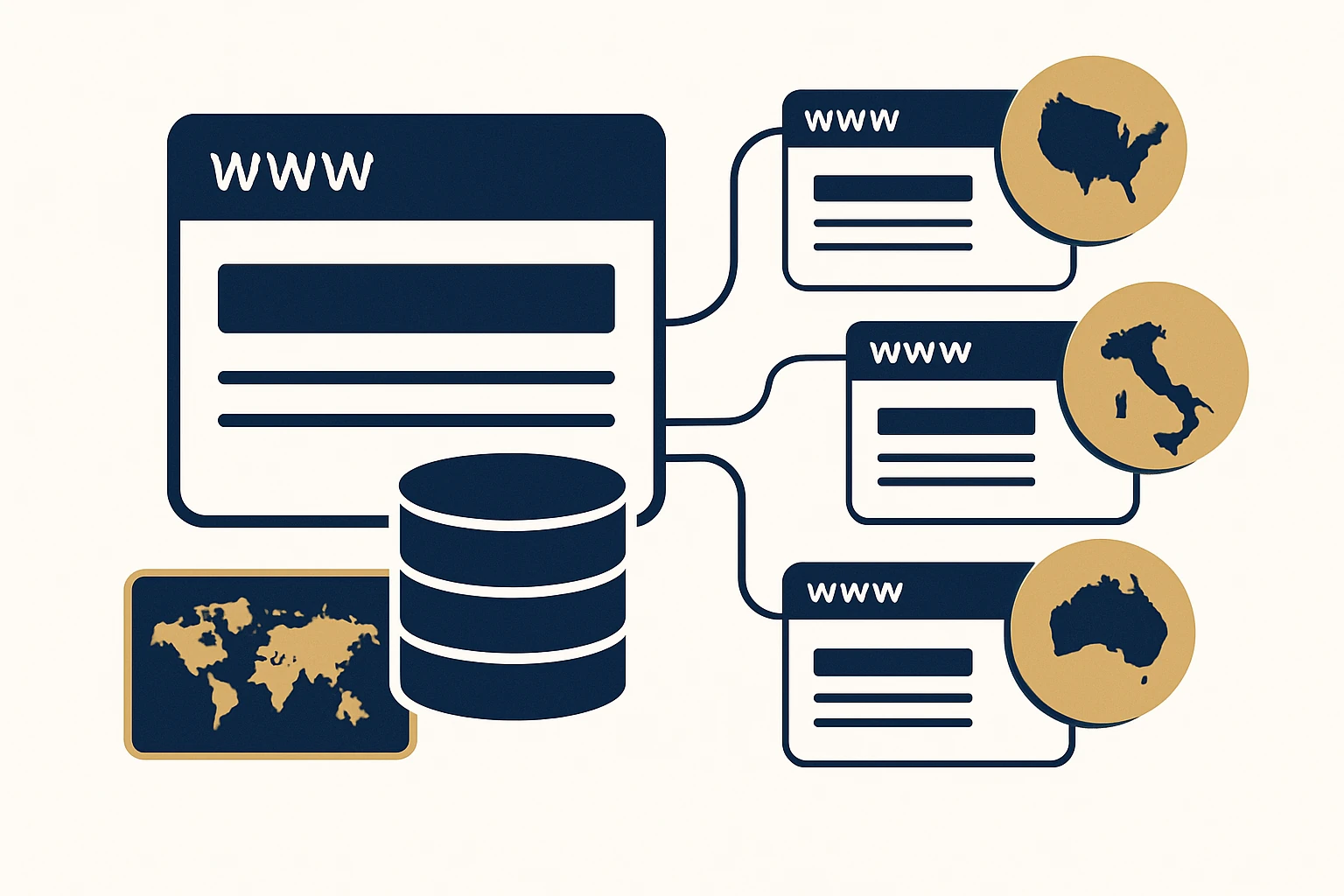
Turning the concept into a usable asset requires a clear data schema and a repeatable process. A practical country-by-country website list should capture both macro-market dynamics and micro-domain realities so it can guide strategic acquisition, risk assessment, and ongoing governance. The following data elements form a robust baseline:
- Country name and ISO code - the linguistic and regulatory context for the market.
- ccTLD(s) in use - the primary country suffix and any widely used regional variants.
- Existing brand footprint - whether the brand already has a presence or competitors dominate the market.
- Domain availability and premium inventory - what is open for purchase, what is held by others, and where premium assets exist.
- Regulatory and content requirements - local privacy laws, content localization norms, and any restrictions on foreign ownership or registration.
- Strategic value and risk indicators - potential ROI, market importance, and legal/trademark exposure in that jurisdiction.
- Data sources and verification status - which public registries, RDAP/WHOIS checks, and trademark databases were consulted.
To keep this list usable at scale, assign an owner for each country, set a cadence for updates, and align the data with your broader brand governance model. This ensures the country-by-country website list remains actionable and not merely a data dump.
Data sources and data quality
Building a credible country-by-country website list hinges on reliable, verifiable data. The core sources to anchor the database include:
- IANA Root Zone Database for official ccTLD status and delegation, which confirms which jurisdictions control specific country codes and how they’re managed. IANA Root Zone Database.
- ICANN and ccNSO documentation for policy context and governance of ccTLDs, which helps determine potential regulatory constraints and governance changes. ccNSO FAQs.
- RDAP & WHOIS verification to confirm current ownership and registrant data, supporting a confidential, accurate acquisition posture. The client’s RDAP & WHOIS database is a practical resource for this step. RDAP & WHOIS Database.
- Trademark and dispute risk data from WIPO UDRP statistics, which help calibrate risk when considering country- or ccTLD-based acquisitions. WIPO Domain Name Disputes 2024 and WIPO 2025 Domain Name Statistics.
These sources collectively support a disciplined approach: you’re not guessing which country domains to pursue, you’re making evidence-based decisions that reflect governance, market dynamics, and risk exposure. For organizations with a global domain strategy, this disciplined sourcing helps prevent costly missteps and aligns with best-practice brand protection standards.
Integrating with premium domain brokerage: a practical framework
The value of a country-by-country website list multiplies when it’s integrated with an experienced premium domain brokerage and digital asset advisory capability. The database informs prioritization, negotiation strategy, and portfolio governance, while a trusted broker can manage confidential acquisitions and complex deal terms. In practice, you can use the country-by-country list to:
- Identify high‑value targets in markets where your brand has strategic importance or strong growth potential.
- Assess risk signals tied to each country’s ccTLD, including trademark exposure and regulatory constraints.
- Plan phased acquisitions to balance speed, cost, and integration risk while maintaining brand protection across jurisdictions.
For brands seeking confidentiality and scale, webatla offers a structured approach to country-specific domain acquisitions and portfolio strategy. You can explore a country-by-country view of assets and related services at webatla’s country portfolio list, and access additional domain data resources at RDAP & WHOIS Database. These tools can be used alongside editorial frameworks to drive disciplined, strategic decisions about premium domain acquisitions and asset management.
Beyond the client’s tools, a formal framework for decisions in this space typically pairs data-driven prioritization with an execution plan. In practice, the data informs which markets to target first and how aggressively to pursue premium domains, while the broker coordinates due diligence, licensing, and transfer mechanics under confidentiality constraints. The result is a portfolio that not only protects the brand but also accelerates regional market access and customer trust. For those seeking more depth on ccTLD governance and the broader domain landscape, ICANN and IANA provide foundational context and ongoing policy developments.
For context on the broader dispute landscape, reference the World Intellectual Property Organization (WIPO), which reports steady activity in UDRP-related matters across both gTLDs and ccTLDs. This trend reinforces the importance of a robust, country-aware domain strategy as part of a comprehensive brand protection program. WIPO Domain Name Disputes 2024 and WIPO 2025 Domain Name Statistics.
Limitations and common mistakes to avoid
Even a well-designed country-by-country website list is not a silver bullet. Being comprehensive is not the same as being actionable, missteps in execution can erode ROI or stall brand momentum. Common pitfalls include:
- Overloading with countries without clear prioritization. A long list is only useful if you can translate it into a phased acquisition plan and budget.
- Ignoring local brand presence or market relevance. A country may have a large digital economy but limited strategic value for your brand if it lacks demand or alignment with your product portfolio.
- Underestimating ongoing costs - ccTLD management, renewals, privacy compliance, and local hosting can accumulate quickly as portfolios scale.
- Failing to account for regulatory constraints - certain markets impose ownership or data localization requirements that affect how you structure and register domains.
- Relying on static data without regular refreshes. The domain landscape shifts as policy, ownership, and market demand change, so governance and update cadences matter.
These limitations underscore the need for governance alongside data. The best outcomes arise from a disciplined process that pairs a trusted broker’s execution capabilities with a refreshed, country-aware database, maintained under a formal policy framework.
Framework: five-step process to build a country website list
To help teams operationalize the concept, here is a concise, repeatable framework you can apply. Think of it as a five‑step cycle that feeds premium-domain decision-making and ongoing governance:
- Step 1 - Define scope: determine which countries and ccTLDs matter for your brand, considering regional strategy, product lines, and regulatory risk.
- Step 2 - Gather baseline data: compile country name, ISO code, ccTLDs, market indicators, and existing brand footprints. Capture both public registry data and current ownership signals via RDAP/WHOIS where available.
- Step 3 - Validate data quality: cross-check with multiple sources (IANA, ICANN, WIPO) to confirm governance status, ownership, and risk signals. Flag discrepancies for review.
- Step 4 - Prioritize for acquisition: rank opportunities by strategic value, brand protection risk, and total cost of ownership. Build a phased acquisition plan with clear milestones.
- Step 5 - Establish governance and maintenance: assign owners, set review cadences, and align with brand protection and portfolio-management protocols to keep the database accurate over time.
When executed with discipline, this framework turns a sprawling set of country codes into a manageable, strategic asset. It helps you answer practical questions, such as which markets deserve a premium-domain focus versus which markets can be addressed through brand protection and monitoring rather than immediate acquisitions.
Conclusion
In the global digital economy, a country-by-country website list is more than a catalog, it is a strategic instrument for disciplined growth, risk management, and brand integrity. By anchoring decisions in reliable data sources - ccTLD governance from IANA and ICANN, ownership verification via RDAP/WHOIS, and trademark risk insights from WIPO - brands can design a viable, scalable path to premium domain acquisitions and portfolio governance. The framework outlined here is intentionally pragmatic, designed to be adopted by in-house teams and by premium domain brokers who recognize that confidentiality, efficiency, and strategic alignment must go hand in hand.
For practitioners seeking to operationalize these concepts within a subscription-ready workflow, webatla provides country-focused data and secure acquisition capabilities that align with the approach described above. Explore the country list at webatla's country portfolio list, and leverage their RDAP/WHOIS data resources at RDAP & WHOIS Database to inform confidential negotiations and portfolio strategy. This integration helps ensure that premium-domain decisions are both data-driven and brand-aligned, across markets and time.