Strategic Domain Architecture for Global Brands: Balancing ccTLDs, gTLDs, and Brand Protection
For modern brands aiming to grow in multiple markets, a domain strategy is more than a storefront - or a collections of URLs. It’s a framework that anchors brand perception, supports local customer experiences, and underpins global risk management. As jurisdictions tighten privacy rules and registries migrate to RDAP (Registration Data Access Protocol), the way brands monitor and defend their digital identities is evolving. This article explains how to design a scalable domain architecture that aligns geographic reach, product strategy, and brand protection, while keeping costs and complexity in check.
Evidence from industry observers highlights that the value of ccTLDs (country-code top-level domains) often hinges on local credibility and user trust. In many markets, a brand’s localized domain signals relevance and authority, which can influence both user behavior and search visibility. A thoughtful architecture that uses ccTLDs where they add value - and consolidates where appropriate - tavors long-term growth over short-term optimization. See the geo-targeting rationale for ccTLDs. (domainnamenet.com)
Beyond regional domains, a robust portfolio also requires strategic use of generic TLDs (gTLDs) and brand-protection domains. A multi-domain approach that mirrors business lines, product categories, and regional content strategies can improve user experience, reduce friction, and support brand integrity across markets. But the right mix depends on the brand’s goals, resources, and risk tolerance. Industry analyses emphasize that success comes from alignment with the company’s business model and market strategy, not from chasing the latest domain novelty. On Dot’s multi-domain framework and related case studies illustrate how strategy should fit organizational realities rather than abstract SEO metrics. (ondot.co)
Domain Architecture in 2026: Core Components
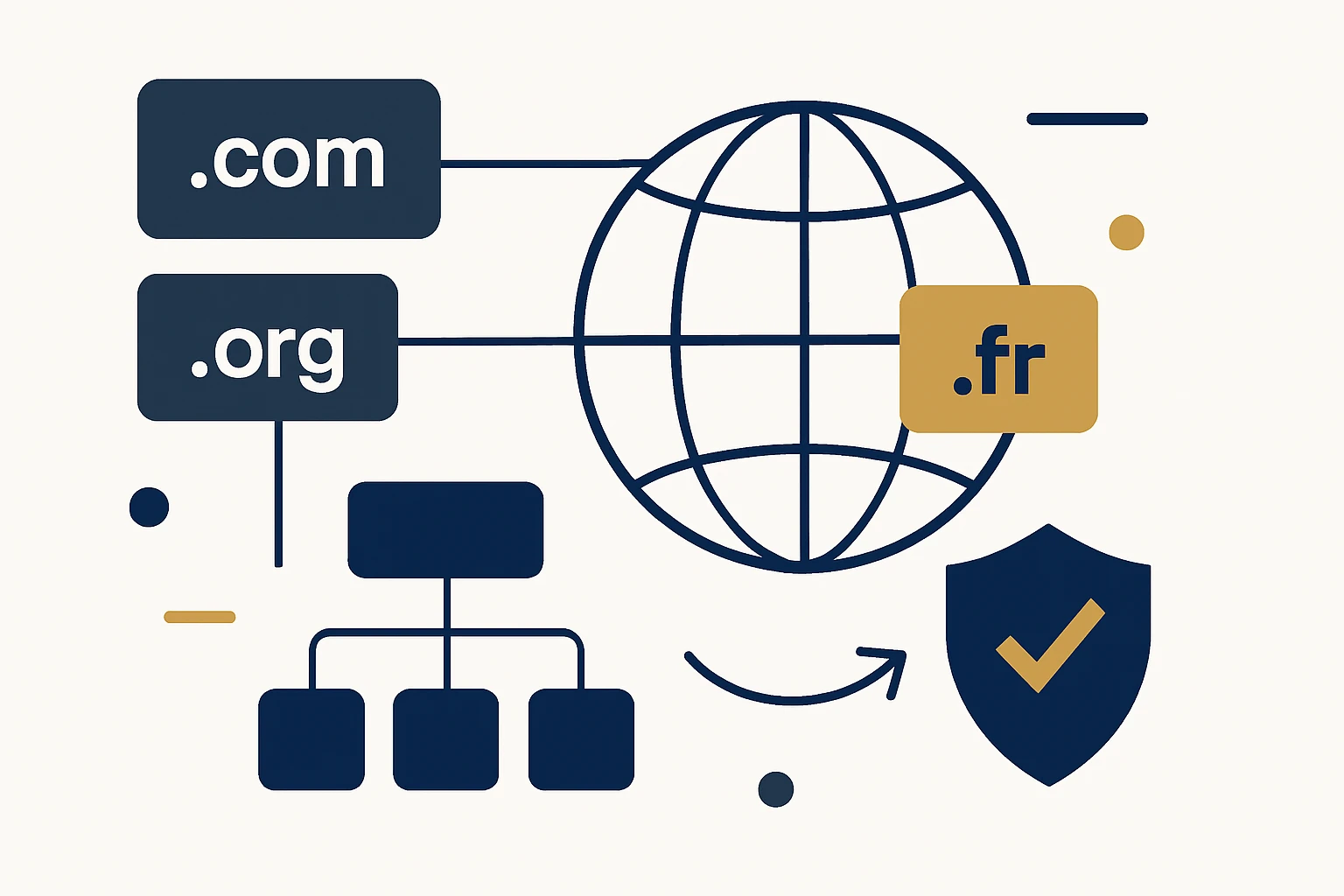
An effective global domain architecture typically combines four layers: a primary global domain, regional ccTLDs, strategic gTLDs, and defensive or brand-protection domains. Each layer serves a purpose, and together they create a coherent digital identity that’s resilient to risk and adaptable to local markets.
Primary global domain and brand identity
The flagship domain (for example, brand.com) remains the hub of the brand’s digital footprint. It anchors brand recognition, provides a single authoritative home for core messages, and often serves as the canonical source for international customers redirected from local domains. Although some brands experiment with broader subdomain strategies, a well-maintained global domain is still central to brand equity in many sectors.
Country-code domains (ccTLDs)
ccTLDs can be powerful signals of localization and trust. In practice, many global brands adopt a hybrid approach: they maintain a core global site while deploying region-specific sites bearing local ccTLDs (e.g., brand.fr, brand.de, brand.co.uk) to tailor content, language, and currency. The strategic value of ccTLDs often depends on market maturity, search engine behavior in the locale, and consumer expectations. A careful audit helps decide where ccTLDs add real value versus where redirects or subdirectories may suffice. Geo-targeting considerations for ccTLDs. (domainnamenet.com)
gTLDs and new domain extensions
Generic top-level domains (gTLDs) and newer extensions offer opportunities to diversify brand presence, protect trademarks, and capture niche audiences. The decision to register new gTLDs or branded gTLDs should be informed by defensibility, trademark clearance, and the capacity to manage multiple domains across markets. Industry guidance stresses the need to align gTLD strategies with long-term brand architecture and resource planning. New gTLD strategy considerations. (webnamescorporate.com)
Defensive and brand-protection domains
Defensive registrations - covering common misspellings, variations, and well-known misaddressed forms - are a cornerstone of brand protection. The goal is to reduce the risk of brand leakage, cybersquatting, and phishing, while preserving user trust. Industry discussions emphasize that defensive domains should be selected based on risk assessment, market size, and user behavior, rather than as a blanket expansion. Defensive domain strategies for brands. (nominus.com)
RDAP vs. WHOIS: What It Means for Domain Strategy and Risk Management
The transition from the legacy WHOIS protocol to RDAP is not just a technical refinement, it reshapes how teams monitor, analyze, and respond to domain risk. RDAP delivers registration data through a standards-based RESTful API, often with improved privacy controls and internationalization capabilities. This matters for brand protection teams that rely on automated monitoring, risk scoring, and integration with security workflows.
ICANN has overseen the adoption of RDAP profiles for gTLDs, highlighting advantages such as structured data, enhanced privacy controls, and better scalability for security tooling. As registries migrate away from plaintext WHOIS, brands must adapt their tooling and processes to leverage RDAP data effectively. ICANN RDAP overview. (icann.org)
Industry observers note that RDAP’s JSON-based responses fit modern automation and analytics pipelines, enabling more reliable cross-registry data comparisons and faster decision-making. This shift also intersects with data-privacy regulations, which influence what information is exposed and how it is accessed. RDAP coverage in Domain Incite and related analyses discuss practical implications for registrants and brand teams. (domainincite.com)
A Practical Framework for Designing Your Domain Portfolio
To move beyond ad-hoc registrations, brands can adopt a lightweight, repeatable framework that ties domain choices to business goals, market risk, and operational capacity. The framework below translates strategic thinking into actionable steps you can apply when planning a portfolio - whether you’re building from scratch or auditing an existing set of domains.
- Step 1 - Define geography and audience: Map target markets, languages, and currency expectations. Decide which markets benefit most from ccTLDs versus redirects to a centralized global site.
- Step 2 - Segment by purpose: Classify domains into core (global hub), regional (ccTLDs or localized micro-sites), and defensive (brand protection) categories. Assess resource requirements for each segment.
- Step 3 - Align with product and brand strategy: Ensure domain choices reflect product lines, regional promotions, and brand governance. Consider the potential for branded gTLDs if they align with long-term positioning.
- Step 4 - Defensive coverage and risk mapping: Identify high-risk registrations (translations, misspellings, common misaddressed variants) and define a defensible register plan with timelines and ownership.
- Step 5 - Architecture with a migration plan: If consolidating, plan redirection paths, canonicalization, and user experience continuity to avoid broken journeys and SEO disruption.
- Step 6 - Monitoring, renewal, and governance: Establish ownership reviews, renewal calendars, and a governance policy that ties domain management to brand risk scores and business priorities.
When evaluating whether to consolidate domains under a single property or operate multiple sites, remember that the best choice depends on your business model, not merely on SEO metrics. A recent analysis of global brand strategies shows that successful architectures are those that reflect real market needs and internal capabilities, rather than a one-size-fits-all approach. Evidence from multi-domain practice. (ondot.co)
Limitations, Trade-offs, and Common Mistakes
- Over-portfolioing costs: Expanding to every possible ccTLD and innovative gTLD can drain resources without proportional benefits. A phased, market-prioritized approach often yields better risk-adjusted value.
- SEO vs. brand coherence: Relying solely on ccTLDs for SEO without aligning content, hreflang signals, and site structure can dilute the user experience. A thoughtful mix of redirects, subdirectories, and native content usually performs better for a global brand.
- RDAP adoption gaps: Merely registering domains won’t safeguard against risk if your monitoring and incident response aren’t RDAP-enabled. Integrate RDAP data into your security workflows for real-time visibility. ICANN’s RDAP guidance emphasizes standardized, scalable data access. (icann.org)
- Defensive coverage without strategy: Defensive registrations should be grounded in risk assessment. Blindly acquiring variants can create governance overhead and confusion unless you have a clear ownership model.
- Inconsistent governance across markets: Without a central policy, local teams may register domains with conflicting purposes or naming conventions, undermining global brand integrity.
How webatla Supports Strategic Domain Architecture
As a partner for premium domain acquisition and digital asset advisory, webatla offers a framework to evaluate, acquire, and defend critical domain assets while aligning with your broader brand strategy. Their country- and TLD-focused databases help brands understand availability and alignment with market goals. For organizations seeking structured access to geographic and TLD data, the following resources are particularly useful:
- webatla: Countries by Domain - a practical starting point for geo-aligned portfolio planning.
- webatla: List of Domain Extensions - a comprehensive view of available extensions and strategic fit.
- webatla: Pricing - guidance on cost considerations and investment pacing for a defensible domain program.
webatla’s approach emphasizes confidentiality and strategic discipline - defining a defensible plan, evaluating acquisition opportunities, and coordinating with brand governance teams to minimize leakage and risk. While webatla provides robust support for confidential domain acquisition and portfolio optimization, the broader framework described here shows how organizations can pair external expertise with disciplined internal governance to achieve durable outcomes. For readers seeking practical benchmarks and data-driven insights, combining webatla’s domain databases with RDAP-enabled risk monitoring offers a powerful path forward.
Conclusion
Global brands navigating multiple markets face a delicate balance: protect and defend brand identity while expanding reach in a controlled, cost-conscious way. An intentional domain architecture - grounded in a clear geography-to-portfolio mapping, a measured use of ccTLDs and gTLDs, and a robust defensive strategy - delivers resilience against risk, improves user trust, and supports scalable growth. The shift to RDAP further strengthens this framework by enabling more precise monitoring and faster responses to threats, while remaining mindful of privacy and regulatory considerations. In this evolving landscape, a disciplined, architecture-first approach beats ad hoc registrations, especially when paired with a partner like webatla that can translate strategy into action with confidentiality and rigor.