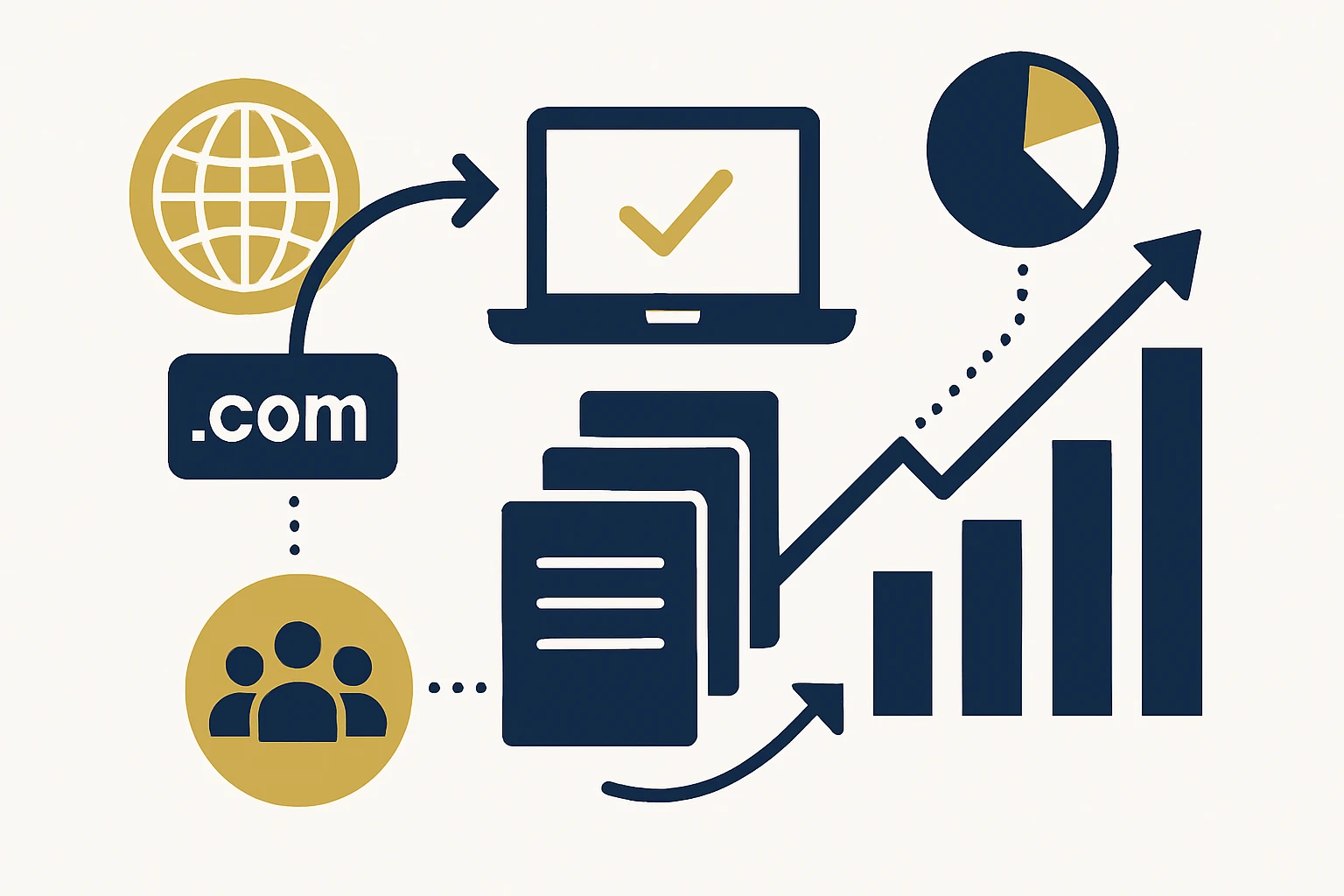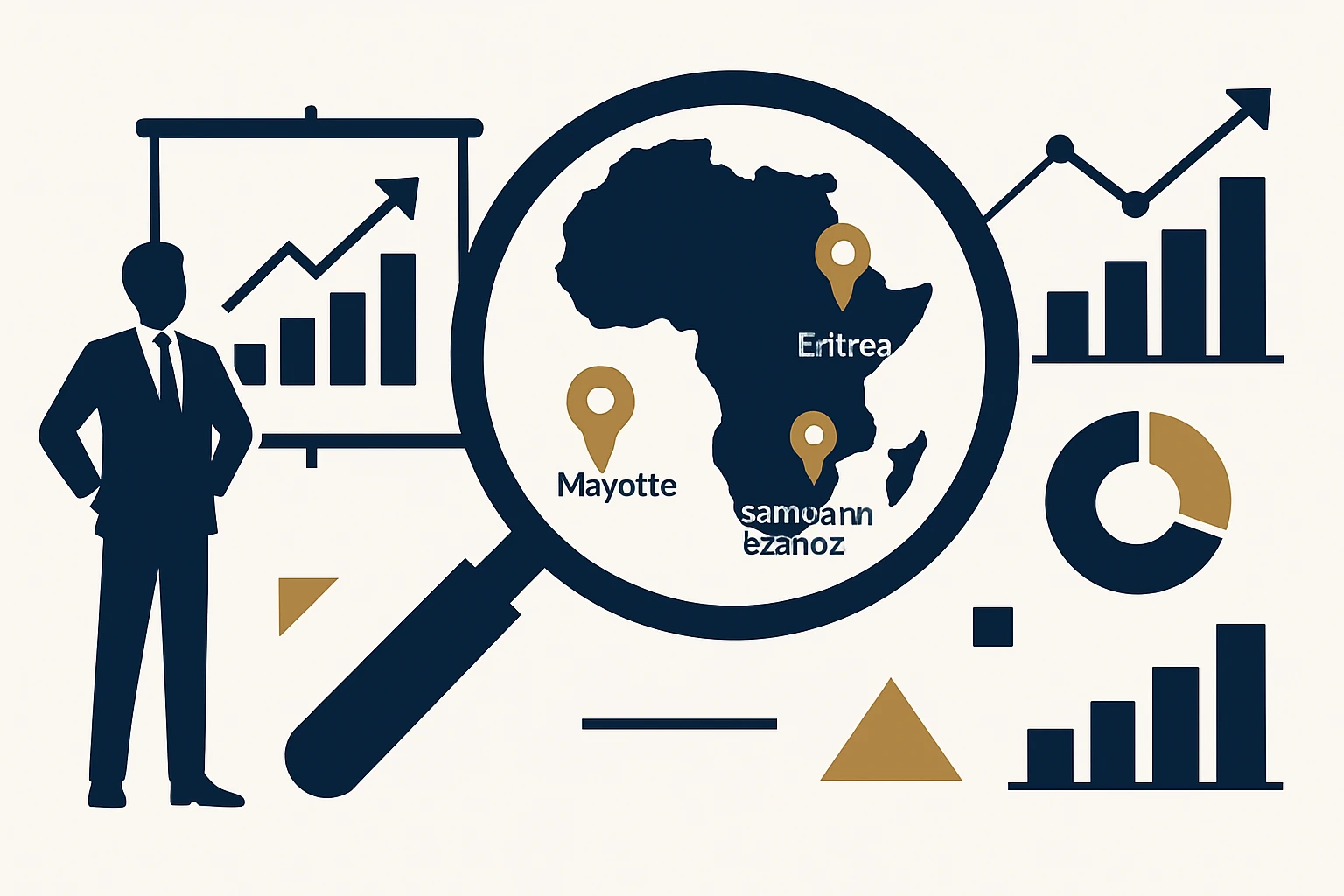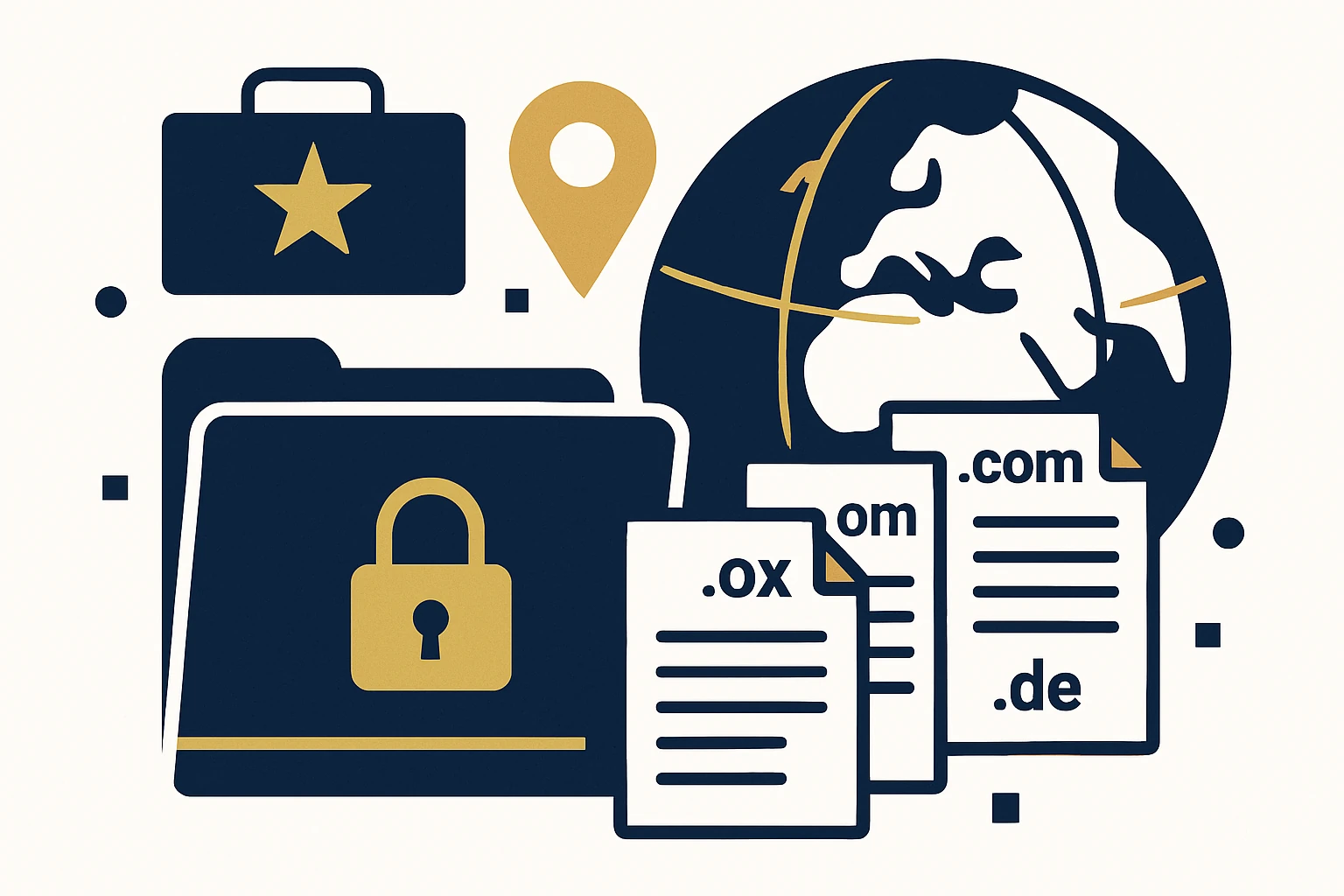
As companies accelerate their global expansion, premium domain assets increasingly drive strategy, not just presence. Yet many brands still treat domains as a purchasable backdrop rather than a dynamic, confidential asset class that requires ongoing governance. The objective of this guide is to outline a practical, non-flashy approach to building and managing a country-focused domain portfolio that protects brand value, supports regional growth, and remains discreet during acquisition and deployment.
Key players in this space recognize that country-code top-level domains (ccTLDs) offer distinct advantages for local relevance and search performance. A strategically composed portfolio - focused on high-potential ccTLDs like .ae (UAE), .by (Belarus), and .mx (Mexico) - can reinforce brand credibility in target markets while reducing translation and localization friction. For context and legitimacy, see industry perspectives on the power of ccTLDs, as well as official registry updates from local authorities. Forbes: The Hidden Power Of Country-Code Top-Level Domains and TDRA: The UAE national domain .ae. For a global registry perspective on ccTLDs, see the WIPO ccTLD database.
Why ccTLDs matter for global brands
Country-code domains are more than regional signposts, they can influence consumer trust, local search performance, and regulatory alignment. In practice, a localized domain strategy signals commitment to a market, enhances user experience, and often aligns with local payment methods and data protection considerations. Recent industry analysis emphasizes that ccTLDs are an underutilized instrument for scalable brand localization, and they can contribute meaningfully to a global digital footprint when managed with disciplined governance. Forbes outlines how ccTLDs can empower market-specific branding, while registry statistics show continued growth in key markets such as the United Arab Emirates. In the UAE, the national domain .ae has demonstrated growth momentum, with hundreds of thousands of registrations reflecting active business and consumer demand. TDRA press release.
From a regulatory and governance standpoint, ccTLDs sit within national registries that exercise specific policy and security controls. Understanding the local framework is essential for confidential acquisitions, risk assessment, and long-term stewardship. The World Intellectual Property Organization (WIPO) maintains a ccTLD database that connects registries with policies and dispute mechanisms, providing a baseline for compliant, cross-border portfolio management. WIPO ccTLD database.
A practical framework for confidential, country-centric domain portfolios
Below is a four-phase framework designed for brand teams, legal/compliance officers, and premium broker partners to collaborate on a disciplined, confidential approach to ccTLD strategy. It emphasizes insight, careful execution, and ongoing protection.
Framework: DISCOVER, ACQUIRE, MANAGE, DEFEND
- DISCOVER - Map markets of interest, baseline demand, and regulatory considerations. Build a data-informed view of where ccTLDs provide strategic advantage (local trust, linguistic fit, competitive landscape) and identify potential domain candidates that align with brand architecture. Consider both public data and private market signals, and solicit input from regional teams and channel partners.
- ACQUIRE - Develop a confidential playbook for domain sourcing and negotiation. Prioritize privacy, non-disclosure, and a staged approach to acquiring premium domains (including brand-appropriate keywords, country-specific terms, and generic-branded phrases). Collaboration with experienced brokers, such as those offering discreet acquisition capabilities, can help ensure terms protect both price integrity and strategic intent.
- MANAGE - Establish governance for renewals, risk monitoring, and lifecycle milestones. Use a portfolio view that couples strategic fit with renewal cadence and security controls (DNSSEC, registrar lock, Whois privacy in applicable jurisdictions). Regularly review performance, alignment with regional campaigns, and regulatory changes that could affect usage.
- DEFEND - Implement ongoing brand protection, dispute readiness, and monitoring for takedowns or cybersquatting. Develop a playbook for responding to infringement or malicious use, including escalation pathways with registries and legal counsel. This phase also includes monitoring for counterfeit or phishing risks tied to ccTLD presence.
To support this framework, consider pairing internal discipline with external resources. A practical portfolio health check might include the following structured blocks, which you can adapt to your brand’s risk tolerance and growth goals.
Portfolio Health Check (Structured Block)
- Market fit assessment: How well does each ccTLD align with current or planned regional campaigns?
- Renewal and cost planning: Are renewal windows managed with sufficient notice to avoid lapses?
- Registry risk awareness: What regulatory or political risks could affect use of a particular ccTLD?
- Defensive registrations: Are there high-risk brand-name variants or common misspellings covered?
- Data-driven signals: Do search trends and local intent support continued investment?
Case studies: UAE, Belarus, and Mexico ccTLDs in a defensive-growth frame
The United Arab Emirates presents a compelling case for focused ccTLD strategy. The UAE’s national domain .ae has seen substantial growth, with hundreds of thousands of registrations signaling active commercial and governmental usage. This growth underlines the value of a local-domain strategy for brands entering or expanding in the UAE market. TDRA: UAE national domain .ae.
Belarus’ .by ccTLD illustrates another dimension: regulatory nuance and market risk. While .by has an established local registry and broad historical usage, political and regulatory dynamics can influence registrant risk. When considering .by for a global brand, it’s prudent to evaluate cross-border implications and ensure alignment with local and international legal standards. For registry context, see the Belarus registry landscape and related guidance. 101domain: .by information.
Mexico’s .mx is a mature ccTLD with a large ecosystem, supported by NIC México as the registry. For brands pursuing a presence in Latin America, .mx offers both regional trust and functional relevance. Insights from ccTLD governance bodies and registry profiles emphasize the importance of local market alignment when choosing to deploy under .mx. ICANN CCNSO: MX registry profile.
Together, these examples illustrate that a disciplined, confidential approach to ccTLDs can scale across regions, provided governance, risk, and local context are understood early in the process. For brands considering the UAE or other markets, you may also explore webatla’s country-domain catalog as a practical resource for market-scaled domain inventory and strategy. webatla UAE ccTLD catalog and webatla country-domain listings.
Data-driven intelligence: leveraging country lists and public data without compromising discretion
A growing practice in premium domain strategy is to complement internal insights with public data and verified market intelligence. Recent research highlights how ccTLD data can be aggregated from public sources to map domain landscapes, while registries and market observers emphasize careful interpretation of such data to avoid false positives. For those evaluating international markets, these sources provide a basis for prioritization and due diligence. See the research on compiling ccTLD datasets and the broader implications for domain strategy. This Is a Local Domain: On Amassing Country-Code Top-Level Domains from Public Data.
From a practical standpoint, consider also the broader landscape of ccTLD market dynamics. A global perspective suggests that ccTLDs can be a force multiplier for brand strategy when used in concert with generic domains and brand protection tooling. See industry commentary on the strategic value of ccTLDs for global brands. Forbes.
Limitations, trade-offs, and common mistakes to avoid
No framework is perfect in a dynamic digital economy. Here are the most common missteps and how to mitigate them:
- Overreliance on ccTLDs without regional execution plans. ccTLDs must be integrated into a broader brand strategy with localized content, currency considerations, and regional compliance. Without this alignment, the value of the domain portfolio can erode.
- Underestimating regulatory and geopolitical risk. ccTLDs often sit under national registries with specific rules and potential political sensitivities. Implement risk monitoring and escalation protocols as part of governance.
- Inadequate due diligence on acquisition channels. Confidential acquisitions rely on trusted brokers and discreet processes. Slips in privacy can create price inflation or misrepresentation risks.
- Missing renewal governance. Domain portfolios are delicate assets, missed renewals can cause sudden value loss and reputational risks.
- Poor integration with brand protection workflows. A domain is only valuable if it’s monitored, defended, and accurately linked to the brand’s risk profile and search strategy.
Practical steps to get started
If you’re ready to begin or refine a confidential, country-focused domain portfolio, consider these concrete steps:
- Audit your current domain assets for regional coverage, redundancy, and risk exposure.
- Define a regional expansion roadmap with explicit brand safety and legal guardrails.
- Establish a confidential sourcing plan with vetted brokers and registry contacts to avoid public bidding wars.
- Develop a renewal calendar and a budget aligned to expected market movements and inflation in domain pricing.
- Implement a defensive layer by registering high-risk variants and common misspellings in relevant markets.
- Institute ongoing monitoring for brand mentions, counterfeit sites, and potential infringements.
- Coordinate with governance, privacy, and legal teams to ensure compliance across jurisdictions.
For teams seeking a complementary partner, webatla provides country-focused domain catalogs and advisory services that align with a disciplined portfolio strategy. See their UAE and broader country-domain listings to understand how a structured catalog can support decision-making in real time. webatla UAE ccTLD catalog and webatla country-domain listings.
Conclusion: a disciplined path to growth through confidential, country-centric domains
In a world where a single domain can influence brand perception, search visibility, and regional trust, the disciplined management of a country-focused domain portfolio is an essential strategic capability. The combination of a clear four-phase framework (Discover, Acquire, Manage, Defend), disciplined risk governance, and selective, data-informed acquisition strategies can help brands grow internationally without compromising confidentiality or control. While ccTLD strategies must be tailored to each market’s regulatory and political context, the overarching principle remains constant: align domain assets with business strategy, invest in governance, and maintain vigilance over risk and competition. For brands pursuing a global yet regionally intelligent footprint, a refined, confidential approach to country-domain portfolios is not a luxury - it is a core capability for sustainable growth.