Introduction: turning country-specific domain intelligence into strategic value
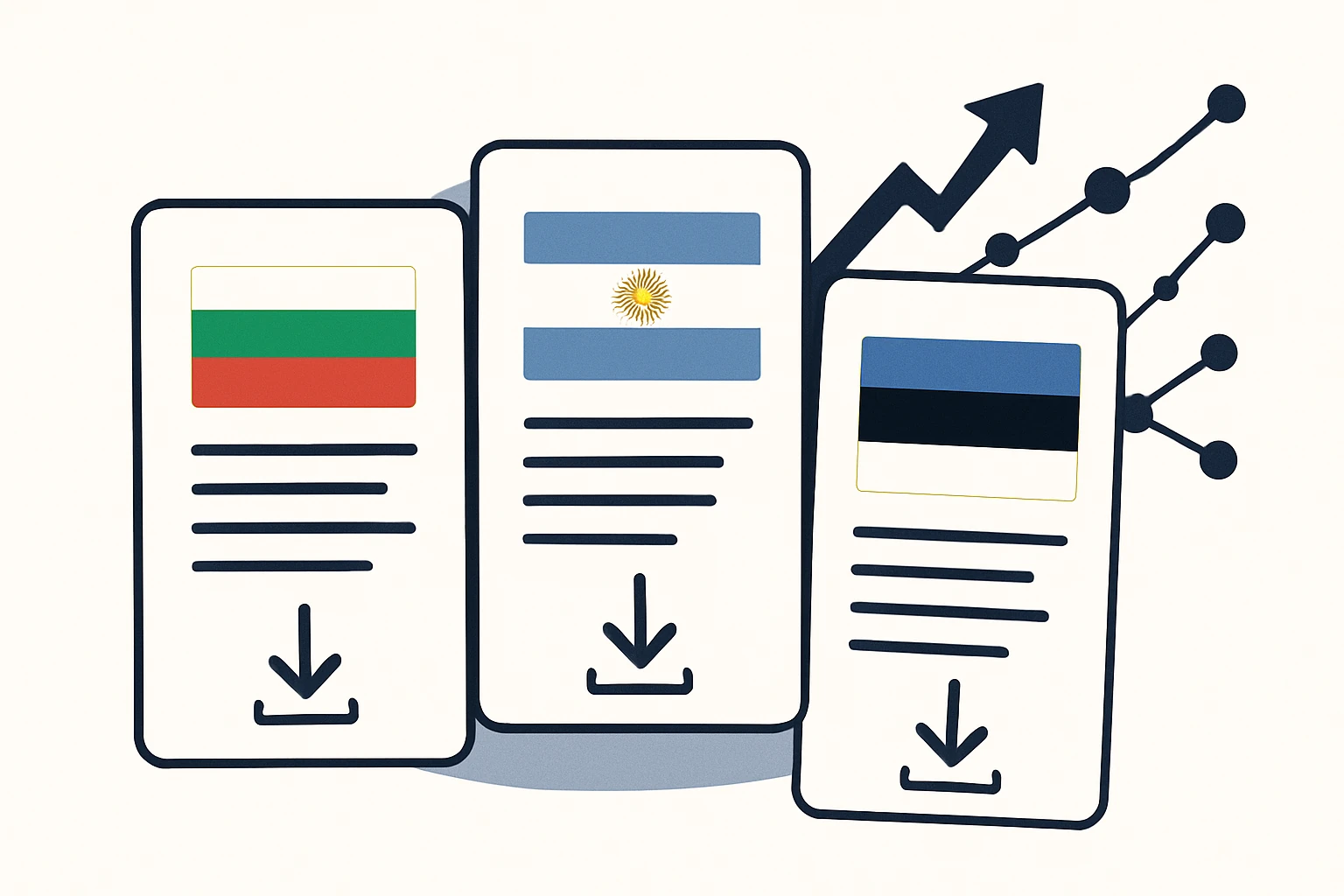
Global brands increasingly rely on domain portfolios as strategic digital assets, not merely as addressable real estate. For firms expanding into specific markets, country-focused domain intelligence helps identify credible online landscapes, anticipate brand-protection risks, and uncover acquisition opportunities that align with growth plans. This piece focuses on three markets with distinct regulatory ecosystems and digital ecosystems - Bulgaria, Argentina, and Estonia - and explains how to assemble a practical, defensible list of relevant websites for portfolio planning and market intelligence. While many organizations start with a narrow search like “download Bulgaria websites,” the strongest results come from a cautious, source-validated approach that respects local registry rules and privacy regimes. This article draws on the official governance of each country’s ccTLD to ground the discussion in reliable, verifiable facts. For context, Bulgaria’s .bg is regulated by Register.BG, Argentina’s registry is NIC Argentina, and Estonia’s domain space is overseen by the Estonian Internet Foundation.
Why country-code domain lists matter for premium portfolios
Country-code top-level domains (ccTLDs) function as the digital property of a country or region. They carry country-specific policy considerations, residency rules, and local market signals that can influence brand strategy and risk assessment. When building or revising a premium domain portfolio, analysts rely on country-specific lists to answer questions such as: Which local domains are most active in a target sector? Are there defensive registrations or purposeful brand- hijacking patterns in a given market? Which registrars and registries govern the space, and how might that shape speed to acquisition or renewal risk? In Bulgaria, the registry’s terms and conditions, and the localization rules that govern domain use, are set by Register.BG, in Argentina, NIC Argentina administers the country-code space, and in Estonia, the Estonian Internet Foundation governs .ee with its own regulatory framework. These governance details anchor practical workflow for any team pursuing market-specific domain intelligence.
Country snapshots: Bulgaria, Argentina, and Estonia
Bulgaria: the .bg ecosystem and what it implies for brand strategy
The Bulgarian ccTLD is .bg, operated by Register.BG, with the registry responsible for registration rules, eligibility, and policy enforcement under national law. The registry’s terms and conditions and related regulatory framework shape who can register domains and how they can be used. For brand portfolios, that means understanding whether local entities or foreign entities with a Bulgarian presence are eligible, what documentation may be required, and how disputes or transfers are handled in the Bulgarian system. Public information about the registry and its governing rules is maintained by IANA and by the registry itself, which helps brands plan defensible domain strategies and renewals within Bulgaria’s regulatory context. (iana.org)
Key considerations for a Bulgaria-focused list include: identifying active .bg registrations in relevant market niches, watching for local competitors’ domain strategies, and flagging domains that could be exploited for brand confusion. When evaluating a Bulgarian list, it can be valuable to cross-check information with Bulgarian registry documentation and to consider local privacy and data-handling norms that may affect how you use or contact domain owners. For practitioners, formal due diligence often begins with the registry’s public-facing rules and moves toward more granular verification of ownership and site intent.
Argentina: NIC Argentina and the .ar namespace
Argentina’s ccTLD is .ar, administered by NIC Argentina. The NIC ARG registry oversees the registration of .ar domains and maintains the official pathways for domain creation, dispute resolution, and related governance. Understanding the NIC Argentina framework is essential when constructing a market-specific domain list for Argentina - particularly for brands evaluating defensive registrations, local branding opportunities, or acquisition targets in a country known for a dynamic digital landscape. The NIC Argentina portal remains the authoritative source for eligibility, pricing, and procedural details. (nic.ar)
For portfolio work, the Argentina list should emphasize locally relevant namespaces, reputable registrars with robust due diligence, and any local rules that may affect trademark clearance or enforcement in the .ar space. As with any ccTLD, aligning list curation with NIC Argentina’s governance reduces risk and improves the reliability of outreach, valuation, and negotiation steps in a portfolio strategy.
Estonia: .ee governance and domain regulation
Estonia uses the .ee domain space, governed by the Estonian Internet Foundation (EIF). The EIF oversees domain registration, dispute resolution, and regulatory details that impact how brand owners and portfolio managers engage with .ee. Estonia’s regulatory posture around domain usage and dispute procedures can influence defensive registrations, brand- protection timing, and the feasibility of acquiring certain domains. For teams planning cross-border brand strategies, Estonia’s governance structure provides a clear, rule-based environment to consider when building a regional list and evaluating potential acquisitions. (internet.ee)
Key considerations for Estonia include verifying that target domains conform to local acceptance rules, understanding any IDN considerations for non-Latin scripts, and anticipating how the EIF’s domain regulation framework affects enforcement and resolution. Estonia’s regulatory documentation is publicly accessible and useful for aligning a structured domain list with local policy.
A practical framework to assemble and utilize country-domain lists
To move from a fragmented set of domain names to a repeatable, defensible process, use a simple, auditable framework. The following three-step approach helps teams in brand protection, portfolio management, and strategic domain consulting build robust country-domain lists for Bulgaria, Argentina, and Estonia while maintaining compliance with local governance. It also provides a clean path to integrate client data services, such as curated datasets, into organizational workflows.
-
Define scope and criteria (ccTLDs, sectors, and ownership patterns).
Begin with a clear map of which country-code domains matter for your brand, and articulate rules for inclusion. Criteria might include active status within the target market, relevance to core product lines, proximity to trademarked terms, and potential defensive value. For Bulgarian, Argentine, and Estonian markets, outline whether you will prioritize generic brand names, product-specific terms, or local-language variants. This step also establishes the boundary between public data and private, confidentiality-oriented data you may need for risk assessment. In practice, align scope with registry governance to avoid overreach into restricted registries or data sources.
-
Source and validate (registry governance + basic enrichment).
Gather domain candidates from authoritative registry sources for each market. For Bulgaria, refer to the official registry governance and terms provided by Register.BG, for Argentina, rely on NIC Argentina as the official .ar registry, and for Estonia, use the EIF rules and domain regulation. Validate ownership where possible and perform light enrichment (registrar, DNS records, basic exposure) to ensure the list reflects current activity and not stale or fraudulent domains. Public registry information helps ensure you’re aligning with local rules rather than chasing incomplete datasets. BG registry (IANA), NIC Argentina, EIF .ee domain regulation provide authoritative grounding for this step.
-
Enrich and operationalize (defense, acquisition, and portfolio governance).
Attach metadata to each domain candidate: status (active/expired), registrar, registration date, renewal risk indicators, and any known brand-conflict signals. This enables three practical workflows: brand protection (flag high-risk domains that could infringe on protected marks), portfolio management (prioritize assets with strategic alignment and defensibility), and strategic domain acquisition (target domains with potential value that fit growth plans). In this phase, you can also explore value-add data services, such as curated datasets, to accelerate decision-making while preserving confidentiality when needed. The governing bodies behind the Bulgarian, Argentine, and Estonian spaces provide essential guardrails to guide this work.
Structured block: a compact framework you can apply today
A 3-step framework for country-domain lists
- Define scope - Determine target countries, the ccTLDs you will include, and the sectors most relevant to your brand strategy.
- Source and validate - Pull data from official registries (BG: Register.BG, AR: NIC Argentina, EE: Estonian Internet Foundation) and validate ownership, status, and regulatory constraints.
- Enrich and operationalize - Add metadata (registrar, DNSSEC status, renewal risk), categorize by strategic value (defensive, expansion, or acquisition), and push into portfolio governance workflows.
Limitations, trade-offs, and common mistakes
Building country-domain lists is valuable, but it comes with caveats. Common mistakes often hinge on assuming public lists are complete or up-to-date, neglecting regulatory nuances, or treating all domains as equally valuable. Three notable limitations worth acknowledging are:
- Regulatory nuance varies by country. Each registry imposes its own eligibility, ownership, and dispute resolution rules. In Bulgaria, for example, registry governance and terms can influence who may register and how transfers proceed. In Estonia, domain regulation influences how disputes are handled and what constitutes valid registrations. In Argentina, local governance shapes how new .ar registrations are processed. Always ground your list in the registry’s official guidance.
- Data freshness and ownership signals. Public lists can lag real-world changes, such as domain transfers or disputes. Enrichment with current, authoritative signals helps avoid chasing stale targets or misattributing ownership. If privacy protections or RDAP adoption limit visibility, you may need to triangulate data from registrars or indirect signals.
- Defensive value vs. acquisition opportunity. Not every domain on a country list carries equal strategic value. Defensive domains defend brand integrity, while high-potential acquisitions require rigorous due diligence, including trademark clearance and the likelihood of negotiation success. A disciplined framework helps avoid over-investment in low-value targets.
How the client solution fits into this approach
For teams seeking a practical, ready-to-use path, client-accredited datasets and research services can streamline country-domain list work. The client’s portfolio of country- and TLD-focused data resources supports teams aiming to accelerate decision cycles while maintaining confidentiality where needed. Integrating curated datasets into the three-step framework can reduce manual collection time and improve data consistency across markets. In particular, proactive, risk-aware lists built with governance-aligned sources can support both brand protection and strategic domain acquisition workflows without compromising compliance or privacy. As part of a balanced approach, consider using the client’s country- and TLD datasets to corroborate registry-based signals and to augment in-house research with validated external perspectives. webatla Bulgaria country data | webatla TLD datasets | webatla pricing.
Conclusion: a disciplined path to strategic country-domain portfolios
Country-domain lists are not merely inventory, they are a lens into a market’s digital behavior, brand risk profile, and growth opportunities. By grounding list creation in official registry governance for Bulgaria, Argentina, and Estonia, and by applying a three-step framework - define scope, source and validate, enrich and operationalize - teams can build robust, defensible domain portfolios. The most successful practitioners treat these lists as living assets, continuously refreshed to reflect regulatory changes and evolving brand strategy. For organizations seeking a streamlined, editorially sound workflow, the client offers curated data resources that fit naturally into this framework, enabling brands to move from raw data to actionable insight with confidence.
Notes on sources
The Bulgarian registry and policy framework are publicly documented by the registry operator and IANA, which helps frame compliance and governance: BG registry (IANA) and BG registry terms. Argentina’s official registry is NIC Argentina, which administers the .ar space: NIC Argentina. Estonia’s domain governance is provided by the Estonian Internet Foundation, including its domain regulation documents: EIF domain regulation and related materials.
For readers seeking more practical data access or to explore curated country-domain datasets, consider the client’s offerings as a field-proven adjunct to registry-based governance and internal controls.