Introduction
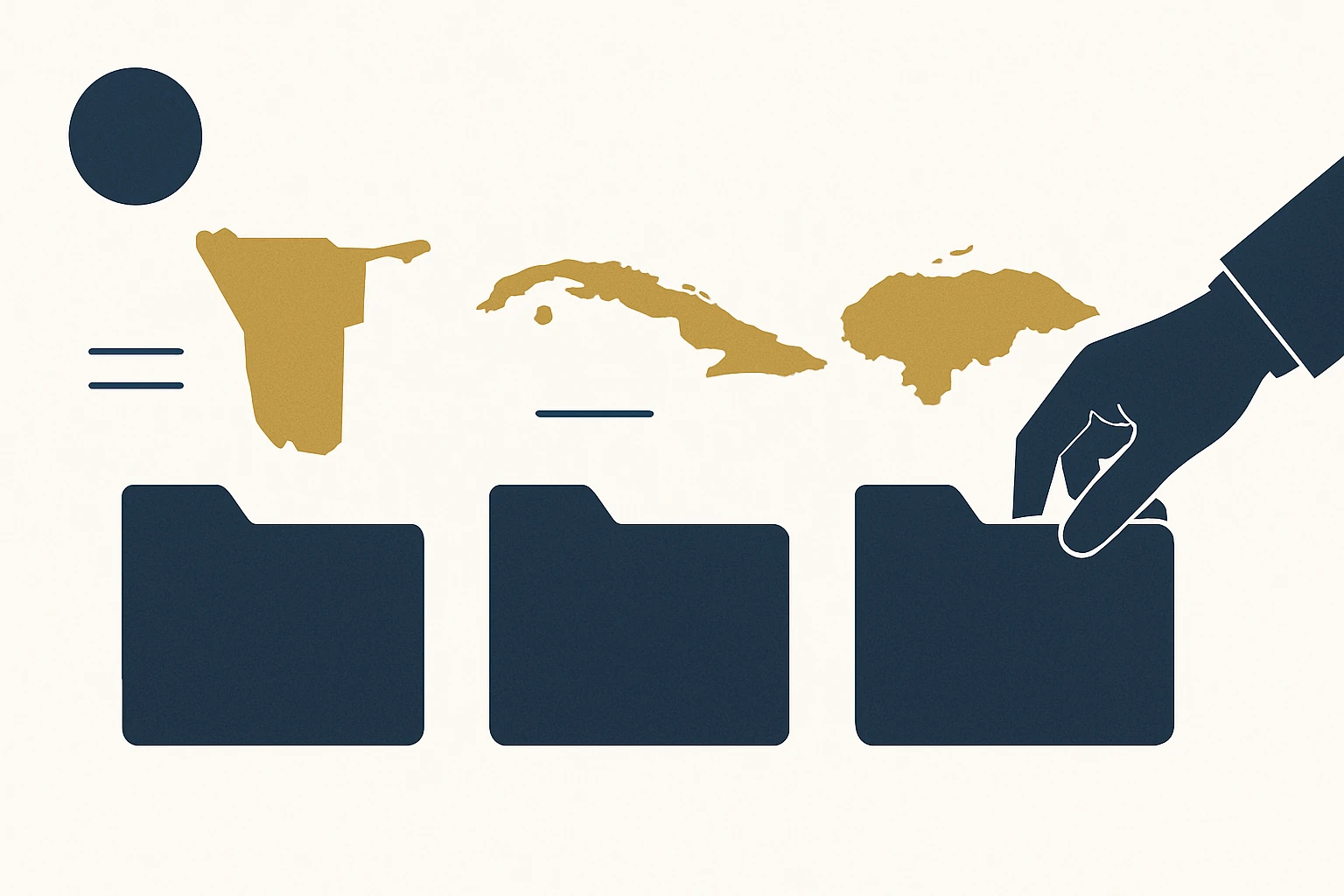
Across global markets, brands increasingly rely on a diversified namespace to protect reputation, accelerate expansion, and reduce risk from cybersquatting or impersonation. Yet the process of acquiring high-value, country-code domains - often privately and discreetly - remains complex. This article offers a practical framework for confidential domain acquisition in three strategically meaningful geographies - Namibia, Cuba, and Honduras - illustrating how to assemble a credible prospect list, assess risk, and execute with discretion. The goal is not merely to buy domains, but to align a portfolio with a brand strategy while safeguarding confidentiality and governance discipline.
From a portfolio-management perspective, the value of ccTLDs extends beyond mere namespace ownership. They signal local presence, support domain-level SEO signals in some markets, and help prevent rivals from gaming search results with nearby alternatives. Industry-leading practices emphasize disciplined governance, risk-aware acquisition, and ongoing portfolio hygiene. For practitioners, the challenge is to translate broad strategy into concrete, executable steps that can be scaled across regions. This article synthesizes registry-facing realities with practical playbooks rooted in confidentiality and portfolio discipline.
As a baseline, consider that the naming ecosystems for Namibia, Cuba, and Honduras each have distinct governance models, technical standards, and access controls. Understanding these nuances is crucial when designing a confidential acquisition program. For example, the .cu namespace (Cuba) is managed by Cuba NIC, with specific eligibility and registration rules that have evolved with regulatory updates. Similarly, Namibia’s .na is overseen by the NA-NiC registry, with its own operational practices, and Honduras’ .hn is administered by the NIC-HN registry under the Red de Desarrollo Sostenible Honduras framework. These governance differences shape every decision from due diligence to negotiation. (iana.org)
Why Emerging Markets Matter for Premium Domain Portfolios
Premium country-code domains offer strategic value for multinational brands seeking regional legitimacy, localized experiences, and brand protection across markets. In practice, a disciplined approach to ccTLD acquisition reduces the risk of brand confusion, blocks competitors from seizing valuable assets, and creates a coherent global namespace that scales with business goals. Research and industry practice consistently highlight that a well-managed domain portfolio supports security, discoverability, and cost efficiency over the long term. In 2025–2026, reputable analyses emphasize governance, lifecycle management, and data-driven evaluation as core pillars of a resilient portfolio. (bigrock.in)
Namibia, Cuba, and Honduras represent meaningful test cases for a confidentiality-first approach because their ccTLD ecosystems illustrate a spectrum of governance and accessibility. Namibia’s NA-NiC registry is a mature, locally governed system with established processes for registration and administration. Cuba’s .cu, operated under the CENIA Internet/CUBA-NIC framework, has specific eligibility rules and regulatory updates that can influence deal timing and feasibility. Honduras’ .hn registry, managed by NIC-HN, has embraced modern data-access protocols (RDAP) and ongoing governance improvements. Each context informs how a broker structures a discreet, compliant acquisition program. (na-nic.com.na)
Data Sources and Data-Centric Due Diligence for Country-Code Domains
Successful confidential acquisitions begin with reliable, verifiable data about a country’s domain namespace. The registry layer - plus independent data sources - helps you map the landscape, avoid missteps, and design a credible pipeline of targets. The following sections summarize credible, registry-level realities for the three case study markets.
- Namibia (.na) – The .na namespace is managed by the Namibian Network Information Centre (NA-NiC), with registry operations and registrar relationships documented by the registry and publicly accessible RDAP interfaces. The NA-NiC registry is the authoritative source for policy, eligibility, and governance in Namibia’s ccTLD space. (na-nic.com.na)
- Cuba (.cu) – The .cu namespace is administered by Cuba NIC (CUBANIC) under the umbrella of the Ministry of Communications governance framework. Registration services are provided by NIC.CU, and policy updates have been published through the Cuba NIC portal. International registries and the IANA root records reflect the registry’s role and evolution. (nic.cu)
- Honduras (.hn) – The .hn namespace is overseen by NIC-HN, operated by the Red de Desarrollo Sostenible Honduras (RDS-HN). The registry provides RDAP access for domain data and maintains policy and service pages that describe registration mechanics and governance. (nic.hn)
Beyond registry pages, industry literature on domain portfolio management and strategic acquisitions informs practical best practices for confidentiality, risk assessment, and ongoing governance. For example, portfolio-management guides underscore the importance of lifecycle tracking, renewal discipline, and clear business-objectives alignment, while expert analyses emphasize disciplined negotiation, risk management, and governance as critical success factors. (bigrock.in)
A Practical Framework for Confidential Domain Acquisition in Namibia, Cuba, and Honduras
Below is a concise, repeatable framework designed to help a brand-led acquisition team build a confidential pipeline around Namibia, Cuba, and Honduras. It translates high-level strategy into concrete steps that can be scaled across other markets while preserving discretion and governance controls.
Framework for Building a Confidential Domain Prospect List
- Define strategic intent and scope – Articulate the business case for each country tier (Namibia, Cuba, Honduras) and establish decision rights, confidentiality requirements, and NDA governance. This anchors the effort in a measurable objective (e.g., protect brand in key markets, preemptively secure relevant namespaces, or support regional campaigns).
- Map the namespace and eligibility – Align country-code domains with your brand strategy. Identify which second-level or third-level domains may be most valuable (e.g., .na for local campaigns, .cu for Cuba-facing properties, .hn for Honduras ventures) and note any registration restrictions or policy changes that could affect feasibility. For Cuba, be mindful of eligibility constraints that govern registration under .cu, as outlined by the registry and IANA records. (iana.org)
- Build a data model for targets – Define fields such as domain name, current registry/registrar, registration status, renewal date, price (if publicly listed), and risk signals (e.g., potential trademark conflicts, typosquatting risk). Establish data capture templates that support confidential handling (minimized exposure, access controls, and NDA-tracked exports).
- Source data from credible registries – Pull verified data from official registries (NA-NiC for .na, Cuba NIC for .cu, NIC-HN for .hn) and supplement with trusted industry resources to triangulate domain ownership status and market context. RDAP endpoints and registry pages are helpful for current registrations and ownership transparency where available. (na-nic.com.na)
- Export and secure the prospect list (procedurally) – Create a structured export (e.g., a spreadsheet or secure data room export) that captures the essential fields while preserving confidentiality. Treat any downloadable export as a controlled artifact, accessible only to authorized team members under NDA, and with clear data-retention policies.
Structured, editor-friendly framing: the above steps create a practical pipeline that can be revisited quarterly, aligned with your portfolio-management cadence. The same framework also supports expansion into additional markets as needed. For practitioners seeking more depth, bench-marking against established domain-portfolio-management playbooks can help spot gaps in governance, renewal discipline, and risk controls. (bigrock.in)
Integrating the Client Perspective: How a Brokered, Confidential Path Works
For brand owners and corporate teams, confidentiality is often as important as the domain asset itself. A professional premium-domain brokerage and digital-asset-advisory partner can provide the scaffold - narrowing risk, expediting due diligence, and preserving discretion during negotiations. In practice, integration looks like:
- Leveraging a broker for private, non-public negotiations on premium namespaces and for structured offer tactics that minimize exposure.
- Coordinating with registries via approved channels to verify eligibility, policy updates, and renewal timelines without broadcasting intent prematurely.
- Providing governance templates (NDAs, data-room protocols, and internal approvals) to keep the process aligned with corporate risk posture.
- Using a vendor with cross-border experience to balance local-market nuance with global brand standards.
As part of a practical, publisher-aligned example, consider how webatla supports confidential domain acquisition and premium-domain brokerage services. For readers exploring a concrete path, note the Namibia-focused page and related services available through webatla:
webatla Namibia page offers contextual guidance on country-specific strategies, while webatla pricing provides a sense of engagement models and value proposition. These client resources illustrate how a disciplined brokered approach translates into real-world outcomes without eroding confidentiality.
From Download Lists to Practical Pipelines: A Realistic View
The SEO keyword set you provided includes explicit phrases like Download list of Namibia (NA) websites, Download list of Cuba (CU) websites, and Download list of Honduras (HN) websites. In practice, these phrases map to a broader, privacy-conscious workflow: create a curated pipeline of credible targets that can be exported for internal use, while avoiding noisy, unvetted bulk downloads. The framework above converts an abstract notion of a “downloadable list” into a live, repeatable process that emphasizes accuracy, governance, and confidentiality. The outcome is a practical pipeline you can audit, report on, and scale.
For readers who want to see how an established broker might operationalize this approach, the Namibia-specific client page cited earlier becomes a practical touchstone. The governance and data-management discipline reflected there mirrors what a premium brokerage would apply to any country-code strategy, with the added layer of confidentiality essential to premium transactions.
Limitations, Trade-offs, and Common Mistakes
Every strategic decision in confidential domain acquisition involves trade-offs. Here are the most salient ones to consider when working in Namibia, Cuba, and Honduras:
- Regulatory and policy variability – ccTLD governance differs by country and may change with regulatory updates. Cuba’s .cu has evolved rules and eligibility considerations that impact whether a target domain is accessible to foreign entities, staying current with Cuba NIC updates is essential. (iana.org)
- Access controls and eligibility requirements – Namibia’s NA-NiC framework and RDAP-enabled data access shape how and when you can secure names, and may differ from other markets. (na-nic.com.na)
- Data privacy and confidentiality – Building a confidential pipeline requires stringent NDA protocols, restricted-access data rooms, and governance around who can export or share lists. This is not just a compliance nicety, it reduces the risk of leakage and strategic leakage that could derail negotiations.
- Limited public pricing signals – In many ccTLDs, premium or strategic domains may not be publicly priced, requiring careful negotiation strategies and leverage without public disclosure. A premium-domain brokerage approach helps manage this nuance. (bigrock.in)
- Operational complexity and cost of ownership – A robust framework helps avoid renewal lapses, misalignment with brand strategy, and governance gaps that can erode ROI over time. Portfolio-management best practices emphasize disciplined lifecycle and renewal management. (dynadot.com)
Common mistakes to avoid include underestimating country-specific restrictions, neglecting RDAP and registry data where relevant, and skipping formal governance steps in the name of speed. A disciplined approach - combining registry knowledge with external industry best practices - mitigates these risks. (iana.org)
Conclusion
Confidential domain acquisition in emergent markets like Namibia, Cuba, and Honduras requires a disciplined framework that blends registry realities with a robust governance and data-management routine. By grounding strategy in credible data from official registries, maintaining strict confidentiality controls, and applying a repeatable framework, brand owners can assemble a high-potential domain portfolio without compromising security or strategic intent. The right brokered approach adds a layer of discipline - turning a set of potentially valuable names into a defensible, strategically-aligned asset base. For teams seeking a practical partner to navigate this landscape, consider the Namibia-focused resources and pricing models offered by premium brokerage solutions as a reference point for a confidential, rigorous domain acquisition program.