Introduction
Geographic nuance matters when brands build or extend their digital real estate. Premium domain acquisitions today are as much about regional strategy as they are about price. Many enterprises pursue country-anchored targets to signal local relevance, protect brand equity in key markets, and accelerate regional go-to-market efforts. Yet the path from a broad wish-list to a defendable, regionally fit domain portfolio is non-trivial: data quality varies, regulatory considerations differ by country, and negotiation dynamics shift when you operate across borders. This article provides a practical playbook for assembling regional domain pipelines - specifically through the lenses of the Philippines (PH), Belize (BZ), and Colombia (CO) - without losing sight of brand protection and governance.
Two core truths guide this approach. First, country-code top-level domains (ccTLDs) are country-anchored suffixes that convey geographic intent and corporate legitimacy, and they are defined and managed within a global governance framework. Second, accessing and validating domain data in a privacy-conscious, scalable way increasingly relies on modern data protocols such as RDAP, the standardized successor to WHOIS for registration data. (icann.org)
The data landscape for country-targeted domain targeting
Understanding the data landscape is the first step in a disciplined regional domain strategy. ccTLDs map directly to countries or territories, offering geographic signaling that can reinforce brand localization and trust. They are governed by local registries and supported by international bodies to ensure stability and security in the DNS ecosystem. In practice, this means you should expect country-level nuances in availability, pricing, and renewal risk. (icann.org)
Beyond registration data, the accuracy and accessibility of domain ownership and status information matter for credible negotiations. The industry increasingly relies on Registration Data Access Protocol (RDAP) as the standard interface for querying registration data, with RDAP offering structured, machine-readable responses that improve consistency across registries. This matters when you’re building a regional pipeline across PH, BZ, and CO, where data quality can determine whether a target is truly viable or a false positive. (icann.org)
Data quality in practice can vary by registry and geography. While RDAP is the modern standard, some registries may still fall back to legacy WHOIS in certain contexts, underscoring the importance of cross-checking data through multiple sources and maintaining rigorous due diligence protocols. Industry practitioners emphasize aligning data sources with governance and privacy considerations to avoid overpaying or mischaracterizing a target. (arin.net)
From PH to CO: building a regional domain acquisition pipeline
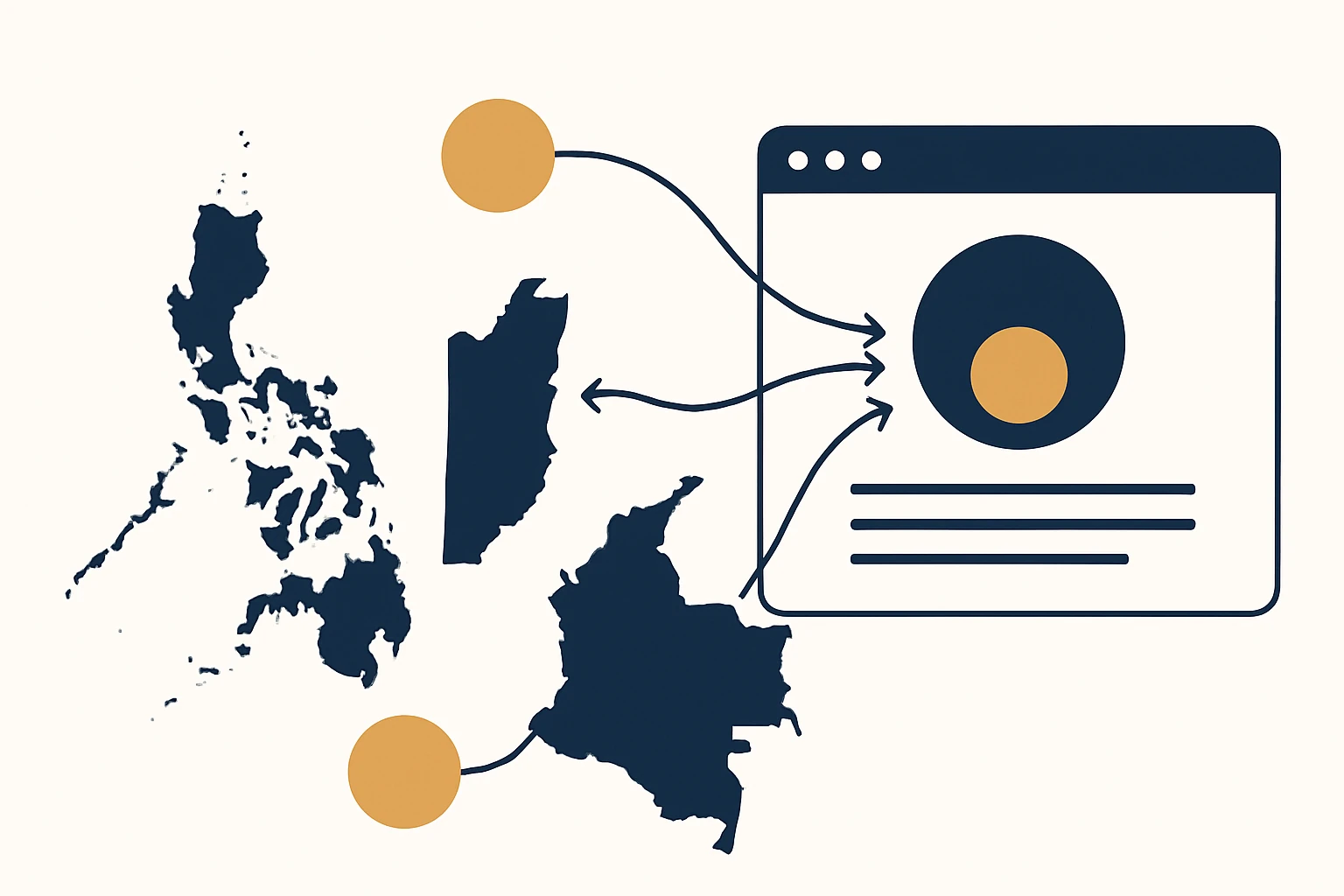
A regional pipeline starts with a clear target definition, then expands into sourced lists that are subsequently validated and scored. The Philippines, Belize, and Colombia each present unique opportunities and constraints: PH offers a large, active online market with abundant brand-building opportunities, CO presents a significant consumer technology footprint, and BE (Belize) tends toward smaller markets where defensibility and local relevance can matter more than pure traffic. The goal is not to chase every domain but to curate a defensible, brand-consistent set of targets across these markets. The following framework outlines how to approach this systematically.
Step 1 - Define regional criteria
Before digging into lists, codify what “regional fit” means for your brand. Criteria often include: linguistic and cultural congruence, alignment with core product or service lines, defensibility (availability of comparable domains or exact-match risk), and regulatory or reputational risk in the country. In practice, this means drafting a scoring rubric that weighs brand fit, market relevance, and governance risk. A disciplined rubric helps avoid overreliance on availability alone, a common pitfall in regional targeting. (icann.org)
Step 2 - Source candidate lists with geographic intent
A practical starting point is to assemble country-specific candidate lists that reflect local presence, consumer behavior, and competitive landscape. Publicly observable signals (such as top local sites, industry directories, and government portals) can serve as a baseline, while more granular signals come from private data feeds and registries. When forming PH, BZ, or CO targets, teams often combine public signals with privacy-preserving indicators of brand risk and market relevance. For example, country-anchored lists can be complemented by regional market intelligence to identify navigation paths, brand-committee opportunities, and defensible assets. See how a regional provider framework positions country lists as a core input to domain strategy. (icann.org)
For publishers and brokers, the point is to couple country lists with a robust verification workflow. webatla, for example, maintains country and TLD directories that help clients explore regional inventory in one place. See their country listings and TLD directory as a reference for building your own pipeline. webatla’s country lists and webatla’s TLD directory. If you need a quick view of regional pricing or terms, their pricing pages provide a baseline for budgeting your acquisitions.
Step 3 - Validate data and score targets
Validation combines automated checks (via RDAP where available) with manual diligence. Key checks include current registration status, expiration risk, and basic ownership signals. While RDAP yields structured data, cross-checking with multiple sources reduces the risk of relying on stale or incomplete records. This practice aligns with industry guidance on RDAP usage and data integrity. (icann.org)
Score targets against a simple framework: brand alignment, defensibility, and market relevance. A common, editor-friendly approach is to use a 3x3 scoring matrix where you rate each candidate on a 1–5 scale for each dimension, then prioritize the top scorers for outreach. The result is a focused pipeline that balances potential value with risk exposure. A structured approach to scoring and negotiation is a hallmark of effective domain portfolio management, a discipline practiced by leading brokers and asset managers. (saw.com)
Step 4 - Outreach, negotiation, and confidentiality
Outreach should be calibrated for regional nuance: direct-to-owner approaches may work in some markets, while others benefit from broker-led, discreet negotiations. A staged negotiation process often yields better outcomes: private inquiries, non-disclosure agreements, and an escalation plan aligned to the target’s perceived strategic value. Industry practice emphasizes confidentiality to preserve leverage and reduce price inflation. A disciplined brokerage process helps maintain alignment with brand strategy and governance requirements. (nameexperts.com)
Step 5 - Documentation, transfer, and governance
Once a deal closes, proper documentation, escrow arrangements, and transfer protocols are essential for a clean hand-off to the brand team. In a multi-country program, governance becomes as important as price: maintain an auditable record of approvals, licensing considerations, and post-purchase brand protections. This discipline protects the investment and ensures consistency with your broader digital asset strategy. See also portfolio-management considerations from leading providers. (saw.com)
A practical framework you can apply today
To make the approach actionable, use a compact decision framework that translates country-target ideas into an executable pipeline. The framework below - the Target-Quality-Value Matrix - helps you prioritize domain targets by three core dimensions: alignment with brand strategy (Target Fit), signals of quality (Quality Signals), and the expected value (Value Levers). This structured block can guide outreach, negotiation, and governance decisions across PH, BZ, and CO.
| Dimension | What to Assess | How to Apply |
|---|---|---|
| Target Fit | Brand alignment, language, product relevance | Score 1–5, prioritize assets that closely reflect core offerings and local market needs |
| Quality Signals | Age of domain, traffic signals where available, backlink quality, defensibility | Use RDAP data where possible, triangulate with third-party metrics and manual review |
| Value Levers | Acquisition cost, renewal risk, transfer complexity, regulatory exposure | Factor in total cost of ownership, including negotiation time and post-purchase protections |
This matrix provides a simple, repeatable method to screen country-target candidates and allocate scarce negotiation bandwidth to the most strategic targets. It also serves as a transparent companion to any confidential acquisition plan the broker or internal team may execute across PH, BZ, and CO.
Integration with a real-world domain program
A robust regional pipeline is not a stand-alone exercise. It integrates with broader domain portfolio management and brand protection practices. The process should include regular reviews of country-specific risk, updates to governance policies, and a clear escalation path for when a target shifts from potential to essential. For teams operating across multiple markets, the right data provenance and governance framework can prevent missteps that undermine a regional brand strategy. SAW.com, for example, emphasizes quarterly policy reviews, strategic domain name searches, and proactive negotiation planning as core pillars of portfolio management. Portfolio management for domain names. (saw.com)
In parallel with data-driven diligence, consider how a broker can help balance confidentiality with market visibility. A professional broker can help you navigate regional sensitivities, prepare controlled outreach, and structure deals that align with your brand’s risk tolerance. For readers seeking a practical example of broker-led strategies and process steps, industry sources outline best practices and negotiation tactics that inform confident, well-timed acquisitions. Domain Name Wire coverage and related industry guidance provide context for the evolving premium domain market. (domainnamewire.com)
Limitations, trade-offs, and common mistakes
No framework is perfect, especially when spanning multiple jurisdictions with different regulatory and privacy norms. A key limitation is data freshness: even with RDAP, ownership and expiration signals can lag, particularly in regions where registries update less frequently. A practical workaround is to implement a rolling verification cadence and to maintain a shortlist of backup targets so that a delayed signal does not derail the pipeline. ICANN’s migration toward standardized data access and ongoing ccTLD governance underscore the importance of aligning your process with current industry practice. (icann.org)
Common mistakes include overreliance on public lists without cross-verification, underestimating legal and regulatory risk in cross-border deals, and treating all country markets as homogeneous. A disciplined approach requires a clear perspective on local context, data integrity, and governance, plus an explicit plan for brand protection after acquisition. Experts in domain strategy warn against rushed deals and urge a staged, confidential process to protect negotiating leverage and brand integrity. (saw.com)
Conclusion
Regional domain targeting can unlock meaningful brand and growth opportunities when paired with a disciplined, data-driven pipeline. By starting with clearly defined regional criteria, sourcing targeted country lists, validating data with RDAP, and applying a transparent scoring framework, brands can build a defensible portfolio across PH, BZ, and CO. The integration of confidential brokerage services - backed by governance-supported processes - helps ensure that acquisitions are strategically aligned, financially prudent, and compliant with regional norms. For teams pursuing this approach, consider leveraging a trusted partner to curate and protect the process, while keeping brand strategy at the center of every target evaluation. For a consolidated view of country and TLD resources, you can explore webatla’s country and TLD directories, or connect with their pricing and services for practical next steps.
See also: webatla's country listings • webatla's TLD directory • webatla pricing.