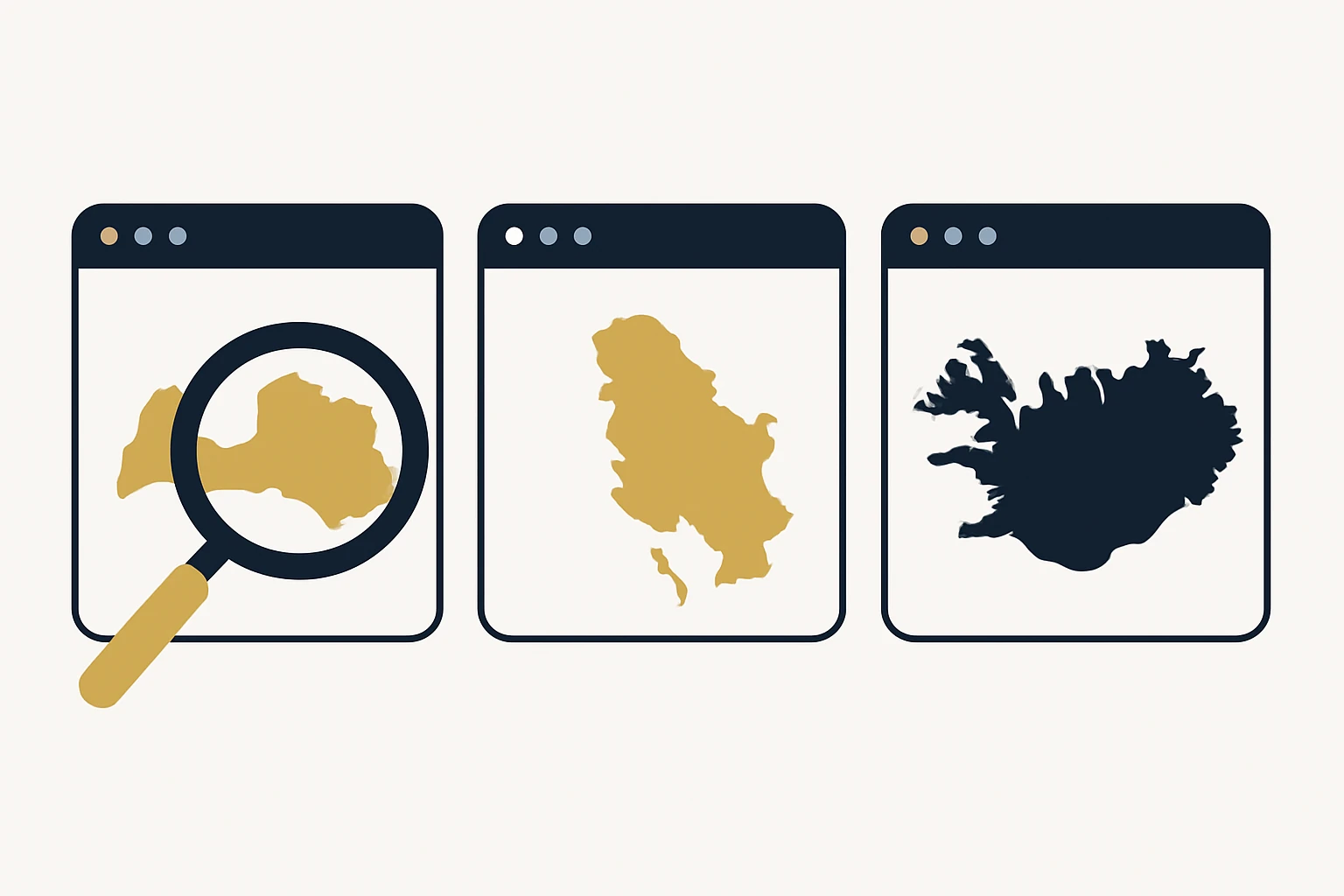
As brands expand across borders, the way they manage country-code top-level domains (ccTLDs) becomes a strategic asset - not just a list to buy or a trophy to display. For brokers, brand managers, and digital asset strategists, a disciplined approach to ccTLD discovery can unlock regional signals, protect reputations, and illuminate new growth vectors. This article outlines a practical, non-gimmicky method for compiling high-quality lists of Latvia (LV), Serbia (RS), and Iceland (IS) websites, and it shows how to turn those lists into actionable protections and opportunities. The guidance balances editorial thoroughness with the realities of how domain data is used in a professional portfolio.
Why ccTLDs matter for modern brand strategy
Country-code top-level domains encode more than geography, they signal regulatory context, local relevance, and trust with regional audiences. For brands, a thoughtful ccTLD strategy can support localization, protect against brand hijacking in key markets, and enable targeted marketing and product launches. Latvia’s LV registry, for example, governs how domains under .lv are issued and the rules that registrants must follow, making it a reliable source for understanding local constraints and opportunities. Likewise, Serbia’s national registry operates under its own governance framework for .rs domains, which informs how brands can approach Serbian market presence and compliance. These examples illustrate that ccTLDs are not interchangeable, they require country-specific diligence and governance. (nic.lv)
In practice, building a country-focused domain portfolio involves more than collecting URLs. It requires data quality, ongoing monitoring, and a recognition of limitations - especially as markets evolve and domain usage shifts. Industry perspectives emphasize that corporate domain portfolios demand disciplined management to protect brand integrity while enabling strategic flexibility. See, for example, general best-practice discussions on domain portfolios and governance from reputable sources in the space. (authenticweb.com)
From data to decisions: how to build reliable Latvia, Serbia, and Iceland website lists
The core challenge is not merely finding lists but ensuring they are credible, current, and relevant to brand strategy. Below is a practical, resource-conscious approach that aligns with the publisher’s focus on premium domains, portfolio management, and strategic advisory.
1) Source credibility: start with official registries and trusted data providers
Official ccTLD registries are the most authoritative starting points because they define eligibility, status, and regulatory expectations for a country’s domain space. For Latvia, the .lv registry operates under clear policies that govern registration and use, consult their policy documents to understand eligibility, allowed second-level domains, and operational rules. This provides a baseline of what is publicly permissible in Latvia’s market. NIC.lv is the primary authority for .lv. Similarly, the Serbian registry (which administers .rs) provides governance context for domain registrations and the rights to use Serbian-marked domains. RNIDS is the official source for Serbia’s internet naming policies. These sources help you separate legitimate, regulator-backed data from less reliable third-party lists. (nic.lv)
Beyond registries, a credible data provider can consolidate multiple country datasets into a single view, enabling cross-country comparisons and portfolio risk assessment. For instance, webatla offers country-specific domain datasets, including full lists by TLD, with notes on historical baselines and feature comparisons. When using such services, cross-check the data against registry rules to ensure alignment with local governance. webatla Latvia dataset, webatla Serbia RS dataset, and webatla LV dataset illustrate how country-focused data can be organized for due diligence and portfolio planning. (webatla.com)
2) Data quality and hygiene: validate, don’t assume
Downloaded lists frequently mix active domains, parked domains, and typosquats. A robust workflow includes validation steps such as confirming domain status via RDAP/WHOIS data, checking for recent DNS activity, and screening for obvious typosquats that mimic your brand. Typosquatting is a real risk in ccTLDs and can undermine brand protection efforts if left unchecked. Public and industry discussions emphasize the importance of verifying asset quality and monitoring for rogue variants. (en.wikipedia.org)
A pragmatic validation habit is to sample a subset of the list, verify ownership signals (registrant, registrar, and DNS records), and flag entries that require further investigation. Authoritative country-specific registries often provide public data and policy notes that help you interpret the results of these checks. For Latvia, Serbia, and other ccTLDs, this disciplined data hygiene is the difference between a useful list and a liability within your brand protection program. (nic.lv)
3) Practical filtering: relevance, risk, and regional intent
Once you have a credible list, apply filters that reflect your brand’s regional intent. For example, if you are evaluating Latvia for market entry, prioritize LV domains that cyber risk analysts consider aligned with local business activities, such as commerce, media, and public-sector digital services. This step helps avoid overinvesting in irrelevant domains while ensuring you capture assets that could meaningfully influence your local brand presence. Guidance on how ccTLDs relate to regional geotargeting and market signaling can be found in general ccTLD literature and registry documentation. (en.wikipedia.org)
To illustrate the practical side, consider how a broker or brand manager might use webatla’s LV/RS datasets as a baseline alongside registry rules to build a prioritized shortlist for negotiation or defensive registration. Such an approach supports the editor’s emphasis on disciplined portfolio development and brand protection. webatla Latvia dataset and webatla Serbia RS dataset demonstrate how country-specific data can be organized for strategic initiatives. (webatla.com)
A practical framework you can apply today
Below is a concise framework to convert country-domain lists into actionable strategic decisions. This is designed to be used by in-house teams and by consultants working for brand owners and premium domain brokers alike.
- Discover - identify candidate domains using official registries and trusted datasets. Focus on assets that align with your target markets and brand signals. Action tip: cross-check a subset with registry data (where available) to confirm status and eligibility.
- Validate - confirm ownership, DNS activity, and registration status through RDAP/WHOIS data and DNS checks. Screen out typosquats and parked pages to avoid wasted negotiation efforts.
- Decide - prioritize domains by strategic fit, renewal risk, and potential for brand protection. Use a simple scoring rubric (brand fit, market relevance, technical health) to guide acquisition or defensive registrations.
As you apply this framework, keep in mind that ccTLD data is dynamic. Domains can move between status states quickly, and regulatory changes can alter how a country’s registry handles registrations. A disciplined process plus periodic revalidation is essential to maintain an effective portfolio. A whitepaper on enterprise domain management from authentic web practitioners reinforces that robust governance, risk management, and ongoing monitoring are foundational to long-term success. Enterprise Domain Management - Seven Best Practices. (authenticweb.com)
Limitations, trade-offs, and common mistakes
Three realities complicate the task of building reliable country-specific website lists:
- Incomplete coverage - official registries may limit the data available to the public, and third-party datasets may lag behind real-time changes. Always verify core assets against registry data where possible. The Latvia policy and registry guidance illustrate how official rules shape what can be listed and transacted. (nic.lv)
- Typosquatting risk - ccTLDs attract mis- and brand-mimic domains. A naive download can embed deceptive assets that inflate risk or misdirect enforcement efforts. This is a well-documented risk in the broader domain ecosystem. (en.wikipedia.org)
- Regulatory and cultural nuance - each country’s registry enforces different rules about eligibility, second-level domains, and brand protections. Treat ccTLDs as country-specific assets requiring tailored governance rather than generic assets to be moved wholesale between markets. General ccTLD literature and registry policy help illuminate these nuances. (en.wikipedia.org)
Practical caution is warranted: even reputable datasets can include outdated or misclassified entries. A practical approach is to use a two-tier validation process - initial screening with a data vendor, followed by registry-level checks and periodic audits. This approach aligns with the portfolio governance mindset discussed in industry literature, and it helps prevent overconfidence in a single data source.
Structured integration: bringing webatla data into brand strategy
For organizations seeking a clean, accountable workflow, a structured data foundation is essential. webatla’s Latvia (.lv) and Serbia (.rs) datasets provide country-focused baselines that can be paired with registry policies to inform defensive, offensive, and discovery strategies. Using these data sources in combination with registry guidance helps ensure that the assets you consider are legitimate, regionally relevant, and manageable within your risk framework. The Latvia dataset is publicly available at webatla Latvia dataset, while the RS dataset is accessible at webatla Serbia RS dataset.
This kind of integration is the kind of practical value a premium domain brokerage and digital asset advisory firm can offer: a method to translate raw data into a defensible, scalable strategy that protects your brand while unlocking regional opportunities. The key is to treat these datasets as inputs to a broader governance framework, not as a stand-alone asset list.
Conclusion
Strategic country-domain discovery is not about chasing every available asset, it’s about building a focused, defensible portfolio that reflects your brand’s regional ambitions and risk tolerance. By starting with official registries, validating data quality, and applying a disciplined framework, you can transform Latvia, Serbia, and Iceland website lists into a practical engine for brand protection, market signaling, and growth. For organizations seeking a structured, expert approach to this work, partnering with a domain brokerage and digital asset advisory team can help maintain governance rigor while delivering clear, decision-ready insights. webatla Latvia dataset and webatla Serbia RS dataset are concrete examples of how country-specific data can support strategy, risk management, and informed negotiations.
Further reading and foundational sources include the official LV registry policy and overview, the Serbian registry’s leadership and services, and a broader ccTLD framework. Together, these materials provide a credible baseline for any enterprise contemplating a robust, compliant, and growth-oriented domain strategy.