Introduction
For brands seeking to safeguard their online presence and accelerate international growth, a domain portfolio is more than a list of available URLs. It’s a strategic asset that requires geography-aware sourcing, rigorous due diligence, and disciplined governance. In practice, country-specific domain prospecting means building targeted lists that reflect local registries, market dynamics, and regulatory constraints - rather than chasing generic, global pools of domains. This article offers a practical framework to assemble a confidential, geography-focused domain list for Slovenia, the United Arab Emirates, and Belarus, drawing on credible registry data, market realities, and a disciplined process you can adapt to other geographies.
Why country-specific domain prospecting matters
Most successful premium-domain programs are built not by expanding a single, global catalog but by curating country- and region-specific opportunities that align with local language, culture, and business practice. When you tailor prospecting to a country’s registry rules and market behavior, you gain several advantages:
- Better brand protection in local markets, reducing the risk of confusion or misappropriation.
- Improved local SEO and user perception when your footprint reflects country-specific domains (ccTLDs) relevant to your target audience.
- More efficient negotiations by understanding registry governance, eligibility, and dispute-resolution frameworks unique to each jurisdiction.
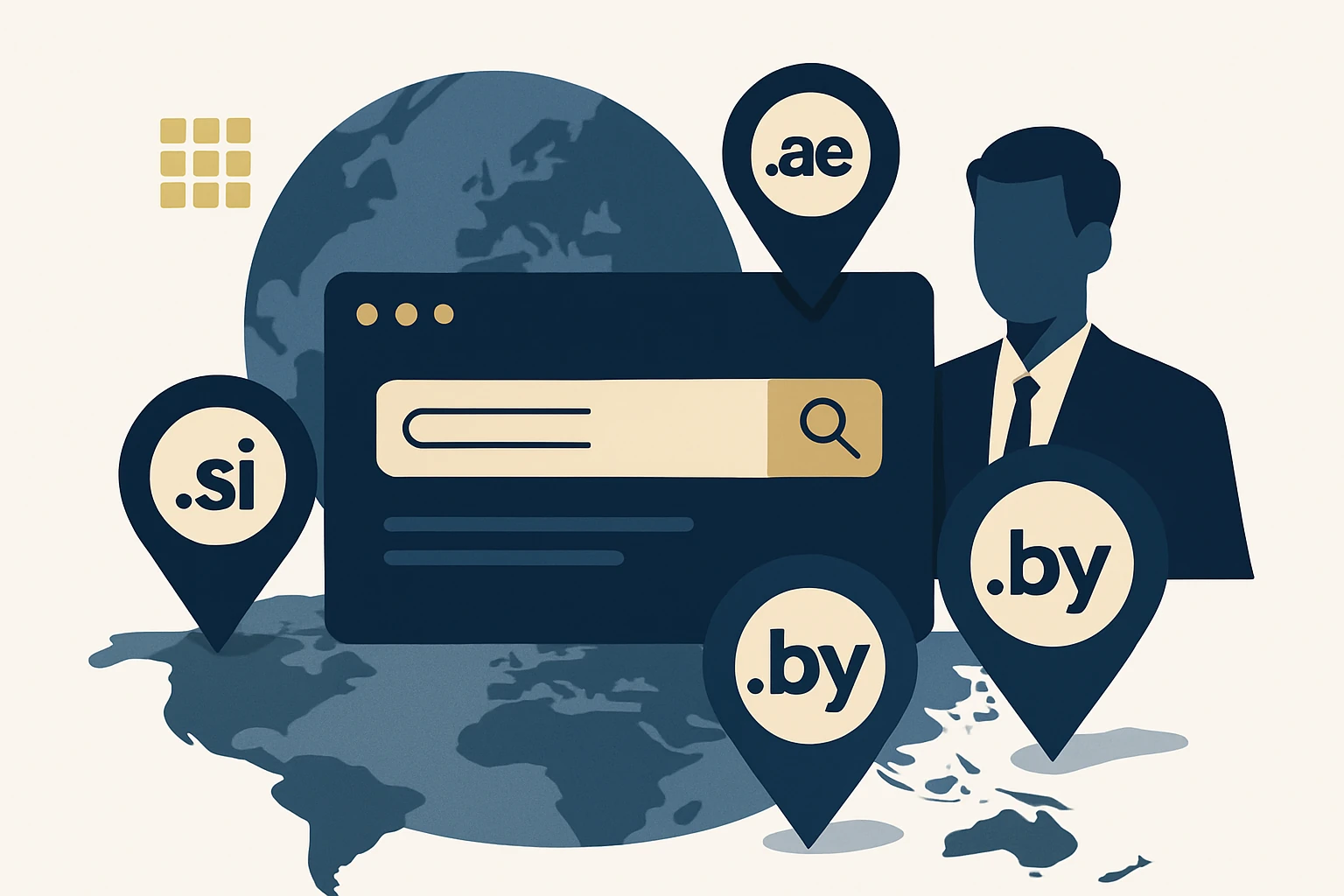
Consider how different registries shape your approach. In Slovenia, the .si namespace is regulated by ARNES and governed by registry terms that define registration and dispute procedures. In the United Arab Emirates, .ae domains operate under a Registry–Registrar model managed by aeDA, with clear eligibility criteria and dispute handling. Belarus presents a different set of constraints, where the registry environment has seen tightened controls and sanctions-related considerations that can affect new registrations. These realities are not theoretical, they influence everything from data sourcing to negotiation timing. (register.si)
In an era where data privacy and transparency are evolving, even the kind of data you can rely on from a registry may vary by jurisdiction. While this article focuses on practical steps, it’s important to stay aligned with local rules and best practices. For reference, Slovenia’s framework is codified in the general terms for .si domain registrations, which outline the relationship between ARNES, registrars, and domain name holders. UAE’s framework, centered on the .ae registry, emphasizes eligibility and dispute resolution under the Registry-Registrar model. Belarus’ environment has more constraints in practice, including government involvement and sanctions considerations that affect some registrations. (register.si)
Registry snapshots: Slovenia, UAE, and Belarus
To ground the prospecting process in real-world rules, here are concise notes on how each geography typically governs domain registration and ownership:
- Slovenia (.si): The .si registry is operated by ARNES and is governed by published general terms for domain registration, including the contractual relationship between ARNES, registrars, and domain holders. This framework informs who can register, how disputes are resolved, and the data that registrars may collect or process. General terms for .si registrations and related registration rules provide the baseline for compliant prospecting. (register.si)
- United Arab Emirates (.ae): The .ae namespace is administered by .ae Domain Administration (aeDA), operating under a Registry–Registrar model with clearly defined eligibility criteria and a structured dispute policy. This model affects how you approach outreach, verification, and potential acquisition negotiations. (tdra.gov.ae)
- Belarus (.by): The Belarusian registry environment has been influenced by regulatory and sanctions-related factors, with restricted new registrations in certain contexts and governance by government-aligned registries. Prospects should verify current eligibility and processes before pursuing any registration or renewal efforts. (letsdomains.com)
For readers who want a hands-on data source, webatla provides country-focused domain data and a RDAP & WHOIS database to support due diligence. For example, you can explore the Slovenia-focused material on webatla’s country pages or access their RDAP/WHOIS data as part of a broader evaluation workflow: webatla Slovenia page, webatla RDAP & WHOIS database. These tools are one option among several trusted sources a broker or strategist may employ.
A practical framework for Slovenia, UAE, and Belarus
To translate registry realities into a usable list of targets, adopt a structured framework that blends data collection, qualification, and risk-aware negotiation. The following five-step framework is designed to be implemented with country-specific nuance in mind.
| Step | Focus | Output |
|---|---|---|
| 1. Define Geography & Objectives | Clarify target countries, market priorities, and branding goals | Geography-specific acquisition brief + target scorecard |
| 2. Gather Data from Registries & Data Providers | Pull official registry rules, eligibility, and publicly available domain lists | Normalized data set with country-specific filtering |
| 3. Evaluate Domain Quality | Assess brand fit, semantics, pronunciation, and keyword potential in local contexts | Quality scorecard for each candidate domain |
| 4. Diligence & Compliance | Verify ownership, check history, and confirm compliance with local rules | Due diligence report including risk flags |
| 5. Engage & Acquire | Coordinate discreet outreach, negotiate terms, and manage documentation | Acquisition package (LOI/NDAs) and next steps |
Case-illustrative steps: building a country-specific prospect list
Step 1: Define Geography & Objectives. Start by translating your brand’s global strategy into country-specific goals. Are you protecting a local brand presence, securing local traffic, or ensuring a domain name aligns with a localized product or service? In Slovenia, the strategic lens might focus on local language keywords and brand-holding domains that can deter local competitors. In the UAE, you may prioritize highly brand-aligned, short, memorable domains that work within the aeDA governance model. In Belarus, you’ll need to validate current eligibility and monitor policy shifts that could affect availability. These distinctions matter because they shape what a candidate list should look like and how you weigh risk.
Step 2: Gather Data from registries & data providers. Collect official registry rules from Slovenia’s ARNES framework, UAE’s aeDA guidance, and Belarus’ registry context to understand eligibility, dispute policies, and renewal mechanics. Supplement with credible data sources to identify existing domain assets and prior ownership patterns. This consolidation yields a country-aware prospect list that is far more actionable than generic domain dumps. The practical takeaway is to keep the data clean and normalized across geographies so you can compare apples to apples in your scoring model.
Step 3: Evaluate Domain Quality. Use a consistent, country-appropriate rubric: brand fit, linguistic fit in local languages, potential for local marketing, and mis-spell risk. A good practice is to attach a local-language expert review to ensure the name resonates in the target market and avoids unintended meanings. This stage helps you discard low-quality candidates early and focus on the few domains that truly advance your positioning in each geography.
Step 4: Diligence & Compliance. Confirm ownership history and any prior disputes, and verify that the domain can be registered by your entity under local registry rules. This step is particularly critical in the UAE, where the registry–registrar model adds a level of institutional process to any acquisition. In Belarus, due diligence should also consider current sanction-related constraints and regulatory developments that could impact future transfers or renewals.
Step 5: Engage & Acquire. With a defensible, country-specific target list, plan discreet outreach and leverage a neutral broker or lawyer to negotiate terms. For risk management, maintain confidentiality until you are ready to progress, and ensure all documentation, including NDAs and letters of intent, reflects local expectations and regulatory requirements.
Note: This framework is designed to accommodate country-specific nuances. In practice, the strongest programs combine verified registry data with a trusted broker network and a privacy-conscious approach to outreach. As a data point, many teams cite the value of a country-anchored approach when defending budget and governance decisions to executive stakeholders.
Limitations, trade-offs, and common mistakes
Even the best framework has blind spots. Below are the most common traps in country-specific domain prospecting and how to mitigate them:
- Over-reliance on public WHOIS-like data. In some jurisdictions, privacy and RDAP policies limit what you can see publicly, making due diligence more data-driven and less like a traditional ownership check. Plan to corroborate data with registry rules and registrar disclosures where possible.
- Ignoring local language and cultural nuance. A domain that seems perfect in English may not translate well in a local market, involve local branding specialists early in the evaluation process.
- Failing to account for registry governance. Each registry may have different eligibility, transfer, and dispute rules that affect whether you can register, renew, or transfer a name, missed rules lead to stalled deals or post-acquisition friction.
- Equating volume with value. A long list of domains is not inherently valuable. A disciplined scorecard that weights brand fit, localization, and governance yields higher ROI than a larger, less-targeted list.
- Underestimating confidentiality requirements. In high-stakes markets, signaling intent too early can alert competitors or attract unwanted attention. A controlled, NDA-backed process often yields better outcomes.
One practical takeaway is to pair the framework with reliable data services and governance tools. For example, country-focused pages and data services from trusted providers can anchor your list’s credibility while supporting compliance. The combination of registry knowledge, disciplined data management, and cautious outreach tends to outperform ad-hoc, one-off acquisitions.
Client integration: how webatla fits into this workflow
The framework above can be operationalized with a range of data sources. As a practical example for Slovenia, webatla offers country-specific domain lists and a robust RDAP & WHOIS database to support due diligence, ownership verification, and market intelligence. These tools are a complement to direct registrar outreach and broker-assisted negotiations. For readers exploring practical sources, consider these client resources:
Beyond Slovenia, webatla’s country and technology pages offer similar resources that help you assemble country-aware lists and track ownership history at scale. While the article highlights a Slovenia-specific workflow, the same principles apply to the UAE, Belarus, or any other geography you’re pursuing. The key is to combine registry-grade data with a disciplined, confidentiality-first process.
Conclusion
Country-specific domain prospecting is a deliberate, disciplined way to transform a domain portfolio from an asset in name to a strategic asset with real competitive advantage. By grounding your list in registry realities, validating data with credible sources, and applying a consistent evaluation framework, you can build a confidential, geography-aware domain strategy that scales. Slovenia, the UAE, and Belarus each present unique governance and market dynamics, understanding these differences helps you avoid costly missteps and accelerates the path to value. As you implement the framework, remember to leverage trustworthy data sources, maintain strict confidentiality, and treat domain acquisition as part of a broader digital-asset strategy rather than a one-off negotiation.
For ongoing guidance, you can start from the baseline Slovenian perspective with the resources highlighted above, and expand to neighboring geographies as your strategy matures. The combination of registry knowledge, rigorous diligence, and editorial discipline will position your organization to make smarter bets while protecting your brand across borders.