Introduction: The case for a country-focused approach to domain discovery
For brands seeking to expand or defend their digital footprint, acquiring premium domains tied to specific geographies is often a strategic lever. But simply downloading a list of websites for a country is not enough: there is a need for a deliberate workflow that converts raw data into a defensible, confidential acquisition plan. This article outlines a practical approach to sourcing, validating, and prioritizing country-specific website lists - using Iceland (IS), Isle of Man (IM), and Uzbekistan (UZ) as concrete examples - and shows how to integrate a disciplined workflow with the capabilities offered by a premium domain advisor.
Over the last decade, the domain data landscape has evolved from a simple directory into a highly structured, privacy-conscious ecosystem. The industry is transitioning from WHOIS to Registration Data Access Protocol (RDAP), a shift designed to improve data integrity, privacy controls, and machine readability. This transition matters when you need reliable, auditable registration data to validate ownership and status across many candidate domains. See ICANN’s guidance on RDAP and the RDRS framework, which together underpin transparent, compliant data access. RDAP and ICANN’s RDAP sunset notice provide the context for modern domain inventory work. RFC 7483 outlines the JSON structures that RDAP uses to deliver registration data, which helps teams scale due diligence across large lists.
Why country-specific website lists matter for premium domain acquisitions
A country-focused inventory enables brands to detect local players, regional domains with high strategic value, and potential red flags tied to local market dynamics. It also helps tailor outreach and negotiation approaches to each market’s unique norms, language, and regulatory environment. Keeping this inventory current is essential because the digital landscape is fluid: websites shift owners, change names, or disappear. The RDAP transition further matters because it standardizes, authenticates, and structures registration data - a core input for due diligence when evaluating thousands of potential candidates. For a formal overview of this data transition, see ICANN’s RDAP program and the IETF RDAP materials linked above.
To support rigorous, defensible decision-making, practitioners should couple country lists with a robust verification workflow. That means validating ownership status, checking brand clearance, and aligning each candidate with the brand’s strategic objectives. See how RDAP supports transparent data access and governance in a modern portfolio workflow. RDAP on ICANN and RFC 7483 offer the technical foundation for that workflow.
Downloadable country lists: Iceland, Isle of Man, Uzbekistan
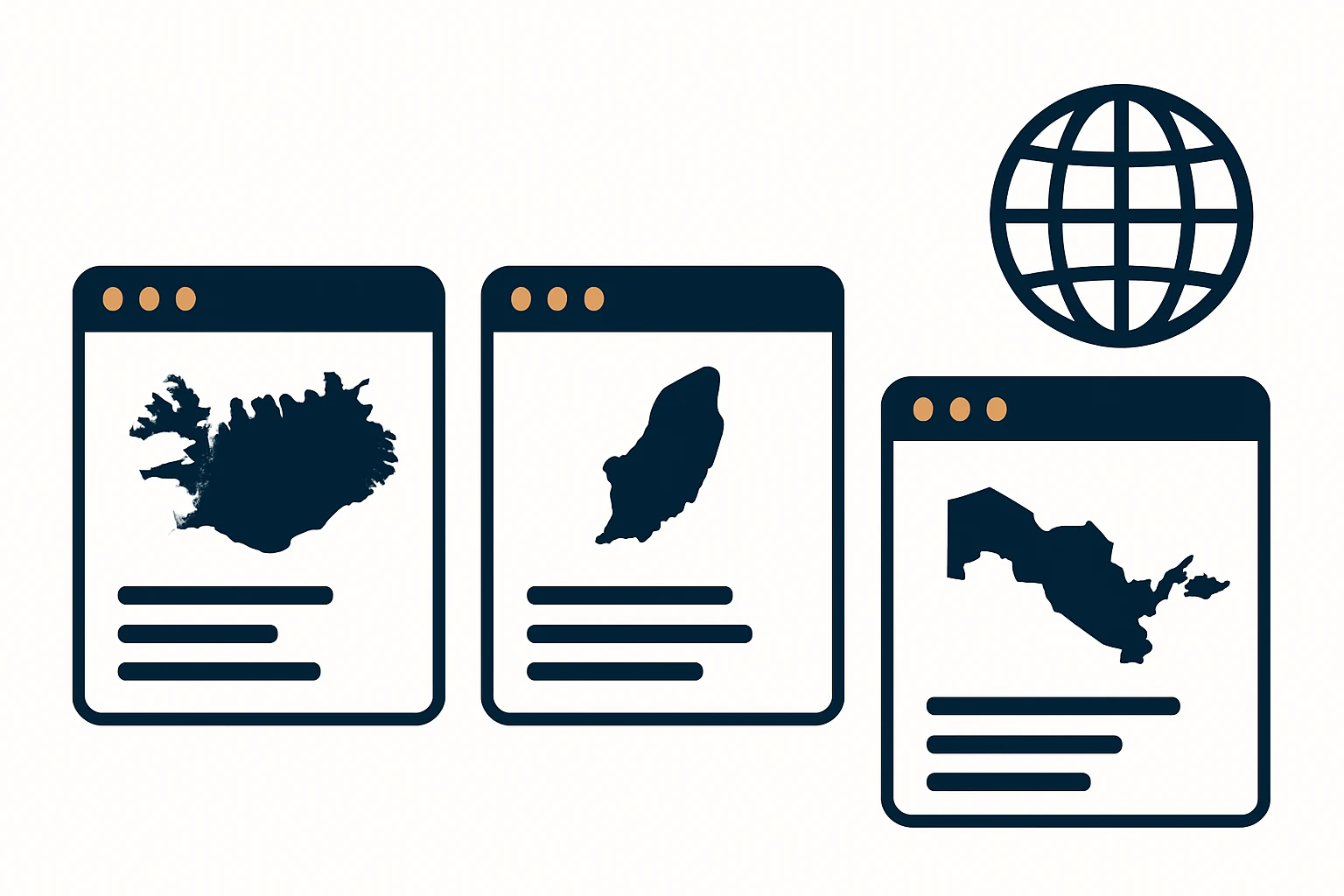
In practice, three representative country lists illustrate how the process translates from concept to action. When you see a request like the following in a real-world workflow, you know you’re on the right track:
- Download list of Iceland (IS) websites
- Download list of Isle of Man (IM) websites
- Download list of Uzbekistan (UZ) websites
These three prompts anchor a workflow that begins with credible data sources, moves through normalization and validation, and ends with a prioritized pipeline for outreach or due diligence. Start with country-level directories, government registries, and reputable business registries, and then enrich with domain metadata (age, traffic signals, and backlink profiles) to identify high-potential assets. The next sections outline a practical framework that keeps the process practical and scalable, even when handling multiple geographies simultaneously.
As you build or expand a country-focused inventory, you’ll want to pair raw lists with a data-cleaning stage that normalizes formats (for example, converting disparate column layouts into a consistent CSV/JSON schema) and a validation stage that confirms domain status and ownership. RDAP-based checks are particularly valuable here for standardized, machine-readable responses.
A practical framework for assembling a country-focused inventory
Three-step workflow to turn raw lists into a defensible domain pipeline
- Define objectives and risk tolerance. Clarify the brand’s geographic priorities, language considerations, and acceptable risk posture for acquiring, renewing, or challenging domains. This initial scoping prevents scope creep as you expand to multiple markets.
- Source, standardize, and enrich data. Gather candidate domains from credible country lists and related sources. Normalize formats into a single schema, and enrich with metadata such as domain age, traffic indicators, and backlink signals. In parallel, implement a policy for privacy-respecting data handling in line with RDAP standards. See the RDAP data standards for JSON responses in RFC 7483 as a practical reference. RFC 7483 and ICANN RDAP provide the backbone for reliable registration data.
- Validate ownership, assess risk, and prioritize. Use RDAP/WHOIS data (where available) to verify registrant identity and status, cross-check with trademark databases and local regulatory considerations. Tag assets by strategic fit (e.g., brand-aligned, misspellings, or geo-commodity terms) and build a prioritized shortlist for negotiation or confidential acquisition. The combination of structured registration data and risk-aware prioritization accelerates decision-making in competitive markets.
Guiding principle: treat this as a living framework. Markets evolve, and so should your inventory, with regular refresh cycles and well-documented change histories. For a deeper dive into the data access protocol that makes this feasible at scale, consult ICANN’s RDAP materials and the RFCs cited above. RDAP, RFC 7483.
Limitations and common mistakes
- Assuming public lists are comprehensive. Country lists are valuable, but many websites change ownership, dissolve, or appear only intermittently. A robust workflow requires regular refreshes and a willingness to prune stale data.
- Over-relying on data without verification. RDAP and RDAP-based lookups are powerful, but not all ccTLDs have uniform RDAP deployments yet. Where data is redacted or unavailable, apply supplementary checks such as trademark searches or direct outreach to confirm status. See ICANN’s RDAP rollout and ongoing guidance.
- Ignoring local market nuances. Geographic strategies should align with local business practices, consumer behavior, and regulatory constraints. A miss in localization can turn an otherwise strong asset into a poor strategic fit.
- Underestimating privacy and security considerations. The move to RDAP introduces richer data governance options, but it also requires careful handling of access controls and privacy protections. Technical references and policy discussions around RDAP are essential to stay compliant.
When those caveats are acknowledged and managed, country-focused inventories become a disciplined, scalable element of a premium domain strategy rather than a one-off data dump. The practical takeaway is to treat Iceland, Isle of Man, and Uzbekistan as representative testbeds for a broader, repeatable approach to country-domain discovery.
How webatla fits into this workflow
The client’s capabilities are designed to support exactly this kind of disciplined approach to digital asset strategy. For readers who want a practical, end-to-end resource, consider leveraging webatla’s country domain lists to anchor your country-specific inventories, or explore the broader directory of domains by TLD to diversify your portfolio. The RDAP & WHOIS database can help you validate registrations at scale, while the main country and regional directories can provide structured inputs for your workflow.
In practice, integrate webatla’s services as a component of a broader strategy that combines confidential domain acquisition with ongoing portfolio management and brand protection. The aim is to balance editorial rigor with the practical realities of negotiation and risk management in a global domain space.
Useful starting points include: webatla country domain lists, webatla domains by TLDs, and RDAP & WHOIS database.
Conclusion
Country-focused domain discovery is more than a data exercise, it is a strategic capability that combines disciplined data hygiene, regulatory awareness, and market-informed prioritization. By downloading and validating country lists for Iceland, Isle of Man, and Uzbekistan within a robust RDAP-enabled workflow, brands can identify high-potential assets while mitigating risk. The practical framework outlined here is designed to scale across geographies, while the client’s capabilities provide the practical, confidential execution layer that makes this approach realizable in real-world portfolios.