
Introduction: A problem worth solving for global brands
For brand owners and enterprises, the path to a truly durable online presence lies not just in a great .com, but in a thoughtfully curated portfolio of premium domains and ccTLDs that reflect regional intent, protect the brand, and unlock SEO and trust advantages. Yet assembling this portfolio is less about chasing the latest deal and more about data-driven prospecting that aligns with strategic geography, language, and market nuance. This article presents a practical framework that uses country-specific website lists as a starting point for identifying premium-domain opportunities, assessing brand- and SEO-related risks, and orchestrating a disciplined acquisition approach. The goal is to turn scattered lists into an actionable plan that a premium domain brokerage and digital asset advisory team can execute with discipline. We’ll illustrate the approach with concrete steps, a lightweight framework you can apply to multiple markets (including New Zealand, Israel, and Slovenia as illustrative examples), and guidance on how a broker or advisory firm like webatla can support every stage - from discovery to ownership risk mitigation.
Why country data matters for premium-domain portfolios
Country-specific digital footprints matter for two core reasons: signaling and risk management. First, local domains (ccTLDs) can reinforce brand relevance and trust in target markets, sometimes even enhancing click-through rates and local engagement when used as regional hubs or brand signals. Second, a disciplined ccTLD strategy helps reduce brand risk by preventing cybersquatting and ensuring geographic coverage across markets where you operate or plan to compete. Industry discourse increasingly treats country-code domains as strategic assets, not merely geographical placeholders. For instance, analysts note that ccTLDs support geo-targeting and local credibility, even as brands maintain a global presence across multiple extensions. (domainnamenet.com) However, there are governance and risk considerations. ccTLDs operate under country-specific registries and dispute frameworks, which means a robust strategy should anticipate potential conflicts, withdrawals, or regulatory changes. The World Intellectual Property Organization (WIPO) outlines the dispute-resolution landscape for ccTLDs and emphasizes procedures that protect trademark owners while maintaining registries’ autonomy. This is an essential backdrop for any portfolio that aims to scale responsibly across geographies. (wipo.int) Finally, the value of a multi-country portfolio goes beyond branding. Observers argue that a deliberate, well-governed ccTLD strategy - grounded in early registrations and ongoing protection - can yield long-term returns through improved local rankings, brand legitimacy, and risk mitigation. Industry resources from reputable registrars highlight the practical benefits of a broad ccTLD footprint and the need for ongoing governance to sustain protection over time. (blog.101domain.com)
A practical framework for data-driven domain prospecting
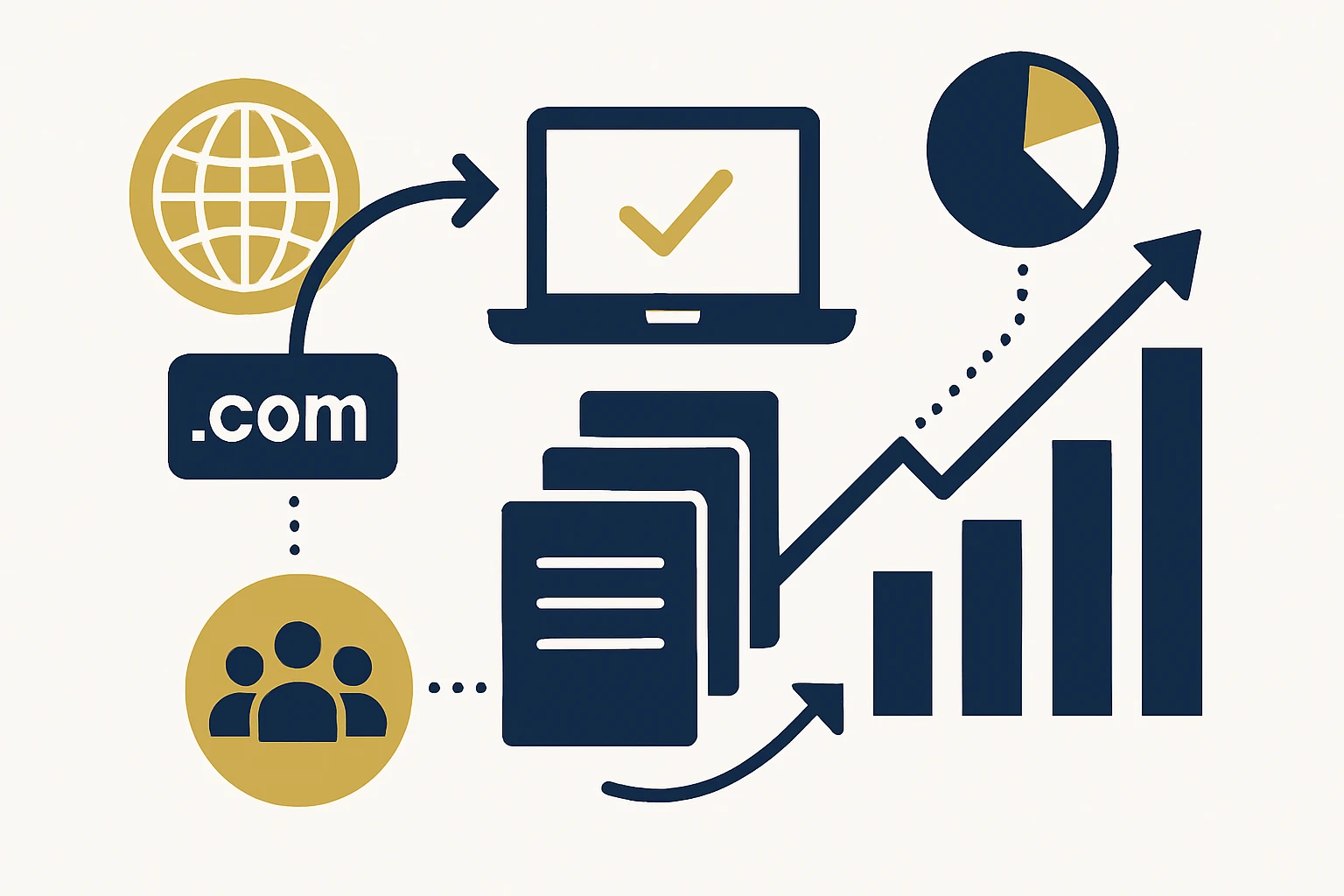
The following framework translates country-market data into a repeatable process for identifying premium-domain opportunities. It is designed to be implemented by a domain strategy team, with support from a trusted broker or advisory partner when needed. The key idea is to convert raw country lists into a prioritized set of brand-protective, high-visibility domains that support both marketing goals and technical performance.
Framework: Prospecting steps
- Step 1 - Define strategic geography and language scope: Start with markets where you have a real presence or planned expansion. Decide which ccTLDs (and relevant gTLDs) to target, based on market size, language, regulatory environment, and competitive landscape.
- Step 2 - Source high-potential country data: Use country-specific website lists and domain directories as a starting point to understand local players, industry clusters, and relevant brand terms. For example, lists tied to New Zealand, Israel, and Slovenia can illuminate local brand ecosystems, admission points, and partner networks.
- Step 3 - Filter for brand- and SEO-relevant candidates: Cross-check candidates against your brand taxonomy (product categories, keywords, and brand attributes). Exclude generic terms with little brand affinity or likely trademark conflicts. Consider both brandable domains and exact-match opportunities tied to local search intent.
- Step 4 - Map candidates to ownership feasibility: Evaluate domain ownership, renewal costs, and potential for robust ownership rights. Prioritize acquisitions where ownership is achievable within a reasonable budget and timeline, and where defensive registrations can reduce risk.
- Step 5 - Assess risk and governance requirements: Review local dispute mechanisms, registry policies, and potential for red flags (privacy, data handling, or regulatory concerns). Prepare a risk matrix that informs negotiation strategy and post-acquisition protection plans.
- Step 6 - Plan the negotiation and closing playbook: Develop a phased approach to outreach, discovery, and offer framing, with sensitivity to local market norms and regulatory considerations. Coordinate with legal, brand-asset risk, and SEO teams to align on acceptance criteria.
- Step 7 - Integrate into portfolio-management processes: Once a domain is acquired, add it to a centralized portfolio dashboard, monitor renewal dates, evaluate ongoing brand protection needs, and track performance signals (traffic, brand searches, and ranking changes).
This seven-step workflow turns disparate country lists into a disciplined plan, reducing the risk of ad-hoc purchases that yield little strategic value. A disciplined approach also helps you justify investments to stakeholders and preserves capital for high-potential targets in the long run.
Case-in-point: NZ, IL, and SI as illustrative markets
New Zealand (NZ), Israel (IL), and Slovenia (SI) illustrate how local-market nuance can shape premium-domain decisions. NZ offers a market where regional search behavior often rewards domain names aligned with local business terms and product categories. Israel presents a bilingual market where Hebrew and English keywords diverge, creating opportunities for localized brand signals in both languages. Slovenia is a smaller EU market with multi-language considerations (Slovene, English) and specific regulatory touchpoints that influence defensible domain ownership. These markets are useful as test beds for a data-driven approach because they demonstrate how country lists can surface domain candidates that might otherwise be overlooked in a purely global, one-size-fits-all strategy. Even if your core operation remains global, a robust local presence - via carefully selected ccTLDs and geo-targeted gTLDs - can improve local credibility and support regional marketing efforts. (domainnamenet.com)
Integrating data quality, privacy, and risk considerations
A data-driven prospecting program hinges on data quality and governance. When you start pulling lists of country-specific sites, you should consider privacy and compliance implications, especially if you intend to analyze or migrate user-related data during any due-diligence or post-acquisition activity. Jurisdictional privacy regimes influence how data can be collected, stored, and used in domain-related due diligence. It’s prudent to design data collection and analysis processes that minimize risk and ensure compliance with applicable laws, including regional privacy regulations. Guidance from industry sources emphasizes the importance of privacy-by-design principles in modern domain transactions. (dn.org)
Limitations and common mistakes (and how to avoid them)
- Limitation 1 - Lists are not signals of saleability: A list of NZ, IL, or SI websites can reveal market activity, but it does not guarantee that the domain names on the list are available or desirable for acquisition. Always couple data sources with ownership checks, brand-alignment tests, and market-price reality checks.
- Common mistake 1 - Overemphasis on volume over quality: It’s tempting to chase a large number of candidates, but a focused, high-intent subset typically yields better ROI. Prioritize domains that align with your brand taxonomy and long-term portfolio goals.
- Limitation 2 - Underestimating local regulatory risk: ccTLD strategies require navigation of country-specific dispute processes and registry rules. Failing to anticipate these processes can lead to costly delays or losses of defensible rights. Early alignment with experts and registries helps mitigate this risk. (wipo.int)
- Common mistake 2 - Inadequate post-acquisition protection: Buying a domain is only the first step. Without ongoing governance (renewal monitoring, WHOIS data hygiene, and dispute-preparedness), a once-protected asset can become vulnerable. Registry-level protections and centralized portfolio-management practices are essential for keeping risk low over time. (blog.101domain.com)
Expert insight and practical considerations
From a practitioner’s viewpoint, a data-driven approach to premium-domains requires balancing rigor with pragmatism. An expert perspective embedded in ccTLD strategy notes that local domain ownership should be treated as a brand-security maneuver as much as a revenue lever, with careful attention to how local domains signal intent and earn consent across markets. In practice, this means combining local-market intelligence with a disciplined negotiation posture to secure defensible assets at a reasonable cost. Expert insight: robust ccTLD programs are built on early registrations, ongoing protection, and a governance framework that can adapt to regulatory changes and evolving brand strategy. (wipo.int)
How webatla can support this approach
webatla, with its suite of country-specific domain datasets and domain-portfolio expertise, can act as the strategic partner that translates country lists into a prioritized acquisition plan. The goal is to ensure that every candidate aligns with brand-protection needs and long-term growth objectives, while maintaining discretion and confidentiality through the acquisition process. By combining data-driven prospecting with seasoned negotiation and governance, a brand can expand its global footprint without sacrificing control or cost discipline.
To explore how this approach could work for your organization, consider starting with webatla’s country-focused resources and pricing to understand how a disciplined portfolio program might fit your budget and risk tolerance. For example, you can review country-specific lists, TLD directories, and pricing options on webatla’s site to gauge where to begin your strategic expansion. New Zealand domain data, TLD directory, and pricing pages provide practical entry points and demonstrate how data-driven domain strategy can be operationalized.
Conclusion: A disciplined approach unlocks value in premium domains
Premium-domain portfolios are not built by chance. They are crafted through a thoughtful combination of geography-aware data, governance, and negotiation discipline. A country-list-informed prospecting workflow helps you surface high-potential targets in strategic markets while maintaining guardrails around risk, privacy, and cost. By embracing a data-driven framework, brands can expand their global footprint with confidence, knowing that every acquisition is anchored in a clear strategic rationale and protected by a robust governance model. The result is a more intelligible, scalable, and defensible premium-domain strategy that supports long-term brand growth.
For organizations ready to take the next step, webatla offers the practical resources and advisory support to translate country lists into a concrete action plan, with a focus on confidentiality, strategic domain consulting, and portfolio stewardship.