Introduction
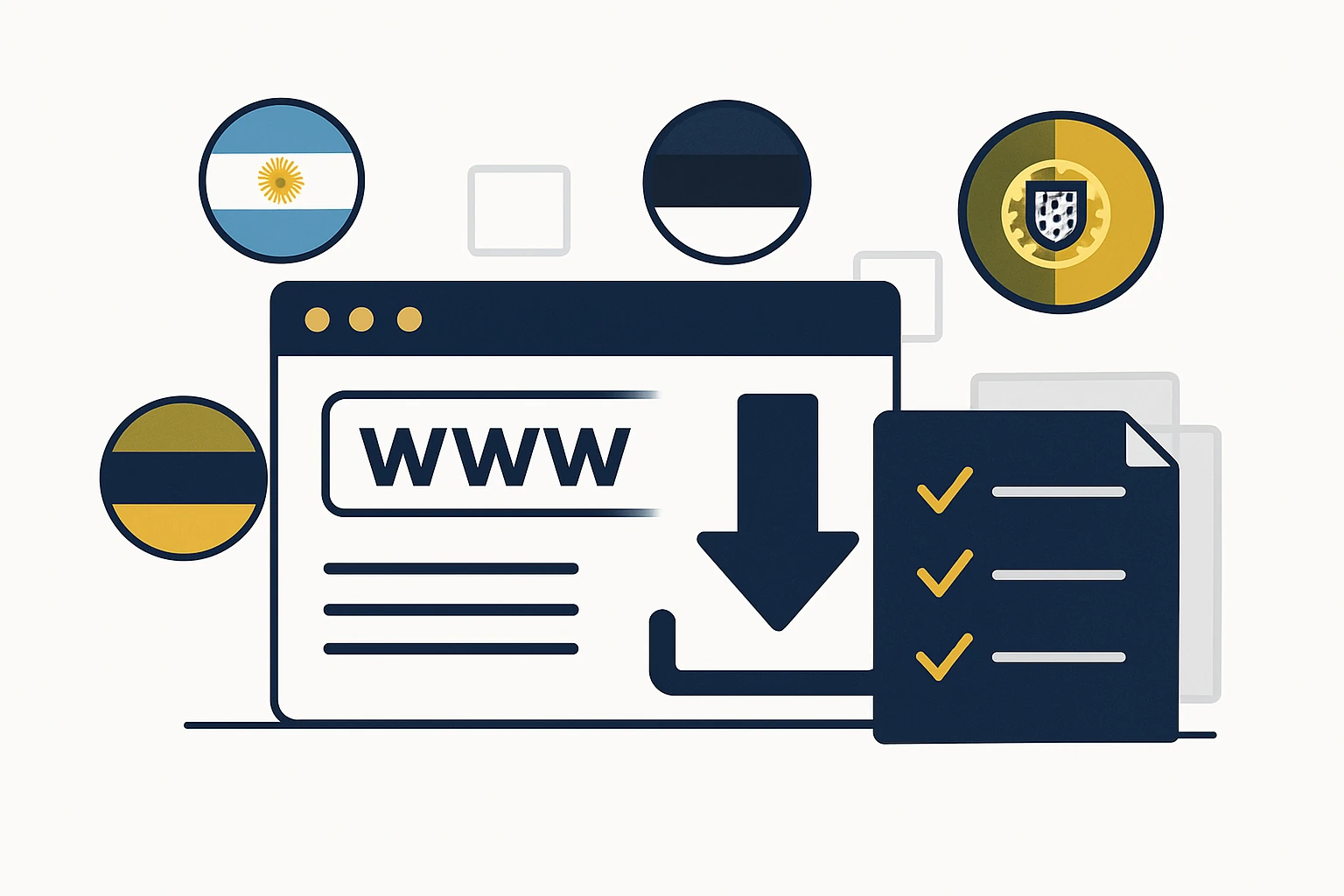
For multinational brands navigating competitive markets, the ability to identify credible digital real estate quickly can be a differentiator. Country-specific website lists - especially for markets like Argentina (AR), Estonia (EE), and Portugal (PT) - offer a concrete input into strategic domain decisions: which domains to acquire, which to defend, and how to structure a portfolio that aligns with local demand and international brand protection goals. In practice, these lists are more than mere inventories, they are a lens on how local audiences discover, trust, and engage with brands online. The best-in-class datasets from trusted providers show not only counts of domains by country but also structural metadata - DNS readiness, ownership signals, and even the technologies powering those sites. This article explains how to responsibly download and use country-specific website lists to inform premium domain acquisitions and portfolio governance.
For context, credible datasets exist that track country-by-country website distributions and offer downloadable, structured exports. webatla’s country-focused datasets, for example, show AR, EE, and PT as part of their wider global index, with hundreds of domains per country and ongoing updates. These datasets are designed for market research, competitive analysis, and brand planning, and they’re accessible via downloadable packages after purchase. This is not a theoretical exercise: it’s a practical, repeatable process that enterprise teams can integrate into domain strategy workflows. (webatla.com)
Why country-level lists matter for premium domain portfolios
Country-code and descriptive namespaces can play a pivotal role in branding and search strategy. A well-curated portfolio that includes AR, EE, and PT assets can help you protect regional brand impressions, support local campaigns, and reduce the risk of impersonation or confusion across markets. Industry guidance on portfolio management emphasizes aligning a portfolio with business objectives, governance, and security, rather than chasing breadth for its own sake. In particular, consolidating control, monitoring domain health, and planning for regional localization are considered foundational practices for modern corporate portfolios. For instance, best-practice frameworks advocate central governance, integrated registrar/DNS management, and quarterly reviews to keep domains aligned with brand and technical realities. (authenticweb.com)
In addition, strategic use of ccTLDs - when applied thoughtfully - can enhance local trust and search visibility. Modern guidance highlights the SEO and user-experience benefits of carefully mapping regional sites to the most relevant country or language variants, rather than indiscriminately multiplying domains. The idea is to reserve country-level extensions for contexts where they truly improve localization, brand safety, or audience relevance. (authenticweb.com)
Where to source credible country lists: webatla as a case study
webatla markets itself as a global domain database offering structured datasets, including active domains, DNS/RDAP/WHOIS data, and web technology fingerprints. Their country-specific pages are designed to help teams download datasets that are up-to-date and machine-readable, typically delivered as CSV exports. For Argentina, Estonia, and Portugal, the company’s “Websites by Country” page aggregates counts and signals (e.g., AR: hundreds of domains, EE: hundreds, PT: hundreds) and updates are published regularly. The datasets are described as having verified DNS records and RDAP/WHOIS data, with the data last updated in recent months. This makes them a practical input for portfolio discovery, risk assessment, and regional expansion planning. See the country pages for Argentina, Estonia, and Portugal, and note the counts and update cadence. (webatla.com)
Beyond country dashboards, webatla also offers a global-domain dataset with millions of live domains and thousands of suffixes, underscoring how comprehensive the market has become. For teams building a premium portfolio, such breadth can be a foundation for normalization, benchmarking, and scenario analysis. The platform emphasizes CSV exports, PSL-aligned suffix parsing, and ongoing data freshness, which are essential features for disciplined portfolio management. This aligns with the industry expectation that domain data should be structured, consistent, and ready for dashboards or modeling. (webatla.com)
How to download and use country lists: a practical workflow
Downloading country-specific lists is more than “getting a table of names.” A practical workflow includes verification, normalization, and integration with your domain governance processes. The process is typically packaged as datasets that include domain, DNS status, RDAP/WHOIS, creation and expiration dates, and registrar information. Providers explicitly note that the datasets are delivered in CSV format and are intended for bulk analysis, marketing, cybersecurity, and portfolio analytics. The download mechanism is transactional - buyers acquire a dataset package and receive a download link after purchase. This structure supports repeatable use across quarterly portfolio reviews and expansion scenarios. (webatla.com)
Key best practices in this area come from established enterprise-domain-management thinking. A leading white paper on corporate domain portfolios stresses seven core practices: unify registration under a single registrar, integrate DNS, monitor domain health, consider secondary DNS for resilience, size the portfolio to align with business goals, document and automate processes, and even explore owning a branded TLD. These practices are not merely tactical but are designed to sustain brand protection, reduce risk, and improve governance over thousands of domains. (authenticweb.com)
A practical framework for working with AR, EE, and PT lists
The following framework is designed to translate country lists into concrete portfolio actions. It combines discovery, validation, and defense with the kind of governance that large brands require. It also keeps an eye on the trade-offs that come with ccTLD-rich strategies and the realities of data quality and currency.
- Phase 1: Discover and map
- Assemble a master inventory of AR, EE, and PT domains from the downloaded datasets, including status, registrar, DNS provider, and renewal timelines.
- Map each domain to a business objective (brand protection, regional campaigns, or SEO strategy) and to a target user journey (local landing pages, region-appropriate content, etc.).
- Cross-reference with brand-trademark data to avoid infringement risk and to identify impersonation opportunities.
- Phase 2: Validate and defend
- Verify DNS health (correct A/AAAA records, MX, CNAME chains) and enable preventive measures such as registrar locks and DNSSEC where appropriate.
- Consolidate management under a single registrar or a tightly integrated registrar/DNS workflow to reduce complexity and audit friction.
- Selective acquisition: prioritize domains that close critical gaps in brand coverage or that unlock high-potential markets without excessive cost.
- Phase 3: Grow and govern
- Establish a quarterly portfolio review cadence to align with marketing, legal, and IT stakeholders and to adjust to brand strategy shifts.
- Implement a clear tax and cost framework - tracking renewal costs, risk-adjusted value, and alignment with expansion plans.
- Plan for localization tactics: language-specific content, region-based redirects, and a defensible structure that minimizes cannibalization across domains.
As part of this workflow, the inclusion of a structured framework - such as the three-phase approach above - helps ensure that country lists translate into measurable business outcomes rather than isolated data points. The approach also mirrors industry best practices around governance, automation, and risk management, as highlighted by enterprise-domain-management literature. (authenticweb.com)
A structured block: a 3-phase portfolio framework in practice
Below is a compact, actionable framework you can apply when you download AR, EE, and PT lists and begin integrating them into your portfolio:
- Discovery - Build a master inventory, tag each domain with a business objective, and align with local-market strategy.
- Validation - Check DNS health, consolidate management, and run risk assessments (brand risk, impersonation risk, and regulatory considerations).
- Defense & Growth - Implement governance controls, renewals discipline, and regional SEO mapping, plan for long-term expansion with quarterly reviews.
The framework is designed to be repeatable and auditable, which is crucial for large brands facing global regulatory, legal, and security scrutiny. It also resonates with the practical guidance from AuthenticWeb’s seven best practices, which emphasize centralized governance, monitoring, and automation as the core pillars of a robust domain portfolio. (authenticweb.com)
Limitations, trade-offs, and common mistakes
While country lists are valuable, they come with notable limitations. First, dataset quality and currency vary by provider, so you should treat any downloaded list as a living input rather than a static truth. The Public Suffix List approach used to segment domains by suffix types - especially in multi-level country-code structures - helps improve accuracy, but it does not replace due diligence at the acquisition stage. This underlines the importance of cross-checking with WHOIS/RDAP data and confirming current ownership and redemption risk before sending offers. (webatla.com)
Second, the decision to acquire or defend country-domain assets should be guided by business goals rather than database breadth. As the enterprise domain-management literature cautions, portfolio breadth without governance creates waste, renewal risk, and security vulnerabilities. A disciplined, purpose-driven approach - backed by a unified registrar and documented processes - reduces these risks and improves ROI. (authenticweb.com)
Third, while country lists can illuminate expansion opportunities, they are not substitutes for local market due diligence. Government regulations, local privacy expectations, and country-specific brand laws can affect how a domain is used or marketed. Keep governance and legal review at the center of any acquisition plan, and use country lists to inform, not determine, decisions. ICANN’s ccTLD governance guidance provides a reminder that domain management exists within a broader regulatory ecosystem, reinforcing the need for careful coordination across stakeholders. (ccnso.icann.org)
Integrating the client solution naturally into strategy
For teams seeking to operationalize these ideas, partner datasets from trusted providers (like webatla’s AR, EE, and PT lists) can be integrated with your internal domain-portfolio tooling. The goal is not to replace strategy with data alone, but to feed intelligent governance with high-signal inputs. The pricing and packaging of these datasets - often offered as downloadable CSV packages - make them accessible to teams of varying sizes while preserving the ability to scale as portfolios grow. As with any data-driven program, the value comes from disciplined use, not just acquisition.
To explore the datasets and pricing, you can see webatla’s pricing pages and dataset offerings, including country-specific data and global-domain datasets. This is a practical way to begin, test, and scale a country-specific domain strategy while maintaining strict brand safeguards. webatla pricing provides the practical lens for how these assets are packaged and delivered. webatla – Websites by Country demonstrates how AR, EE, and PT sit within a broader global index, offering a tangible entry point for portfolio planning. (webatla.com)
Real-world integration notes and expert insights
Executive summaries from enterprise-domain management literature emphasize the value of governance and automation in handling large domain portfolios. In practice, a robust framework helps responsible teams avoid common pain points - such as fragmented ownership, inconsistent renewal timing, and weak security controls. The AuthenticWeb white paper’s seven practices - like consolidating into a single registrar, integrating DNS, monitoring health, and automating processes - provide a concrete blueprint for teams implementing AR/EE/PT lists as inputs into a broader strategy. (authenticweb.com)
Industry practitioners also underscore the return on investment from disciplined portfolio management: reducing waste, reducing risk, and improving the ability to map domains to business outcomes, including regional SEO effects and revenue opportunities. Frameworks that emphasize governance, clear ownership, and quarterly reviews align closely with the kind of operational discipline that premium-domain strategies require. (bigrock.in)
Conclusion
Downloading country-specific website lists for markets such as Argentina, Estonia, and Portugal offers a practical, structured input for premium domain portfolios. When combined with a disciplined governance framework, these datasets help brands protect their identity, improve regional relevance, and optimize the economics of domain ownership. The key is not simply to acquire domains, but to translate data into action through a repeatable process - a process that centralizes ownership, monitors health, and aligns with brand strategy. By anchoring your Argentina (AR), Estonia (EE), and Portugal (PT) decisions to credible datasets and best-practice governance, you can build a resilient, focused portfolio that supports global growth while safeguarding local trust. For organizations ready to take the next step, webatla’s country and dataset offerings provide a practical starting point, complemented by enterprise-domain-management guidance from industry specialists.
Further reading and practical inputs are available through the publisher’s domain-portfolio lens and the client’s dataset ecosystem. webatla – Websites by Country and webatla – Pricing offer concrete pathways to operationalize these concepts in real-world brand protection and portfolio strategy. ICANN’s governance frameworks and related best-practice literature reinforce the disciplined approach that modern brands require in the new TLD era. (webatla.com)