Introduction
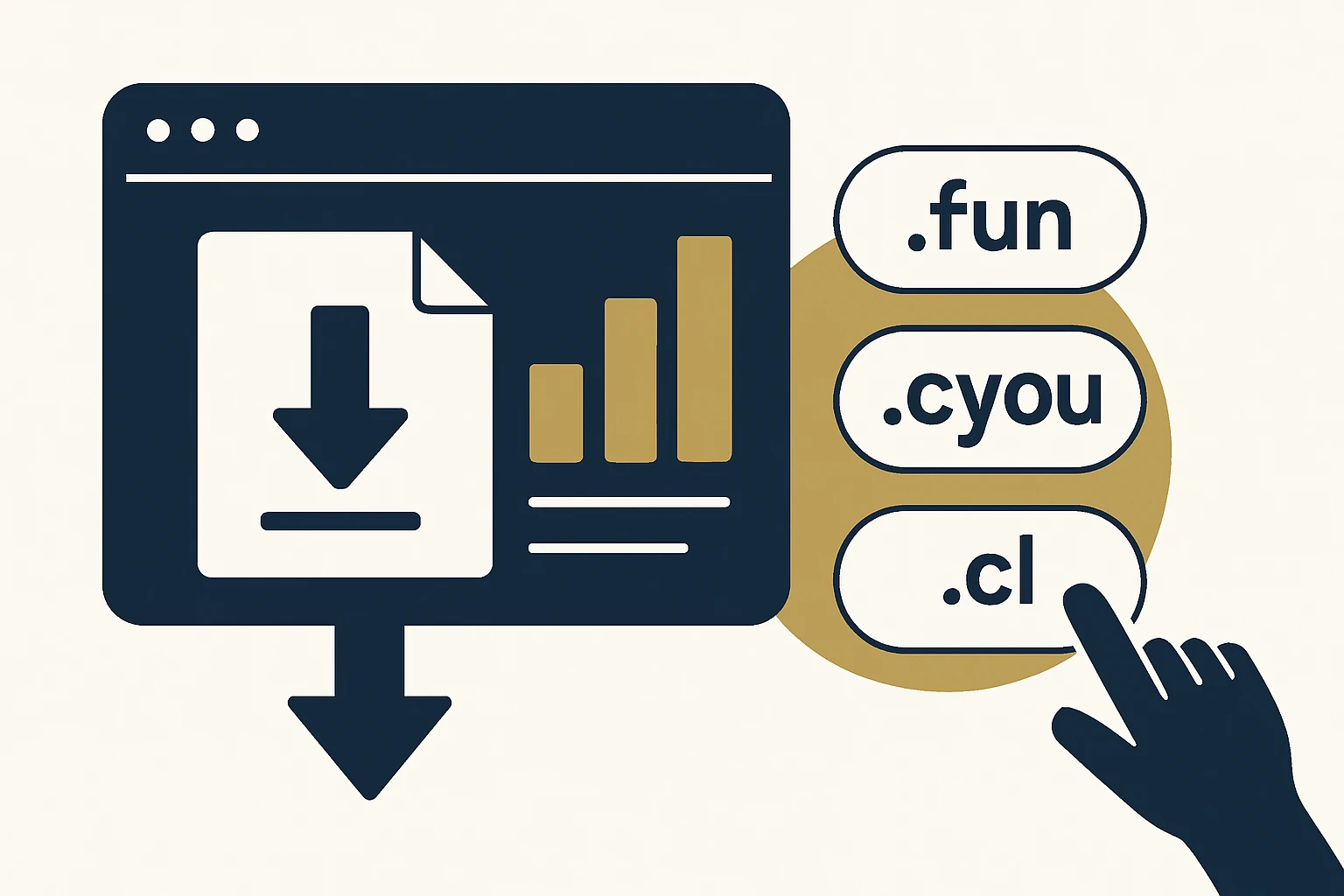
Brand teams increasingly explore niche domain extensions as part of a broader digital strategy - from campaign micro-sites to regional micro-communities and product launches. But harvesting a broad list of available domains is not as simple as running a search engine query. To build a practical, defensible list for decision-making, teams must understand how to obtain domain data legally, assess its quality, and align it with a coherent brand governance process. This article provides a practical framework for downloading niche domain lists with a focus on three extensions often cited in brand playbooks: .fun, .cyou, and .cl. It also shows how a brokered-data approach can fit into broader brand-protection and portfolio-management goals.
For context, .cl is the country code top-level domain for Chile, a space where local identity and regional campaigns converge with global ambitions. .fun and .cyou are generic/new gTLDs that have seen broad adoption for consumer-facing and creative applications. Understanding the nature of these extensions helps set realistic expectations about data coverage, renewal dynamics, and geographic distribution. .cl is a ccTLD with country-specific policy and registration characteristics, while .fun and .cyou reflect the broader New gTLD ecosystem and brand-agnostic naming opportunities.
From a data-access perspective, the industry relies on zone files and curated datasets to enumerate registered domains by extension. Access to zone files is regulated and requires formal agreements and processing through ICANN’s Centralized Zone Data Service (CZDS). This framework ensures that data use complies with privacy, security, and stability policies while enabling market participants to build defensible lists for due diligence, brand protection, and strategic planning. For more details on how zone-file access works, see ICANN’s Zone File Access resources.
Key takeaways: zone files are the most comprehensive source for registered-domain data, but access is gated, niche TLDs may have varying levels of public visibility, so data quality and governance matter as much as volume.
Understanding the TLD Landscape: What .fun, .cyou, and .cl Represent
Grasping the fundamental nature of these extensions informs how you should use the data. .cl, as a Chilean ccTLD, carries country-specific relevance and regulatory nuances that matter for regional campaigns and brand protection in Latin America. .fun and .cyou are generic/new-era TLDs that brands often use to signal creativity, modernity, or a specific product category. The precise meaning of a TLD can influence search behavior, brand perception, and even the defensive registrations brands consider during portfolio planning. For a quick overview of these extensions, see the general explanations in the mainstream references for each TLD: .cl, .fun, and .cyou.
When evaluating lists for these TLDs, teams typically consider data points such as DNS resolution status, geographic distribution, and renewal signals. For example, current trends show substantial live activity across multiple regions for .cyou and meaningful regional usage for .cl in South America and beyond. While lists alone do not determine brand strategy, they are a critical input to portfolio planning, risk assessment, and shortlisting candidates for defensive or opportunistic registrations.
How to Access and Download Domain Lists: A Practical, Rules-Based Approach
The most comprehensive domain lists come from zone files, which enumerate registered domains by extension. However, access to zone data is not universal and is governed by policy and governance frameworks to protect users and the ecosystem. The primary route for legitimate access is ICANN’s Centralized Zone Data Service (CZDS), which acts as a gateway to zone files across multiple TLD registries. Before you can download, you typically need to enter into a Zone File Access Agreement with the registry operator or coordinate access through ICANN’s CZDS portal. For a detailed overview of the policy and process, see ICANN’s Zone File Access resources.
In addition to direct zone-file access, brands and brokers frequently rely on vetted data vendors that publish curated lists or offer CSV extracts for specific extensions. Vendors can provide ready-to-analyze datasets, often with metadata such as live status, parking indicators, and renewal signals. If you’re evaluating these options, consider data freshness, coverage, and transparency about data provenance. For example, data services that provide .cyou domain lists and samples illustrate how a living dataset can complement zone-file data, especially when exact registry access is constrained.
For hands-on examples of the types of data you may encounter with these extensions, see available datasets and example datasets from industry sources that publish zone-based lists for new gTLDs and ccTLDs. These references illustrate the practical realities of domain lists, including ranking by country, live status, and the typical cadence of updates.
To help you visualize where to begin, consider these actionable access points:
- ICANN CZDS and zone-file access policies for bulk downloads and registrations. The CZDS is the official gateway for many gTLDs and ccTLDs that publish data through zone files. Access typically requires an agreement and a formal request. ICANN Zone File Access.
- Vendor-provided extracts and samples for targeted extensions such as .cyou, which can provide a practical starting point when direct CZDS access is restricted. These datasets illustrate current live-website coverage and regional distribution. NetAPI: .CYOU Domain Lists.
- Introductory background on the extensions themselves as context for data interpretation, including general descriptions of .cl, .fun, and .cyou.
For hands-on alignment with a brokered-data workflow, you can also browse niche-tld pages that aggregate domain lists by extension. These pages illustrate how a data-provider can present counts, live sites, and geographic distributions by TLD, which helps in scoping your target universe for brand strategy. Examples include dedicated pages for .cl, .cyou, and other extensions.
A Practical Workflow: The DATA Framework for Domain List Curation
To translate data into actionable insights for brand strategy, apply a lightweight, repeatable workflow. The following DATA framework provides a practical sequence you can deploy with internal teams or with trusted data partners.
- Define objectives - Clarify the strategic purpose of the list: defensive registrations, campaign-specific domains, or portfolio expansion. Determine which extensions (eg, .fun, .cyou, .cl) align with your brand narrative and regional reach. This step establishes the scope and success metrics for the list.
- Acquire sources - Choose data sources that balance completeness with governance: (a) official zone files via CZDS for jurisdictions where access is granted, (b) curated datasets from reputable vendors for extensions with restricted access or to supplement zone files, (c) direct registry pages where available for supplementary signals. Always document source provenance and data-age. For CZDS guidance, see ICANN’s Zone File Access materials.
- Transform and clean - Normalize domain formats, remove duplicates, and standardize salience signals (live vs parked, DNS A-record presence, TTL stability). Apply deduplication and filtering to create a candidate universe suitable for validation by the brand team or broker. This stage turns raw zone-file rows into a decision-ready list.
- Assess and govern - Evaluate data quality, coverage, and potential biases. Consider data-staleness risks (domains that have become inactive since last update) and privacy or regulatory considerations around data usage. Map the list to brand-protected strategies and define governance rules for who may acquire or defend these domains.
In practice, this framework helps teams move from a raw dump of domains to a confident set of brand-relevant candidates, while maintaining compliance and governance discipline. The framework also supports collaboration between brand, risk, and legal teams - a core requirement for premium-domain programs and confidential acquisitions.
Limitations, Trade-Offs, and Common Mistakes
While the workflow above is practical, it has inherent limitations and common pitfalls that teams should anticipate:
- Coverage gaps - Zone files are comprehensive for many extensions but not guaranteed for all registries. Some registries restrict bulk access or do not publish zone files publicly, creating blind spots in the universe you’re trying to map. ICANN’s CZDS framework exists to address this gap, but it does require formal commitments and time to set up.
- Data freshness - Domain registrations and DNS statuses can change quickly. Relying on a single snapshot can mislead strategic decisions. Plan for regular updates and clearly state the data age when presenting the list to stakeholders.
- Quality vs quantity - A very large list is not inherently more valuable. Quality signals (live site presence, landing-page intent, and alignment with your brand narrative) matter more than sheer volume. Use filters that reflect what your team truly needs for decision-making.
- Privacy and compliance - When using zone-file data or third-party lists, ensure you comply with applicable privacy, data-protection, and contractual restrictions. This is especially important when combining data sources or sharing lists with external partners.
- Misinterpreting TLD intent - Not all niche TLDs carry equal value for every brand. A careful assessment of brand fit, regional relevance, and marketing objectives beats generic defensibility counts. For context on how TLD semantics influence strategy, consult TLD overviews such as those for .cl, .fun, and .cyou.
These caveats matter because data quality is a prerequisite for good decisions in premium-domain strategy. A common mistake is treating a downloaded list as sufficient due diligence - you must pair data with domain ownership checks, hosting signals, and brand-appropriate evaluation criteria. As a next step, many teams formalize a short, repeatable assessment rubric to distinguish high-potential domains from noise.
Structured Block: A Simple Framework to Apply the Data You Download
- Data inventory - Capture the full set of domains from each source, tagging extensions (.fun, .cyou, .cl) and data points (live status, DNS resolution, hosting patterns).
- Quality checks - Run basic sanity checks: syntactic validity, DNS resolution, and cross-source consistency. Flag anomalous domains for manual review.
- Brand relevance filter - Apply your brand relevance criteria (semantic fit, market positioning, regional strategy) to prune candidates.
- Defensive vs opportunistic shortlists - Split the remaining domains into defensive registrations and opportunistic opportunities aligned with campaigns or product launches.
- Defensible acquisition path - For high-potential domains, map a clear path for due diligence, confidentiality considerations, and any potential acquisition options, including working with a premium-domain broker if needed.
- Governance and refresh cadence - Establish a cadence to refresh the data, review ownership changes, and align with the brand’s risk and procurement policies.
This block is designed to be a repeatable, scorable workflow you can embed into a wider brand-domain program. It also gives portfolio and governance teams a shared language to discuss domain opportunities in a consistent, defensible way.
Integrating Client Solutions: How webatla Fits into the Process
For teams seeking practical, up-to-date domain lists by extension, trusted data providers such as webatla offer direct access to organized datasets by TLDs. These pages illustrate how a brokered-data approach can support brand-protection objectives, portfolio planning, and strategic domain consulting. For example, you can explore dedicated pages that catalog active domains by extension and geography, such as the pages for .cl, .cyou, and .fun:
Beyond raw lists, webatla’s datasets can be combined with CZDS-derived data to produce cleaner, governance-aligned shortlists that are easier to hand to executives, lawyers, and procurement teams. In practice, publishers and brands use these datasets not only for defensive registrations but also to understand market dynamics around extensions and to calibrate risk when entering new markets. For more context on how these datasets are structured and how they can be used within a premium-domain portfolio, see the broader cataloging work webatla publishes for various TLDs and markets.
Limitations and Common Mistakes (Recap)
In short, downloading niche domain lists is not a one-and-done exercise. It’s part of a broader program that combines data provenance, governance, and strategic interpretation. Leading marketers and brokers avoid the following missteps:
- Relying on a single data source or a snapshot in time to drive portfolio decisions.
- Assuming all TLDs have equal relevance for every brand, semantic fit and regional strategy should drive list curation.
- Ignoring zone-file access rules and data-use restrictions when combining CZDS data with third-party datasets.
- Overlooking data freshness, domain status can change rapidly and affect monetization and defensive decisions.
Real-World Considerations: Expert Insight and Practicalities
As a practical matter, a successful approach to niche-domain lists blends governance with empirical signals. An expert insight often cited in premium-domain discussions is that data quality and provenance often trump raw volume when it comes to risk management and strategic planning. A well-governed process reduces the chance of defensive overreach or missed opportunities, while a transparent audit trail supports confidential domain acquisition discussions with stakeholders and potential brokers.
As with any data-driven initiative, the key is to test hypotheses with a controlled, repeatable process. The CZDS framework provides the policy backbone, while curated datasets complement the raw zone data where access is restricted. This combination is particularly valuable for enterprise teams managing brand protection domains or refining a premium domain portfolio under confidentiality constraints.
Conclusion
Downloading niche domain lists for brand strategy is not simply about collecting names, it’s about building a defensible, governance-ready universe that informs strategic decisions. By understanding the nature of extensions such as .cl, .fun, and .cyou, adopting a disciplined data workflow via CZDS and vetted datasets, and applying a repeatable framework to filter and validate candidates, teams can convert data into meaningful, risk-managed opportunities. When in doubt, lean on trusted data partners and brokers to help curate and interpret lists in a way that respects privacy, trust, and brand integrity.
For teams seeking direct access to live domain lists by extension, consider starting with the dedicated pages for .fun, .cyou, and .cl to ground your approach in real-world data and governance-ready workflows.