Introduction: When country lists become a strategic test for premium domains
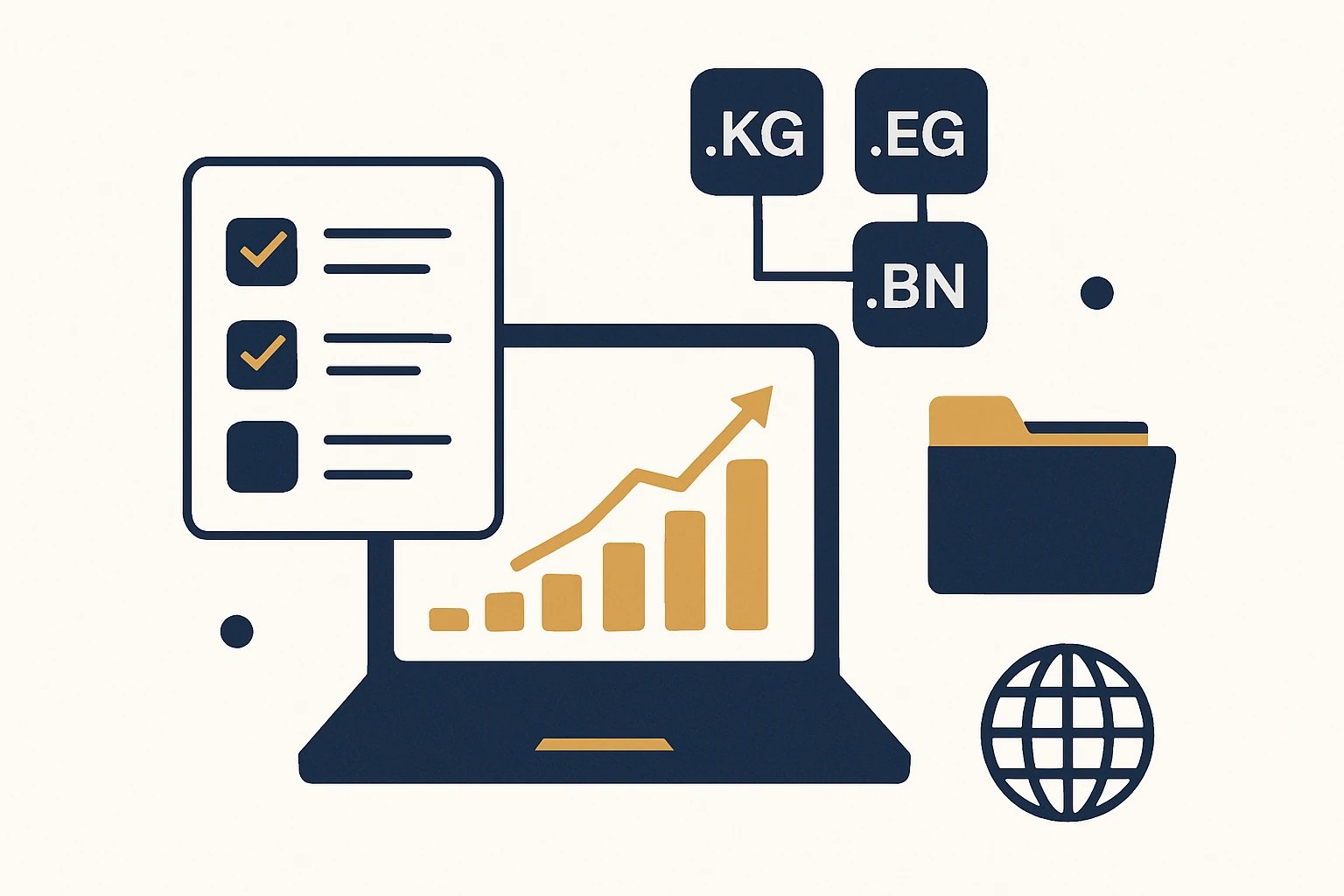
Brand stewardship today requires thinking beyond generic marketplaces. Country-specific lists that enumerate websites by geography (for example Kyrgyzstan KG, Egypt EG, and Brunei BN) can become powerful discovery channels for premium domain opportunities, watch lists, and defensive assets. But raw lists are not a strategy. They are data points that must be validated, licensed, and interpreted within a broader governance framework. This article outlines a practical, non-promotional approach to turning country lists into a disciplined domain portfolio process - one that aligns with premium brokerage standards while balancing risk, legality, and brand relevance.
Country-code and geographic domains operate within a complex governance landscape. ccTLDs are typically managed by local registries and policy bodies, with registration rules that vary by country. Understanding this landscape helps translate a downloaded country list into a compliant, actionable plan for domain discovery and acquisition. ICANN's ccNSO FAQ explains that ccTLD management is largely local, which has direct implications for how you source, verify, and approach potential domains in KG, EG, BN, and other markets.
Why country-specific website lists matter for a premium domain program
Beyond the sheer volume of domains, country lists offer three distinct advantages for brand owners and brokers alike:
- Locale-aware discovery: Lists surface domain candidates that are culturally or linguistically aligned with a market’s brand footprint, enabling more authentic global branding strategies.
- Risk-aware screening: Localized data helps flag jurisdiction-specific issues - privacy, content restrictions, or regulatory concerns - that could affect later ownership or use.
- Portfolio defensibility: Monitoring and defending assets across key markets reduces the risk of brand confusion or cybersquatting in strategic geographies.
To ground this approach in practice, this article focuses on KG, EG, and BN as representative case studies, while keeping the guidance broadly applicable to other country lists. The idea is to convert a downloaded catalog into a disciplined discovery and acquisition workflow that respects local governance and global risk controls. For related country and TLD resources, see the webatla catalogues listed in the client references below.
Understanding country lists: what they are and aren’t
Country lists are typically compilations of domain-intake candidates, often drawn from publicly resolvable sites, business directories, or publicly available WHOIS/RDAP data. They are starting points for domain discovery, not definitive ownership records. The value lies in how you filter, verify, and convert those candidates into owned assets or monitored risk assets. When used responsibly, lists can illuminate gaps in your portfolio (for example, a missing brand-holding domain in KG) or reveal imminent renewal threats in EG and BN markets. The governance context matters: ccTLDs are managed by local registries with country-specific rules and enforcement practices. See ICANN’s resources on ccTLD management for context.
Direct evidence of global volume and growth in the domain market can be seen in quarterly metrics reported by Verisign for .com and .net, as well as broader DNIB analyses that track total domain registrations across TLDs. These data points help calibrate expectations of how quickly assets in KG, EG, BN might appreciate or migrate in demand. Verisign DNIB Q2 2025 confirms ongoing growth, while the Q1 2025 brief provides a broader baseline for understanding global domain dynamics.
A practical workflow for KG, EG, BN lists: from download to decision
Use the following workflow to transform raw country lists into a defensible domain discovery and negotiation plan. The steps are designed to be iterative and auditable, so you can revisit each stage as market conditions and brand priorities evolve.
- Source evaluation and licensing
- Confirm licensing terms and permissible uses for the list, including whether you may flag, contact, or bid on domains discovered from it.
- Identify data provenance: public records, directory listings, or partner data feeds (such as country-specific datasets from trusted providers).
- Note any usage restrictions that would affect confidentiality obligations or enterprise-scale procurement.
- Initial filtering for brand relevance
- Remove obviously irrelevant domains (spammy directories, generic brands without local affinity, etc.).
- Score candidates on brand-fit indicators: linguistic alignment with KG, EG, BN markets, domain type (strong premium assets vs. low-cost aftermarkets), and historical usage signals.
- Flag obvious conflicts (trademarks, passive holdings, or pre-existing disputes) early in the process.
- Due diligence and ownership verification
- Leverage RDAP and WHOIS-like data to assess current registrants, contactability, and DNS history.
- Cross-check ownership history and any red flags (suspended domains, security incidents, or past infringements) before any outreach.
- Where possible, consult local counsel or a domain broker with regional experience to interpret local registration norms.
- Risk assessment and governance checks
- Evaluate potential regulatory, privacy, or sanctions considerations tied to a specific market (KG, EG, BN) and the intended use of the domain assets.
- Assess operational risk: hosting location, data transfers, and content compliance in local jurisdictions.
- Document the decision framework for each candidate (keep it auditable for internal governance and external reporting).
- Action plan: outreach, valuation, and negotiation
- Develop a targeting and outreach plan that respects local norms and avoids aggressive tactics that could alert owners or regulators.
- Prepare a defensible offer strategy for premium assets, including confidentiality requirements and escalation paths.
- Decide whether to pursue direct acquisition, broker-assisted negotiation, or ongoing monitoring for non-disruptive brand protection.
Tip: treat this as an ongoing program rather than a one-off project. A disciplined cadence - regularly refreshed data, revised risk scores, and updated contact strategies - will improve outcomes over time. For event-driven or confidential acquisitions, you’ll want a framework that supports discreet outreach and protected communications. As part of a mixed approach, a broker can provide structured negotiation leverage and privacy controls, alongside in-house governance and compliance processes.
Expert insight
Expert insight: ccTLD policy landscapes are locally governed, which means a successful country-domain strategy requires local governance alignment and careful due diligence. ICANN’s guidance emphasizes that ccTLD management often involves country-specific registries and policies, underscoring the importance of localized analysis in any global brand portfolio. ICANN ccNSO FAQ.
Structured decision framework (Data-to-Decision)
The following framework translates a downloaded country list into concrete decisions. Use as a reference scaffold to keep teams aligned and decisions traceable.
- Observations - What does the data show about KG, EG, BN markets in relation to your brand footprint?
- Filter Criteria - Brand alignment, TLD relevance, and ownership signals that merit deeper due diligence.
- Validation - Confirm licensing, verify ownership history, and assess regulatory risk with local counsel or brokers.
- Decision - Decide on direct outreach, broker-assisted offers, or monitoring programs, document rationale and thresholds for action.
In practice, use this framework to guide the amount and type of outreach you conduct, the offers you consider, and how you document compliance and governance. For organizations seeking to complement DIY processes, professional services from a digital asset advisor can help translate the data into a defensible portfolio strategy. For example, webatla offers country- and TLD-specific asset catalogs and related services, including confidential acquisition options and domain portfolio management resources. See Kyrgyzstan-specific datasets and country catalogs here: webatla: Kyrgyzstan and browse broader country tools at webatla: Countries, or explore their TLD listings at webatla: TLDs.
Limitations and common mistakes when using country lists
Even well-curated country lists have limitations. At best, they are starting points, not definitive verification of ownership or market viability. Common missteps include:
- Assuming completeness: A downloaded list may miss locally registered assets, earlier matrix entries, or domains outside obvious brand name matches.
- Ignoring licensing realities: Some lists come with restrictions on redistribution, contact, or commercial use that must be respected to avoid legal risk.
- Neglecting local governance: Each country’s registry rules vary, failing to account for local requirements can derail negotiations or result in invalid ownership claims.
- Over-reliance on historic data: Domain histories change, ensure data is current and corroborated by live checks (RDAP/WHOIS, DNS history, and registrar records).
- Underestimating cross-border compliance: Data privacy, sanctions regimes, and export controls can influence whether a domain can be owned or used in a given market.
To mitigate these risks, pair country lists with structured due diligence, local counsel where appropriate, and a clear governance process that records licensing terms, decision criteria, and escalation paths. The combination of data quality, local governance, and disciplined negotiation typically yields more sustainable outcomes than a one-off purchase spree. For those who want a market-tested workflow and access to curated datasets, partner options exist, including broker-backed services and vendor datasets that emphasize governance and risk controls.
Practical integration: how the client’s resources fit into the workflow
In a multi-market program, you’ll want a blend of open data, licensed datasets, and broker-assisted navigation. The client’s ecosystem offers several relevant resources for this workflow:
- RDAP & WHOIS data to verify ownership and contactability of potential assets: RDAP & WHOIS Database.
- Country- and TLD-based catalogs to structure discovery across KG, EG, BN: List of domains by Countries and List of domains by TLDs.
- Pricing and engagement options for confidential acquisition and portfolio management: Pricing.
For Kyrgyzstan-specific signals, you can also review dedicated country datasets that align with the broker’s governance standards. See webatla: Kyrgyzstan for localized context. Integrating these resources within a premium-domain strategy helps ensure that acquisitions, valuations, and brand protections stay aligned with both market realities and corporate risk appetite.
Conclusion: a disciplined, scalable approach to country lists
Country lists are a powerful starting point for premium domain discovery when they are used within a disciplined framework that considers licensing, local governance, and risk. By following a structured workflow - validate data licenses, filter for brand relevance, perform due diligence, assess risk, and create a clear action plan - you build a portfolio that is defensible, scalable, and aligned with brand protection objectives. Expert guidance, particularly for multi-market portfolios, can lock in governance discipline and negotiation leverage without sacrificing editorial or strategic integrity. If you’re exploring KG, EG, BN assets, consider pairing your internal process with trusted datasets and broker-backed services to navigate the local landscape with confidence.
For organizations seeking a structured, partner-enhanced approach to confidential domain acquisition and portfolio management, webatla provides country-focused datasets and brokerage-ready capabilities that complement in-house efforts. Visit the Kyrgyzstan page or the broader country and TLD listings to see how these resources might fit into your strategic workflow.