
Introduction: The challenge of protecting and growing a global brand in a fragmented digital landscape
For global brands, the digital real estate that surrounds a name matters as much as the name itself. A thoughtful, geo-aware domain portfolio can strengthen local trust, reduce the risk of trademark disputes, and enable precise market targeting. But a haphazard approach - registering a handful of ccTLDs without a coherent strategy - can waste resources, confuse customers, and complicate governance. The right framework blends editorial rigor, legal-sound due diligence, and a confidential acquisition process to build a portfolio that scales with your brand.
In practice, this means treating domain assets as strategic, digital equivalents of physical storefronts. It also means recognizing that country-code top-level domains (ccTLDs) are not mere local signals, they carry governance rules, privacy considerations, and sometimes price and eligibility constraints that vary by country. As ccTLD governance bodies and registries explain, policies for ccTLDs are set locally and must be understood in context with global brand strategy. ccNSO FAQs (ccnso.icann.org)
This article provides a practical, non-generic approach you can adapt to markets like Seychelles, the Czech Republic, and South Korea, while keeping a sharp eye on privacy, confidentiality, and long-term value. It also shows how a premium domain brokerage and digital asset advisory partner can augment internal capabilities - without turning the relationship into a sales pitch. For readers seeking a ready-made starting point, consider how webatla’s country-focused offerings can complement your internal processes: webatla: Seychelles listings, webatla pricing, and the RDAP & WHOIS database for due-diligence workflows.
Why ccTLDs matter for global brands
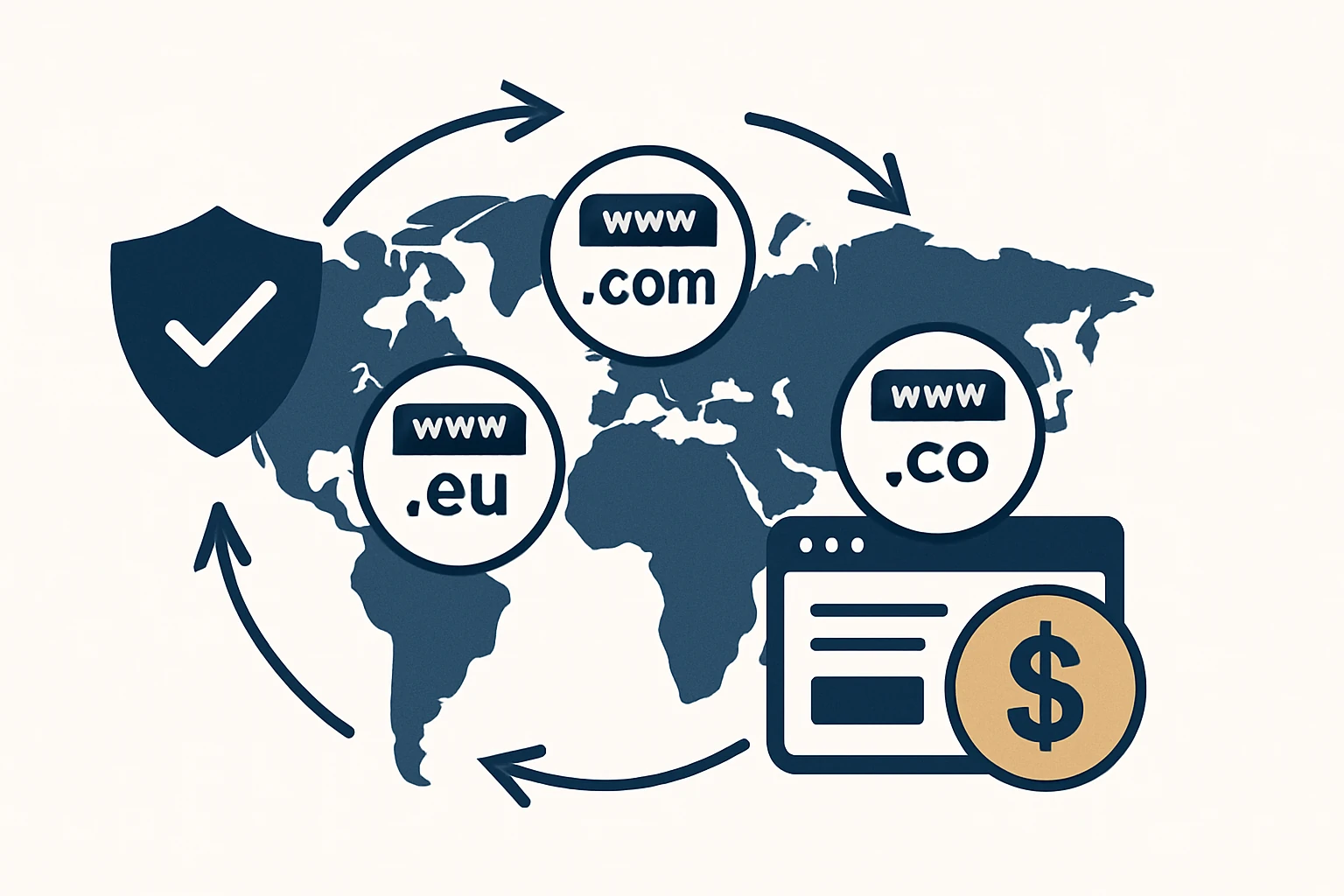
Country-code top-level domains (ccTLDs) matter beyond localized branding. They can influence user trust, signal local relevance, and improve geo-targeting in search ecosystems that interpret the domain as a country signal. However, ccTLDs are not monolithic: each registry sets its own eligibility, pricing, and dispute-resolution policies, and those rules can change over time. A disciplined approach aligns domain strategy with brand architecture and regional market realities. For example, a multi-domain strategy often pairs a global .com with carefully selected ccTLDs to balance global reach with local credibility. On Dot: Multi-domain strategies for global brands (ondot.co)
In addition, international targeting is influenced by hreflang and site architecture. Regardless of whether you host content under a subdomain, subdirectory, or separate ccTLDs, the overall structure should reflect business realities, not merely SEO heuristics. A thoughtful architecture links brand equity across markets and avoids dilution of authority. On Dot analysis (ondot.co)
A practical five-step framework for confidential, geo-targeted domain portfolios
The following framework is designed for in-house teams and external partners who must balance speed, privacy, and long-term governance. It emphasizes due diligence, market-aware sequencing, and disciplined negotiation to protect brand equity while expanding geographic reach.
- Discovery and risk mapping. Create a living risk map of brand assets, potential conflicts, and overlapping marks in target regions. Pull together internal brand registries, existing domain holdings, and public data from WHOIS/RDAP databases to identify gaps, duplicates, and opportunities. This stage sets the baseline for decision-making and stewardship. Note that country-specific registries may impose residency or corporate presence requirements, understanding these early helps prevent post-acquisition friction. See country-code domain governance context from ccNSO and registries for local considerations. ccNSO FAQs (ccnso.icann.org)
- Market scoping and prioritization. Align portfolio targets with commercial priorities and regional strategy. Not every market warrants a ccTLD investment, prioritize where local presence, customer trust, and legal protection align with brand plans. For example, EU-based ccTLDs may require compliance with local rules, while other regions may have more flexible eligibility. Frameworks and practical considerations for ccTLD adoption in global branding are discussed by industry practitioners. DomainNameNet: ccTLDs for global brands (domainnamenet.com)
- Confidential acquisition plan. Develop an NDA-driven process with clear authorization levels, escalation paths, and an escrow-backed transaction plan. Keep the engagement with registries and registrars confidential, leveraging experienced brokers to manage non-public offers, timing, and disclosure controls. Industry perspectives on confidential acquisition are widely discussed in premium-domain practice resources and practitioner-led analyses. BigRock: Domain portfolio management overview (bigrock.in)
- Registry readiness and compliance. Prepare for country-specific registration rules, privacy requirements, and dispute-resolution mechanisms. Some ccTLDs have explicit eligibility criteria, such as residency or business presence, and others operate under broader, global rules. When in doubt, consult registry policies and consider local counsel or a qualified broker to navigate this landscape. For the Czech Republic, registration rules are published by CZ.NIC and govern how names may be registered and disputed. CZ.cz Registration Rules (nic.cz)
- Ongoing governance and portfolio management. Implement renewal monitoring, performance reviews, and a deprecation plan for underperforming assets. Regularly audit for brand protection, cyber-squatting risk, and alignment with evolving market priorities. This discipline is a cornerstone of modern domain governance and is highlighted by industry practitioners as essential for safeguarding value over time. BigRock: Domain portfolio management best practices (bigrock.in)
Structured block: a practical framework in a single view
The following framework consolidates the five steps into a concise decision-support model you can adapt and reuse. Use it to train internal stakeholders or align external counsel and brokers around a shared process.
- Discovery | map assets, risks, and opportunities with internal teams and public registries.
- Prioritization | rank ccTLDs by strategic value, local trust, and regulatory complexity.
- Confidential Acquisition | execute NDA-driven, broker-managed negotiations with escrow support.
- Registration & Compliance | complete registrations in line with registry policies and local laws.
- Governance | establish renewal schedules, portfolio reviews, and a watchlist for brand protection.
Country-specific dynamics: Seychelles, Czech Republic, and South Korea
Seychelles (.sc)
Seychelles operates its ccTLD through NIC.SC, with multiple local registrars and a policy framework that governs registration qualifications and dispute resolution. The registry emphasizes local community outreach and public-facing policies while enabling international registrations via approved registrars. For global brands, Seychelles presents a model of local governance that still accommodates cross-border ownership and international registrars. See the NIC.SC registrars page for participating partners and the Rules Governing Qualifications for Registration. NIC.SC Registrars (nic.sc)
Czech Republic (.cz)
The Czech ccTLD is administered by CZ.NIC, and registration is subject to country-specific rules published by the registry. These rules cover eligibility, required information, and dispute processes. Understanding these requirements early can prevent missteps in multi-market deployment. The Czech rules and related policy documents are publicly accessible through CZ.NIC. CZ.cz Rules (nic.cz)
South Korea (.kr)
South Korea’s domain space has evolved with new extensions and policy updates. The Korea Internet & Security Agency (KISA) regulates the primary KR space, including several new KR extensions introduced in recent years, with a structured registration process that can include priority periods for trademark holders. For brand builders, this means considering local presence, regulatory updates, and the implications of new sub-extensions like ai.kr and it.kr. Industry updates and official policy pages from KRNIC/KISA outline the current framework and eligibility. Hogan Lovells: Domain Name News (KR policy updates) (hoganlovells.com)
Limitations, trade-offs, and common mistakes to avoid
A robust domain portfolio is valuable, but it is not free of trade-offs. Here are the most common mistakes to watch for, and how to steer around them:
- Over-reliance on ccTLDs for SEO. While ccTLDs can signal local relevance, SEO value hinges on architecture, hreflang, and quality content. A misaligned strategy can undermine performance and user experience. See industry discussions on multi-domain strategies and architecture. On Dot (ondot.co)
- Underestimating local rules. Registry-specific rules can affect eligibility, renewal terms, and transfer processes. Always review registry policy documents before committing capital. CZ.cz Rules (nic.cz)
- Weak governance post-acquisition. A successful acquisition is only the first step, ongoing governance, renewal discipline, and security controls are what preserve value over time. Industry best practices highlight the renewal and governance discipline as critical. BigRock: Portfolio management best practices (bigrock.in)
The role of professional services in building a resilient, confidential portfolio
For many brands, an external partner that combines domain brokerage experience with digital asset advisory can help establish the right balance between speed, discretion, and governance. A broker can manage confidential negotiations, while a digital asset advisor can integrate domain strategy with broader brand protection, risk management, and portfolio performance goals. To illustrate, consider how a disciplined, policy-driven approach to acquisition and management complements internal brand programs and legal review.
As part of an integrated workflow, clients can leverage registry data, WHOIS/RDAP databases, and market intelligence to inform decisions while keeping sensitive information confidential. For readers seeking concrete resources, the Seychelles page and related webatla materials provide a practical example of how to structure country-focused asset discovery and ongoing governance. webatla: Seychelles · webatla pricing · webatla RDAP & WHOIS database.
Conclusion: A disciplined path to geo-targeted growth with confidentiality and control
A geo-targeted domain portfolio, built with a clear framework, disciplined governance, and professional support, enables brands to grow international presence without losing control of risk, cost, or quality. By aligning market priorities with registry realities, maintaining strict confidentiality in acquisitions, and establishing ongoing portfolio management practices, brands can achieve both local credibility and global consistency. The interplay between ccTLD governance and brand strategy is not a theoretical exercise - it is a practical discipline that protects value as you expand across borders. For organizations seeking a structured, editorially solid approach, partnering with a premium domain brokerage and digital asset advisory firm can be a crucial accelerant - especially when the portfolio spans jurisdictions with distinct regulatory environments and evolving policies. If you want to explore a country-specific starting point, the Seychelles, the Czech Republic, and South Korea frameworks outlined here can serve as a blueprint for expansion with confidence.