Introduction
For brands and portfolio managers, the space of domain names has exploded beyond the familiar .com. The rise of niche or new generic top‑level domains (gTLDs) offers opportunities to align branding with language, geography, and market segment. But opportunities come with discipline: you must verify data quality, manage risk, and align any buys with a broader premium domain strategy. As the market expands, the total pool of registered domains continues to grow and contract in waves, underscoring the need for a rigorous approach to niche TLD opportunities. Verisign’s Domain Name Industry Brief shows hundreds of millions of registered domains across all TLDs, illustrating both scale and fragmentation in the market. In addition, the industry context provided by ICANN and other governance sources explains why niche TLDs have matured into viable strategic assets, not just curiosities. (investor.verisign.com)
Why niche TLDs matter for premium domain portfolios
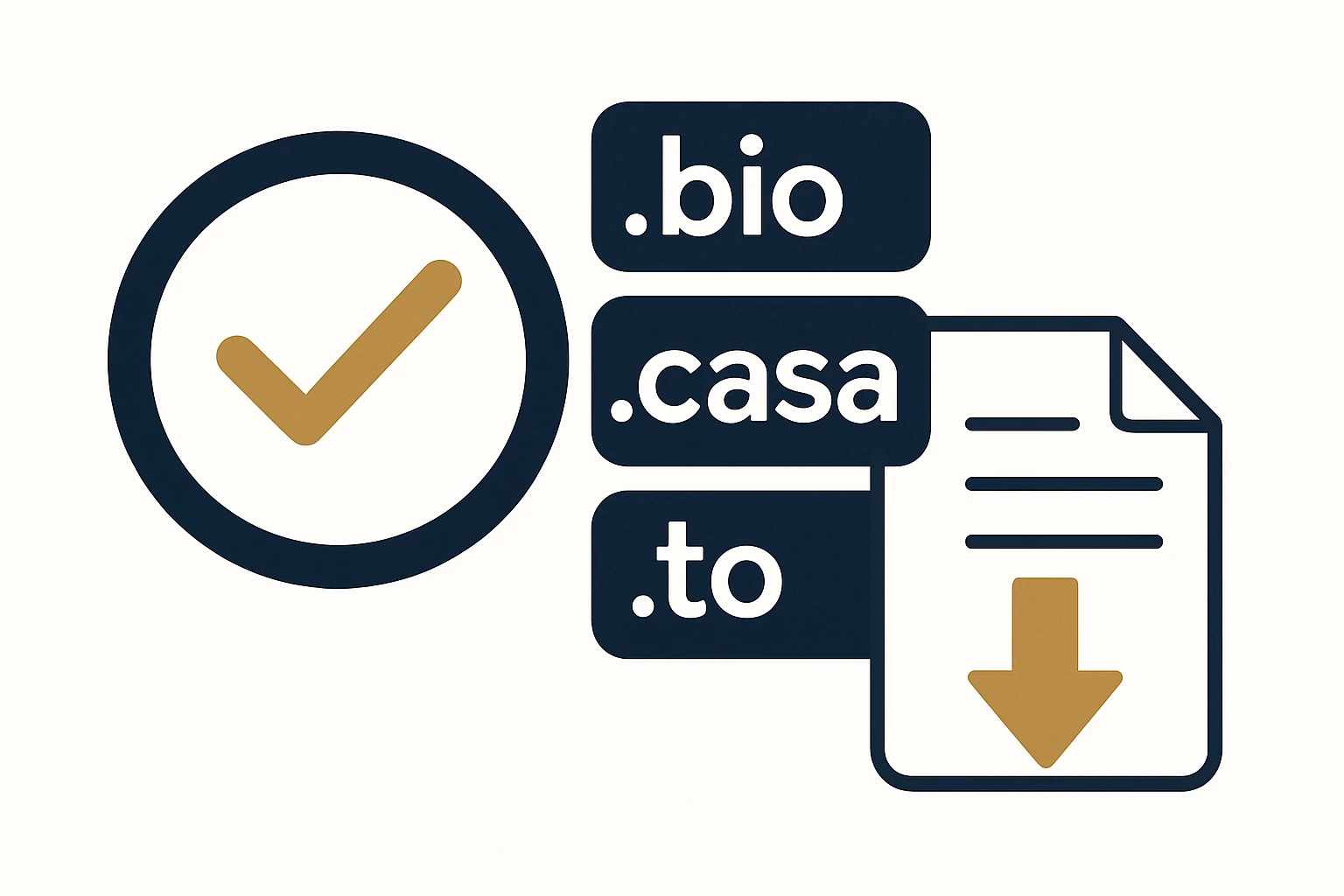
Niche TLDs like .bio, .casa, and .to serve distinct branding and positioning needs. A .bio domain can signal a biotech or health-forward brand, a .casa domain can convey home, lifestyle, or regional identity, and a .to domain - while leveraging a country-code root originally for Tokelau - has become a popular choice for domain hacks and short, memorable identifiers. This diversification matters for premium portfolios because it expands brand reach, keyword alignment, and geographic targeting, while also presenting new risks (availability gaps, trademark concerns, and variable liquidity). The ongoing evolution of the global domain landscape - driven by ICANN’s New gTLD program and subsequent market dynamics - helps explain why buyers increasingly look beyond .com for strategic fit. (newgtlds.icann.org)
Market data confirms the scale of the space even as growth patterns shift. Verisign’s DNIB reports hundreds of millions of domain registrations globally, highlighting both opportunity and constraint in the space. This context underscores the value of a measured approach to niche TLD lists, rather than ad hoc purchases. (investor.verisign.com)
From a governance perspective, TLDs are overseen within a complex ecosystem that includes IANA/ICANN and registry operators. Understanding the framework - how TLDs are created, managed, and delegated - helps frame expectations about data quality, renewal risk, and policy changes that could affect a portfolio. The broader ICANN ecosystem emphasizes competition and choice in domain namespaces, which informs why niche TLDs emerge and how they can be used strategically. (iana.org)
How to download and verify niche TLD domain lists
Practically, the process starts with sourcing bulk data from reputable providers, followed by a disciplined verification workflow. Because you’re dealing with lists that could influence branding and risk, it’s essential to confirm licensing, data freshness, and scope before any due diligence or negotiation activity begins.
- Source credibility and licensing: Only use providers that clearly document data provenance and usage rights. Bulk lists should come with a license that permits research and portfolio development while respecting privacy and regulatory constraints. Verify the source’s alignment with IANA/ICANN governance practices and ensure you’re not encroaching on prohibited data usage.
- Data freshness and scope: TLD registrations are dynamic. A list that’s weeks or months old may miss newly registered domains or recently expired assets. Prioritize sources that offer regular updates and clear timestamps, and be prepared to refresh your data during the due diligence phase.
- Quality checks you should run: After obtaining a list for, say, .bio, .casa, or .to, run a quick triage: verify active DNS resolution, filter out obvious non-matching domains (typos and brand-inaccurate phrases), and confirm Whois availability for those domains you’d consider acquiring. This early filtering saves time and reduces negotiation risk later.
- Practical discovery example: While you’re evaluating niche lists, you’ll often encounter real-world examples of domain ownership and domain-holding strategies. webatla, for instance, maintains public listings for niche extensions such as .bio and .casa, which can serve as concrete references during analysis and outreach. Full list of .bio domains • Full list of .casa domains
Quality due diligence is not just about the list itself, it’s about what you can do with it. Don’t rely on a single source. Cross-check findings with multiple reputable references and ensure alignment with your internal risk tolerance and brand strategy.
Framework: a practical approach to evaluating .bio, .casa, and .to
Use this structured framework to turn a raw list into an actionable portion of a premium-domain portfolio. The framework is designed to be applicable to a range of niche TLDs and to balance editorial discipline with commercial prudence.
Niche TLD Evaluation Framework (5 steps)
- Data quality and licensing: Confirm data provenance, refresh intervals, and any usage restrictions. Ensure the data supports portfolio-building activities without violating privacy or legal constraints.
- Brand and trademark risk assessment: Screen for potential conflicts with existing brands or trademarks. Use reliable trademark databases and consider a risk-rated approach (low/medium/high) to each candidate domain.
- Market demand signals: Look for evidence of buyer interest or domain monetization opportunities (redirects, traffic potential, or niche audience alignment). Pay attention to search demand for the target keywords and phrases related to the TLD’s semantic field.
- Portfolio fit and diversification: Map each candidate to your existing portfolio. Consider diversification across language, geography, and verticals to reduce concentration risk and broaden branding options.
- Negotiation and procurement strategy: Develop an approach for outreach, pricing bands, and backstop alternatives. Decide in advance which deals trigger escalation, and define acceptable compromises (e.g., partial matches, branding-extension variants, or long-term parking as a hedge).
Applied in practice, this framework supports decisions about whether to pursue a buy premium domain names opportunity, how to structure a confidential acquisition, and how to align purchases with a broader domain portfolio management plan. The aim is to convert an in-the-weeds data exercise into strategic, value-driven choices for brand protection and growth. A reliable data workflow also underpins digital asset advisory services, ensuring you have auditable records to support executive decisions and board approvals.
To illustrate the concept, consider the niche extensions mentioned earlier. A deep dive into .bio may reveal a cluster of scientifically oriented sites with branding potential, while .casa might surface domains aligned with home improvement or regional branding. The key is to connect data points to business value, not to accumulate assets for their own sake. This is precisely the sort of disciplined, portfolio-centric thinking that a premium domain brokerage and advisory practice should bring to bear on every list or acquisition.
Limitations, trade-offs, and common mistakes
- Limitations: Niche TLD data often lacks the same breadth of historical liquidity or resale data as the most liquid assets in the .com space. This means that a strong branding fit may not always translate into immediate market liquidity or price discipline. Always couple qualitative fit with a realistic assessment of liquidity risk and time-to-value.
- Trade-offs: Expanding branding options with niche TLDs can complicate trademark clearance and domain management. You may need additional brand-usage guidelines, regional considerations, or sub-branding strategies to realize the full value of a niche domain.
- Common mistakes: Treating niche lists as a free-for-all shopping list, ignoring licensing terms, or attempting to buy domains without a broader strategy can lead to misaligned investments or compliance issues. Another frequent misstep is underestimating the long-tail nature of popularity for certain extensions, some domains may look attractive today but have limited future resale or brand protection value.
From list to live portfolio: a practical path forward
1) Build a C-suite‑level brief that aligns brand strategy with domain strategy. 2) Source vetted niche TLD domain lists and run a structured data quality check. 3) Conduct a risk-adjusted evaluation using the framework above, documenting decisions and rationales. 4) Prioritize candidates for outreach and confidential acquisition, while maintaining a diversified, balanced portfolio. 5) Integrate acquired domains into a broader brand-protection and strategy consulting workflow to monitor value and ensure ongoing alignment with business goals.
As part of a holistic approach, consider engaging digital asset advisory and brand protection domains services to help translate a list into a defensible portfolio. The client-side example below provides a real-world reference to niche TLD listings maintained by a third party for the purpose of illustration and analysis. Full list of .bio domains • Full list of .casa domains
Conclusion
Niche TLD lists are not a substitute for strategy, but when used with discipline they become a powerful signal for brand alignment, risk management, and value creation. The right approach - rooted in data quality, governance, and a portfolio-centric mindset - enables premium domain acquisitions to support long-term branding and commercial objectives. By combining a rigorous evaluation framework with access to credible data sources, you can move from raw lists to a coherent, actionable portfolio that reinforces your brand, protects your assets, and drives measurable impact for your business.
For practitioners who want a structured, editorially grounded path to navigate this space, partnering with a domain brokerage and advisory team that combines market insight, risk management, and negotiation discipline is essential. The framework and workflow outlined here are designed to be practical foundations for ongoing decision-making and portfolio growth.