Introduction: The case for niche TLDs in a modern brand strategy
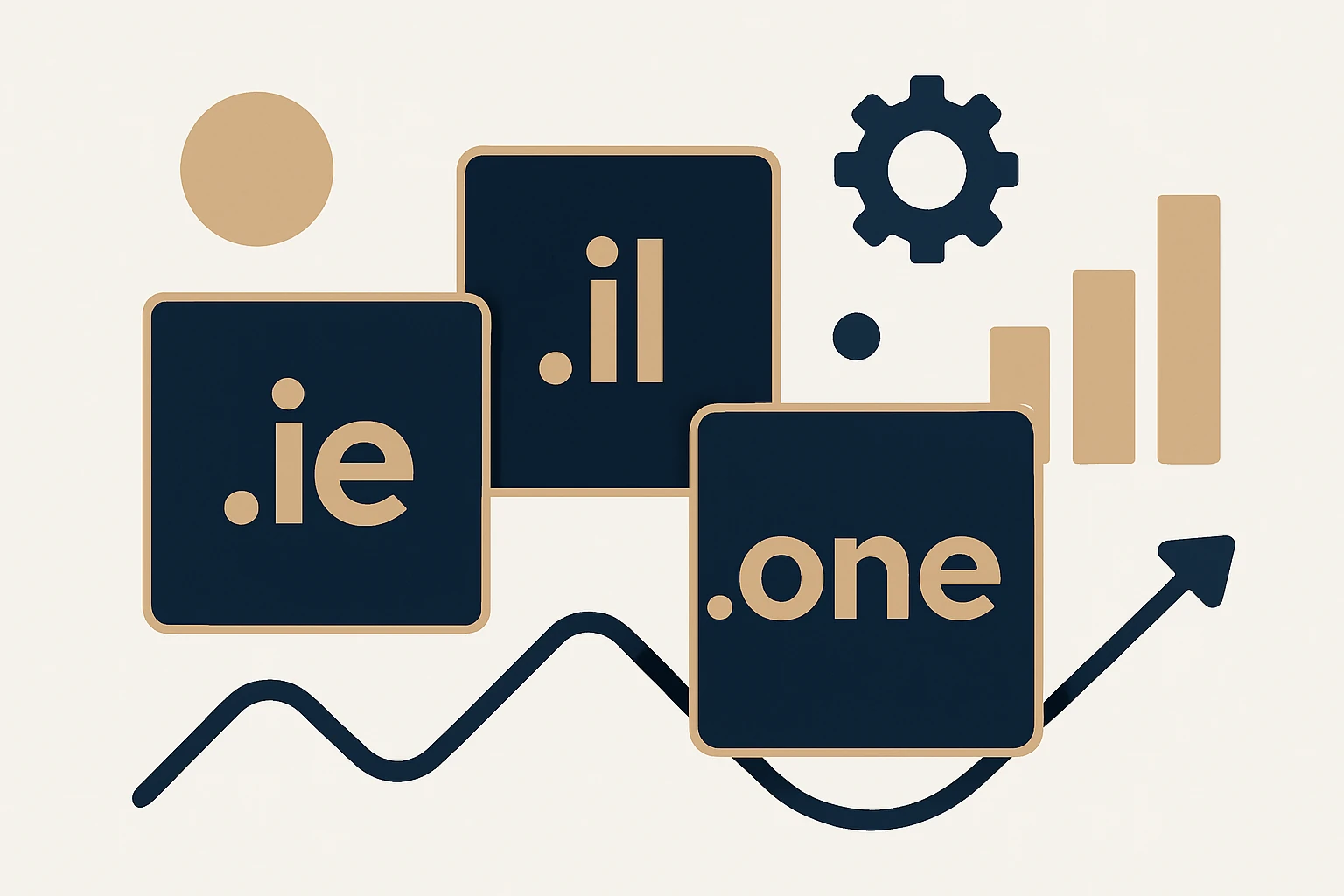
Global brands increasingly look beyond .com to signals of local relevance, regional trust, and differentiated identity. Niche TLDs like .ie (Ireland), .il (Israel), and .one (a newer generic TLD) offer distinctive branding options, but they come with unique eligibility rules, market dynamics, and data-access considerations. A thoughtful approach to sourcing and evaluating domain lists in these TLDs can unlock strategic opportunities - whether you’re defending brand names, entering a new market, or launching country-specific campaigns. This article outlines a practical framework for finding, downloading, and assessing lists of candidate domains in .ie, .il, and .one, while balancing brand protection, portfolio management, and confidential negotiation priorities.
Understanding the landscape of selected niche TLDs
Each TLD carries its own regulatory context, risk profile, and branding implications. A realistic strategy requires recognizing these nuances upfront.
.ie: Ireland’s ccTLD with connection requirements
The .ie namespace is operated by the IEDR, which sets registrant terms and eligibility rules. Importantly, registrants must generally demonstrate a real connection to Ireland, with policy detail published by the registry. This matters for brand-domain planning, as certain names may be restricted or require local documentation or business ties. For an overview of eligibility and policy, see the IEDR Registrant Terms and Conditions and related registry information about registration rules and disputes.
For context, Ireland’s .ie registrations have shown growth, reflecting ongoing e-commerce and digital activity in the Irish market. Disclosures from the registry’s policy pages and registrar ecosystem emphasize that registrations depend on verifiable connections and compliant use. IEDR Registrars help explain who can register and how renewal/terms work within the ecosystem.
.il: Israel’s registry rules and practical considerations
.il is governed by ISOC-IL with explicit registration rules that shape who can register certain domains and under which second-level structures. The registry documents outline allocation, allocation rules, and the need to comply with policy and technical requirements. Understanding these rules is essential when you’re evaluating whether a .il domain fits a brand expansion plan. See the registry’s ISOC-IL Registration Rules for detailed guidance.
.one: a broader, opportunistic new gTLD
.one is one of the newer generic top-level domains and is commonly marketed as a flexible namespace for diverse branding narratives. While open to many applicants, the TLD remains governed by registrar policies and prevailing marketplace dynamics, with registration rules varying by registrar. For a quick primer on what .one is and how it’s positioned, see industry resources and registrar pages such as GoDaddy’s .one overview and a general explanation from registrars like Namecheap’s .one overview.
Why you might want to download lists of niche domains
Actionable lists of candidate domains can inform risk-aware acquisition decisions, especially when you’re building a portfolio across several TLDs. When used responsibly, these lists help you identify brands and domain names that align with your strategy, while avoiding obvious conflicts with existing brands or registrant issues. It’s important to note that access to complete zone data for ccTLDs (like .ie and .il) is often restricted or regulated, whereas generic gTLDs may offer different data-access pathways. ICANN’s Zone File Access framework explains how registry operators provide bulk access and the role of CZDS for many gTLDs, while many ccTLDs do not publish zone files publicly. Zone File Access - ICANN, for general gTLD data access, see CZDS and Verisign’s zone file overview. These policies affect how you obtain, refresh, and validate lists for your diligence process.
In practice, you may use vendor or registry-approved data channels to compile a targeted list, and then perform independent checks (ownership, use, and risk) before initiating any outreach. The distinction between publicly available listings and zone-file-backed datasets matters for scale, speed, and due-diligence rigor.
A practical framework to source, download, and vet niche domain lists
Below is a structured approach you can adapt for a disciplined, risk-conscious domain-sourcing program. It emphasizes a balance between speed (to capitalize on market windows) and governance (to protect your brand and data).
Structured framework for niche TLD acquisitions
- 1) Align on business objectives - Clarify whether you’re defending brand names, expanding into a new geography, or testing generic branding concepts. Specificity here will drive which TLDs to weight and which domains to deprioritize.
- 2) Gather candidate data - You may start with publicly accessible lists or registry-approved data channels. Importantly, you should consider the regulatory and access implications for each TLD. For .ie and .il, consult the respective registries about eligibility and data access, for example, registry policies and registrar information shape what you can legally register and how you source lists. See the IEDR registrar information for real-world registration mechanics and policy context, and ISOC-IL’s registration rules for .il.
- 3) Download and curate lists - When you download list data, ensure you’re compliant with terms of use and data protection obligations. For niche TLDs, you may encounter restrictions on bulk downloads or require direct engagement with registries/registrars to access data. In the gTLD space, CZDS provides bulk zone data access subject to an approval process, ccTLDs may not publish zone files publicly. See ICANN’s Zone File Access guidance and Verisign’s zone file resources for how these data streams work in practice.
- 4) Pre-screen for brand-fit - Apply a rubric that weighs memorability, alignment with markets, and risk signals (safety, brand confusion, and potential trademark conflicts). Your rubric should be language- and market-aware, not just keyword-focused.
- 5) Due diligence and governance - Validate ownership, renewal status, and hosting needs. Use RDAP & WHOIS databases to confirm registrant details and to track portfolio hygiene. The client’s RDAP/WHOIS database can be a valuable companion resource in tandem with registry-provided data.
- 6) Confidential negotiation approach - In sensitive acquisitions, consider using a broker to preserve anonymity until terms are agreed. Maintain a clear trail of approvals and escalation points to avoid leakage or misinterpretation.
- 7) Portfolio integration and protection - Once acquired, integrate the new domains into your brand portfolio with strategy-aligned routing (branding, redirection, content strategy) and guard against brand-tracking risk. Consider ongoing domain portfolio management as part of an enterprise-wide digital asset strategy.
Concrete steps to execute: from list to action
Here is a concrete, action-oriented sequence you can adapt. It weaves together data sourcing, validation, and practical decision-making.
- Step 1: Define scope by market and message - Are you signaling a local Irish market entry with an Irish brand name, or testing a global concept with .one? Your scope informs which names to chase and which to deprioritize.
- Step 2: Collect candidate lists - Use reputable sources to assemble preliminary pools. If you’re pursuing Ireland, you might review the download list of .ie domains in coordination with IEDR and licensed registrars. If you’re exploring Israel or the .il namespace, ISOC-IL’s rules will guide eligibility checks before you commit to registrations.
- Step 3: Normalize and clean data - Remove obviously ineligible or conflicting entries, standardize formatting, and annotate potential risk flags (e.g., near-corporate names, obvious mis-spellings, or trademark risk).
- Step 4: Apply a brand-fit rubric - Use a scoring scale (e.g., 0–5) across dimensions such as memorability, pronunciation, length, and alignment with product or geography. Include a separate risk score (trademark exposure, cybersquatting history, or political/regulatory sensitivity).
- Step 5: Validate ownership and renewal status - Confirm current registrant, registration period, and renewal cost. RDAP/WHOIS data can help, alongside registry or registrar corroboration. If you’re working with a data provider, ensure you understand data provenance and refresh cadence.
- Step 6: Engage confidentially - When a target name has high strategic value, work with a broker who can negotiate discreetly and preserve confidentiality during outreach.
- Step 7: Decide on action and portfolio integration - Decide whether to acquire, park, forward, or reject. Integrate approved acquisitions into your broader digital asset strategy, including brand protection measures and ongoing portfolio review.
Practical considerations and common caveats
While niche TLDs offer clear branding opportunities, several practical limitations shape execution.
- Data access varies by TLD - While gTLDs can offer CZDS-based zone data for bulk analysis, many ccTLDs (such as .ie and .il) do not publish complete zone files publicly, necessitating registry-direct or registrar-assisted data channels. See ICANN’s Zone File Access framework for the formal landscape and CZDS information for generic TLDs. Zone File Access - ICANN • CZDS • Verisign Zone File Resources.
- Eligibility and policy vary by TLD - Ireland’s .ie policy requires a real connection to Ireland, Israel’s .il has allocation rules and governance by ISOC-IL, .one is a more open global namespace but still subject to registrar terms and marketplace dynamics. For the .ie context, see the IEDR registrant terms and conditions and registrar guidance. IEDR Registrant Terms and Conditions • IEDR Registrars . For .il, see ISOC-IL Registration Rules.
- Zone data is not always public for ccTLDs - Expect reliance on registry partnerships or data vendors rather than bulk zone downloads for certain TLDs. This reality informs how you source and refresh candidate lists over time.
- Brand protection requires ongoing discipline - Buying a domain is only part of the story. A disciplined portfolio-management approach, including trademark clearance, monitoring, and renewal discipline, is essential to avoid later disputes or inadvertent brand fracture.
Limitations and common mistakes to avoid
Even well-intentioned strategies can stumble. Here are typical missteps and how to mitigate them:
- Over-emphasizing short, generic forms - While short domains can be memorable, they may lack geographic or brand precision, and in some TLDs, they may be restricted or costly. Balance brevity with relevance and risk considerations.
- Assuming all data is equally accessible - Don’t assume that every TLD provides easy, bulk download capabilities. The regulatory and operational reality differs by registry, plan data access accordingly.
- Ignoring local-market nuances - A domain that sounds compelling in English may lack resonance or raise misinterpretation risks in a local language context. Incorporate local market testing into your vetting process.
- Under-investing in due diligence - Skipping ownership checks or renewal risk analysis can derail a project after acquisition. Leverage RDAP/WHOIS data and registry guidance as part of a disciplined diligence workflow.
Putting it into practice: a concise example
Consider a brand planning a regional expansion into Ireland and Israel, with a parallel global campaign using a flexible namespace like .one for a sub-brand. The first move is to assemble candidate lists for .ie, .il, and .one, with an eye toward names that mirror core brand terms but avoid trademark conflicts. You would then apply a scoring rubric to assess memorability, market fit, and risk signals, followed by targeted outreach through a confidential broker when appropriate. Through an integrated process that combines registry policy awareness, careful data sourcing, and portfolio-management discipline, you can accelerate decision-making while protecting the brand. For Ireland, consult IEDR policy materials to understand eligibility, for Israel, review ISOC-IL registration rules, for .one, monitor registrar guidance and market dynamics.
In parallel, leverage the client’s data resources to cross-check ownership and historical use, and consult the client’s RDAP & WHOIS database for rapid verification during diligence. This multi-source approach helps ensure that you’re acting on solid information rather than assumptions.
Conclusion
Niche TLDs offer tangible opportunities for brand signaling, market-entry posture, and portfolio diversification, but they require a disciplined approach to data access, eligibility checks, and risk management. By combining a clear strategic objective with a structured data-gathering and vetting process - and by leveraging registry policies and data access channels - you can move from a raw candidate list to a defensible, growth-oriented domain portfolio. If you’re navigating this space, consider how a brokered, confidential, and data-informed approach can complement your existing brand-asset strategy. As you build and protect your digital footprint, a well-governed process for sourcing .ie, .il, and .one domains will help you stay competitive without compromising brand integrity.
For ongoing data support and confidential acquisition guidance, you can reference the client resources at webatla’s IE domain data page and the broader suite of data services, including RDAP & WHOIS database access. These resources are designed to help brands make informed, strategic decisions when expanding across niche TLDs.