Introduction: The value of niche TLDs in a premium portfolio
For global brands and ambitious startups, the domain landscape offers more than just a name. It provides a substrate for brand trust, regional targeting, and long‑term protection of digital assets. The traditional reflex - spend on a familiar .com - often misses the strategic leverage that niche top‑level domains (TLDs) can deliver when selected with intent. While Google and other search engines stress that TLDs do not directly boost rankings, the right TLD can improve local relevance, user perception, and protection against brand abuse. In practice, niche TLDs such as .berlin, .ge, and .support are not just vanity extensions, they are signals about geography, audience, and service focus that can integrate with a broader premium‑domain strategy. (SEO context: domain extensions are generally not direct ranking factors, but they influence user trust and local relevance).
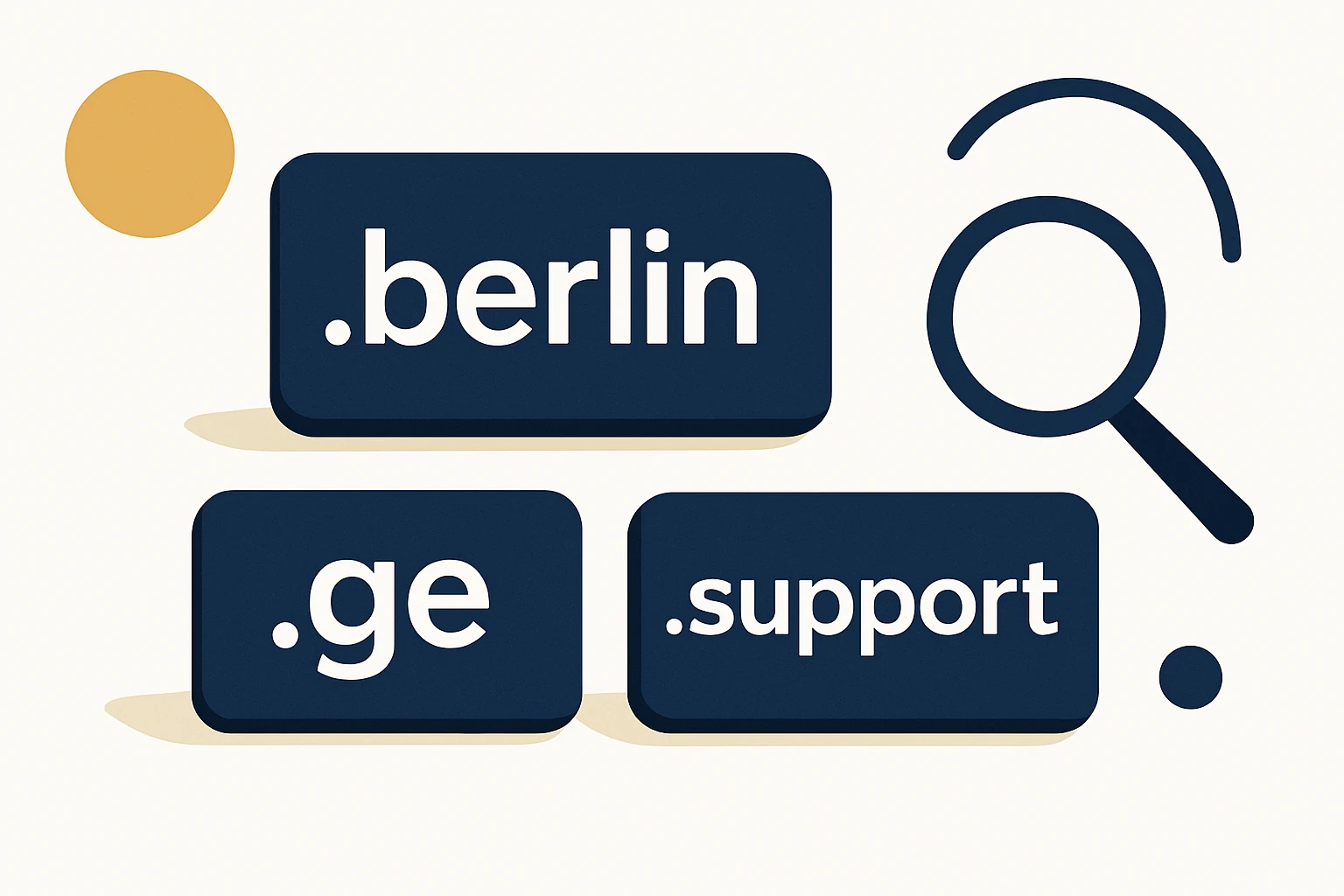
In this article, we explore three compelling niche TLDs through the lens of a premium domain broker and brand strategist: .berlin for city‑level identity, .ge as Georgia’s ccTLD with global appeal, and .support as a versatile service‑focused extension. We also present a practical framework to evaluate these TLDs for a living portfolio, discuss access to bulk domain data, and highlight common pitfalls to avoid when expanding a premium domain catalog. For practitioners who manage brand portfolios, these TLDs can complement a global strategy with localized resonance and stronger domain‑ownership defensibility. For reference and ongoing exploration, see webatla’s Berlin TLD page and the broader directory for TLDs.
Why niche TLDs matter for premium portfolios
Premium domain portfolios are less about chasing keyword lexicons and more about owning properties that support brand protection, regional marketing, and acquisition leverage. Niche TLDs offer several advantages when aligned with strategic intent:
- Brand protection and risk mitigation: Securing domains in relevant TLDs reduces the risk of cybersquatting and brand impersonation in key markets or service lines. A Berlin‑focused brand, for instance, benefits from owning city‑oriented domains that anchor regional campaigns and shield against brand dilution. dotBERLIN itself markets premium Berlin‑specific addresses, underscoring the value of targeted domains within this geoTLD ecosystem.
- Local relevance and trust signals: For brands with national or city‑level campaigns, local TLDs can increase perceived relevance and user trust, particularly in markets where a local presence matters. Berlin’s city domain program and premium address catalog illustrate how location signaling can translate into practical branding assets.
- Diversification and liquidity: A diversified portfolio across TLDs can create resilience against market cycles in any single extension and provide more negotiation leverage during acquisitions or domain trades. While liquidity varies by extension, strategic exposure to blue‑chip geos and service‑oriented TLDs can pay dividends as brand demand grows.
How these ideas translate to concrete choices depends on registry policies, audience reach, and practical access to assets. For example, .ge is the country‑code TLD for Georgia with a registry operated by Caucasus Online, and it remains broadly accessible to global buyers, subject to local policy. The registry structure and rules are documented by NIC.Ge and related governance pages, which helps buyers plan legal and operational steps when assembling a cross‑border portfolio. NIC.Ge FAQ.
Three TLD case studies: what they are and when they fit
.berlin: a geoTLD with city‑level resonance
The .berlin extension is a city‑focused geotld administered by dotBERLIN GmbH & Co. KG. It is designed to reflect Berlin’s identity and commerce, making it attractive for businesses with a Berlin‑centric market or branding narrative. The registry maintains a published list of premium addresses, illustrating how certain strings command premium pricing and clear brand signals. This ecosystem is especially relevant for local campaigns or brands that want to emphasize a dedicated Berlin presence. For reference, dotBERLIN publicly lists «Premium‑Addresses» and pricing, which can help inform decision‑making for a Berlin‑anchored strategy. List of Premium Addresses at dot.berlin, Berlin Premium Domain Price List (PDF).
Practical takeaway: consider Berlin‑anchored assets when your brand or product has a strong local identity in the German capital or when you run campaigns that require a Berlin‑specific digital footprint. A broker can assess availability, negotiate premium terms, and preserve confidentiality in the process. See webatla’s Berlin TLD listings for live examples and options. webatla Berlin TLD listings.
.ge: Georgia’s ccTLD with global reach
.ge is Georgia’s country code top‑level domain. The registry operator is Caucasus Online, and management falls under local regulatory structures that govern registrations, pricing, and registrar relationships. For buyers, .ge offers global reach while preserving a local signaling layer, which can be especially valuable for companies with trans‑regional or Eurasian market strategies. The NIC.Ge site provides official information on administration and policy, including registrar relationships and domain regulations. NIC.Ge, NIC.Ge FAQ.
Practical takeaway: if your growth plan includes expanding into or signaling alignment with the Caucasus region, or you want a globally recognizable ccTLD with potential international branding flexibility, .ge can be a thoughtful add‑on to a premium portfolio. When pursuing .ge assets, work with a broker to navigate local registration rules, privacy considerations, and any compliance nuances.
.support: a versatile, service‑oriented gTLD
.support is a generic top‑level domain designed to signal customer support, service portals, or help desks. It is widely discussed in registrar literature as a flexible branding extension for service‑driven businesses. While it does not carry explicit SEO advantages, it often improves trust and clarity for support‑ or product‑centered domains, which aligns with brand protection and customer‑facing strategies. The domain extension is described by major registrars and industry sources, which helps buyers understand its practical uses and limitations. .support domain overview.
Practical takeaway: .support can be valuable for product help portals, service portals, or customer‑facing hubs that benefit from a clear, service‑oriented extension. When evaluating .support assets, consider how the extension mirrors the user journey and how it fits into a broader service strategy alongside other premium domains.
Framework: a practical lens to evaluate niche TLDs
Framework: 3Cs of TLD evaluation
- Context: does the TLD align with brand geography, audience, and product/service focus?
- Compliance: what are registry policies, privacy considerations, and renewal/transfer terms? Are there any licensing or reserved‑domain rules that could affect long‑term ownership?
- Commercial viability: what is the liquidity of the extension, the expected renewal costs, and the potential aftermarket demand for the targeted strings?
This 3C framework helps portfolio managers avoid over‑reliance on a single dimension (e.g., novelty or price) and encourages a holistic view of how each TLD contributes to branding, protection, and growth. It also aligns well with the broker’s workflow: validate intent, confirm policy and risk, and assess market liquidity before initiating confidential negotiations. For reference on data access and market dynamics, ICANN’s CZDS provides centralized access to zone files for participating gTLDs, a capability that informs acquisition due‑diligence and risk assessment. CZDS zone files overview, Verisign: zone file data.
Bulk data and legitimate access: how to obtain domain lists responsibly
Some buyers seek bulk lists to study market density, availability, or the spread of registrations within a given extension. Access to complete, current zone files is typically controlled and governed by ICANN agreements and registry policies. The Centralized Zone Data Service (CZDS) is the primary official channel for requesting access to zone files from participating gTLDs, with registries adjudicating access on a case‑by‑case basis. This process requires account authentication and a clear, legitimate use case. CZDS zone files access. For broader context on how zone files are managed and distributed, see ICANN and Verisign resources. ICANN: Zone File Access.
Beyond official zone files, registries sometimes publish curated lists or price catalogs of premium assets. For example, dotBERLIN publishes a certified Premium Addresses catalog and price list, which can guide acquisition priorities and negotiation strategy for city‑level assets. Premium addresses at dot.berlin, Berlin Premium Domain Price List (PDF). For direct discovery and live options, see webatla’s Berlin TLD catalog, which aggregates listings and facilitates confidential introductions. webatla Berlin TLD listings.
Limitations and common mistakes to avoid
When building a premium portfolio around niche TLDs, a few pitfalls are common - and avoidable with disciplined execution:
- Over‑reliance on TLD signals: TLDs do not provide a direct ranking boost. Content quality, backlinks, and user experience remain dominant ranking drivers. This is a well‑established facet of modern SEO practice. SEO: Domain name factors.
- Underestimating policy and data access constraints: Zone file access is regulated, bulk lists require legitimate use cases and proper licensing. Plan for due diligence and risk management in acquisitions. CZDS access.
- Ignoring brand coherence across TLDs: A portfolio that strings together disparate TLDs without a clear narrative risks confusion and weaker valuation. Always anchor niche extensions within a coherent brand strategy that supports long‑term protection and growth.
These cautions echo industry analyses that emphasize content and user experience over TLD magic. While TLDs can signal locale or service focus, search engines treat all generic TLDs with parity for global queries, the real value comes from brand clarity, trust, and a robust content/backlink strategy. Domain name and SEO factors.
Practical deployment patterns: how to use these TLDs in a real portfolio
Here are concrete patterns used by brand owners and brokers to maximize value from .berlin, .ge, and .support assets:
- City‑first campaigns: Use .berlin to anchor city‑specific products, events, or services, pairing it with a global primary domain to reinforce local relevance without fragmenting the brand.
- Regional expansion with global reach: Maintain a territorially expressive .ge domain alongside global domains to signal cross‑border readiness and local familiarity, particularly for markets with Georgian or Eurasian business ties.
- Service portals and help ecosystems: Leverage .support for customer help centers, product documentation, or support desks that benefit from a clear, service‑oriented extension.
Integrating brokered assets with your existing portfolio requires careful mapping of ownership rights, renewal economics, and transfer contingencies. For buyers seeking Berlin assets or broader TLD strategies, webatla offers targeted discovery and confidential negotiation pathways. webatla Berlin TLD listings and the broader directory of domains by TLDs provide a practical runway for evaluation and activation. webatla - domains by TLDs.
Conclusion: niche TLDs as a deliberate element of premium strategy
Strategic use of niche TLDs like .berlin, .ge, and .support should be anchored in brand narrative, local market intent, and disciplined portfolio management. The most compelling outcomes arise when niche extensions are integrated into an editorially coherent, protection‑driven plan that also respects the realities of registry policies, licensing, and data access. For brand owners and portfolio leaders, these TLDs offer meaningful ways to signal intent, deepen regional resonance, and fortify defenses against brand abuse. When executed with a rigorous framework and trusted partners, niche TLDs become a valuable asset class within a premium domain strategy.