Introduction: why niche TLD lists matter for premium portfolios
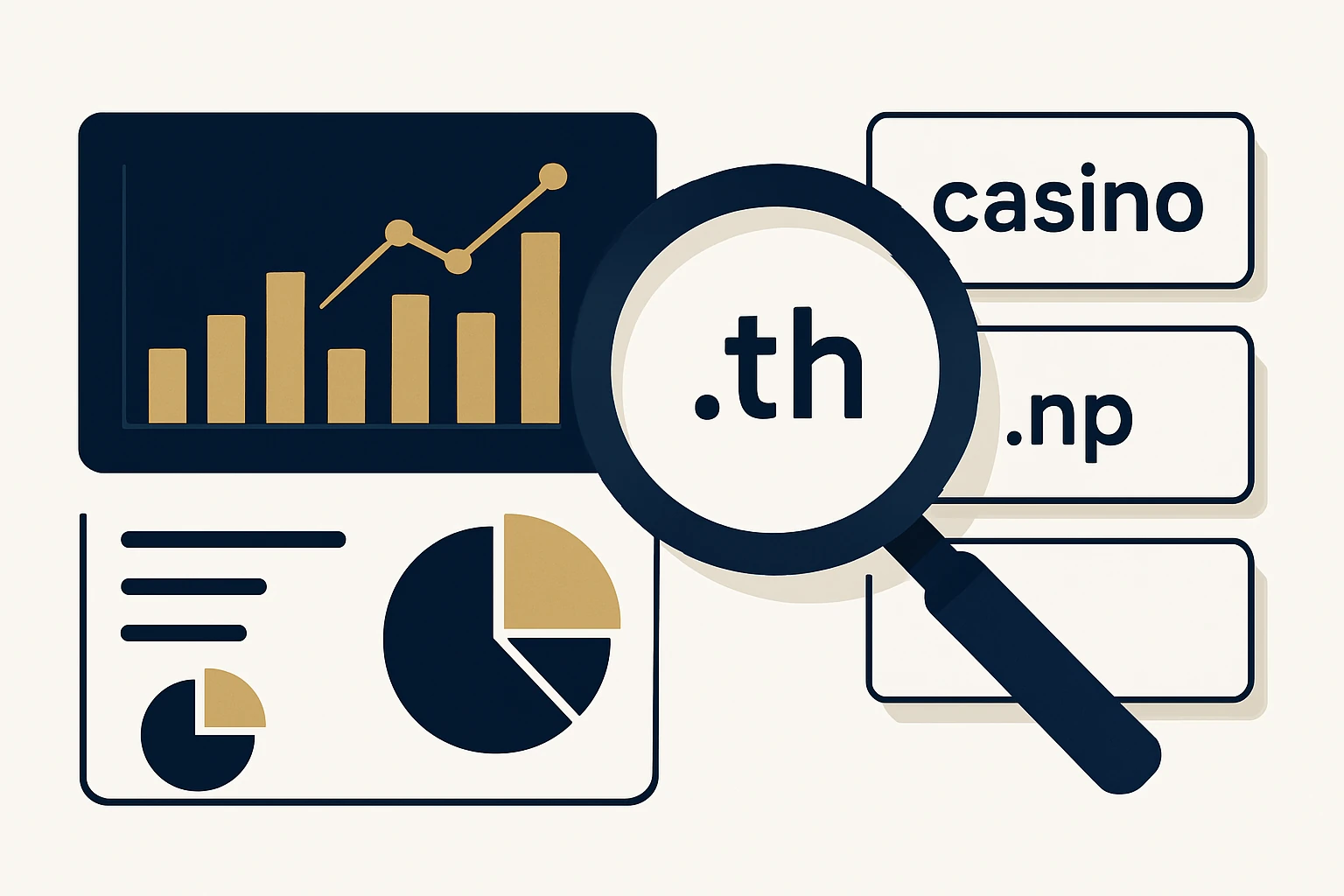
For brand owners and investors aiming to build a premium domain portfolio, the ability to source, assess, and act on niche TLD lists can be a strategic differentiator. TLDs like .casino, country-code domains such as .th (Thailand) and .np (Nepal) are not just alphabet soup, they are signals of market intent, regional reach, and potential SEO impact. Yet, the value of a list hinges on data integrity, ownership history, and brand compatibility. This article presents a practical framework to download these lists and vet them for disciplined, confidential acquisitions - without the hype or guesswork that too often plagues domain decisions.
In recent years, the industry has shifted from plain Whois records to RDAP-based data, driven by privacy concerns and regulatory changes. The Internet Corporation for Assigned Names and Numbers (ICANN) introduced RDAP as the successor to Whois to provide structured, secure access to registration data, this transition is a key consideration when evaluating any downloaded list. ICANN’s RDAP transition highlights the move away from legacy Whois in favor of standardized, privacy-conscious data access. (icann.org)
Meanwhile, major registries and data providers emphasize that RDAP data, while more robust than traditional Whois in terms of structure and privacy, is not a panacea - the data you obtain still requires careful interpretation and corroboration. Verisign’s overview of the RDAP evolution frames the future of registration metadata as privacy-forward and API-driven, not a simple one-to-one replacement for historical Whois. (verisign.com)
Industry practitioners also note that RDAP is used in real-world workflows to verify records and detect anomalies when consolidating large domain datasets. DomainTools describes how RDAP responses fit into modern investigations and research workflows, underscoring the practical realities of working with RDAP in place of traditional Whois. (domaintools.com)
What you’re actually downloading: understanding domain lists and their value
A “download list” of domains is more than a spreadsheet of names. Effective lists typically include fields such as the domain name, registration status, last updated timestamp, registrar, and, when available, basic DNS information. For niche TLDs like .casino, .th, and .np, you should expect variations in data availability depending on registry policies and RDAP coverage. The practical value lies in being able to cross-reference these fields with independent data sources to validate ownership, detect wildcard registrations, and assess brand risk before you initiate any outreach.
When you plan to act on a downloaded list, consider three probing questions for each domain: (1) Who owns or controls the registration, and has ownership changed recently? (2) Does the domain align with your brand strategy, or could it cause trademark confusion or negative associations? (3) Is the domain technically ready for use or easy to transition into a live asset (DNS, mail, SSL, redirects)? Answering these questions requires a disciplined workflow that blends data science with brand and legal judgment.
A practical framework for downloading and vetting niche TLD lists
The following framework is designed to translate raw domain lists into a defensible, decision-ready pipeline. It emphasizes data provenance, brand alignment, and operational feasibility, with practical checks you can apply at each stage.
Framework: three core checks for every domain in the list
- Data provenance and freshness - Verify the source of the list, the licensing terms, and how recently the data was refreshed. RDAP-backed data is preferable to legacy Whois for modern privacy and interoperability, but ensure you understand what fields are actually provided by the registry and whether any fields are redacted. An authoritative shift toward RDAP is documented by ICANN and reflected in industry analyses. (icann.org)
- Ownership history and legitimacy - Use RDAP records to corroborate registrant information and check for privacy redactions. Recognize that some ccTLDs may not fully expose registration data, and privacy shields can obscure ownership. The practical takeaway is to treat RDAP data as one input in a multi-source verification process, not as the sole arbiter of ownership. (icann.org)
- Brand fit and risk assessment - Screen domains for potential trademark conflicts, negative associations, and geographic or cultural sensitivities. A domain that looks attractive on a list may raise complex brand-security questions when mapped to your portfolio or product lines. Consider whether the domain would support your brand architecture or create confusion in the market.
Framework: operational feasibility checklist
- Technical readiness: DNS stability, ability to host, SSL provisioning, and potential redirection paths.
- Traffic and equity signals: any existing inbound links, brand queries, or search presence associated with the domain (even if not immediately obvious from the list).
- Acquisition pathway: whether a direct sale is possible, or if a broker and confidential negotiation will be required to preserve arrangements and pricing.
Structured decision block: a concise evaluation template
- Domain asset score - a composite of data freshness, registrant transparency, and brand fit (scale 1–10).
- Legal risk index - trademark conflicts, potential misuse, and regulatory concerns (scale 1–10).
- Operational feasibility - technical readiness and ease of transfer (scale 1–10).
Use these scores to triage dozens or hundreds of domains into a manageable shortlist for outreach and negotiation. This structured approach helps keep the process auditable and aligned with confidential acquisition goals.
From download to portfolio: how to use lists in a disciplined way
Downloaded lists are most valuable when they are a starting point in a structured sourcing program, not a final inventory. Treat the list as a hypothesis about potential assets, then test it with a rigorous workflow that includes due diligence, risk assessment, and a controlled negotiation process. A practical workflow looks like this:
- Step 1: Source validation - confirm licensing terms and refresh cadence for the list you plan to use. If you’re evaluating niche TLDs like .casino, ensure the source covers the specific TLDs you care about and that you can legally act on the data.
- Step 2: Due diligence - check ownership and history via RDAP where available, cross-check with other public records and vendor-provided data. As industry experts note, RDAP offers improved privacy-respecting access compared with traditional Whois. (domaintools.com)
- Step 3: Brand and risk screening - map each domain to your brand strategy, flag any domain that could cause confusion or backlash in a target market.
- Step 4: Technical readiness - confirm DNS resolution, security certificates, and the feasibility of transferring or developing the asset without service interruption.
- Step 5: Negotiation plan - decide whether to approach directly or through a broker, and set confidentiality expectations and deal terms that protect both sides.
Expert insight, and cautions: what to keep in mind
Expert insight: In practice, a disciplined approach to domain list sourcing requires validating data provenance and maintaining a clear linkage between the data you download and your branding objectives. RDAP provides the foundation for legitimate research and due diligence, but it must be complemented by legal review, brand strategy alignment, and technical readiness checks. This multi-input approach reduces the risk of overpaying for a domain that looks attractive on paper but proves nonfunctional or misaligned in real-world use.
Limitations exist. Not all registries publish complete RDAP data for every domain, and privacy protections can redact key fields. Moreover, while RDAP improves data structure and privacy, it does not eliminate the need for independent verification, nor does it guarantee future availability or transfer conditions. The industry-wide shift toward RDAP is documented by ICANN and reflected in practical guidance from domain data providers and brokers. (icann.org)
Limitations and common mistakes to avoid
What to watch out for
- Assuming RDAP equals absolute ownership certainty - RDAP confirms published registration data, but ownership can be complex (ambiguous registrant terms, privacy services, or proxy registrations). Always corroborate with multiple sources and, when necessary, request direct confirmation from registrars or registries via formal channels.
- Overreliance on a single data feed - No single list or RDAP snapshot captures the full picture. Combine lists with registrar inquiries, historical WHOIS/RDAP records, and market intelligence to avoid false positives.
- Ignoring brand implications for niche TLDs - A domain that seems technically available may clash with regional marketing laws or cultural sensitivities. A misaligned .casino domain, for example, can complicate risk management if not carefully mapped to product lines and geographies.
Putting webatla’s resources to work in a confidential, strategic way
To operationalize this process, teams often pair rigorous data workflows with strategic brokerage and advisory support. The combination helps ensure that every domain listed for potential acquisition aligns with brand protection goals, confidentiality requirements, and long-term value. For teams pursuing a defensible, privacy-preserving sourcing program, consider starting with targeted lists from reputable data sources and coupling them with expert advisory. webatla’s .casino domain page offers a concrete example of how a niche TLD specialist frames sourcing and portfolio strategy, while webatla’s RDAP & WHOIS database demonstrates the practical data layer that underpins due diligence. For a broader view of domain availability and licensing, explore webatla’s List of domains by TLDs.
Conclusion: a disciplined path to niche-TLD advantage
Downloading a list is only the first step in a rigorous, defensible domain strategy. The value lies in the disciplined vetting, the alignment with brand architecture, and the operational precision of the acquisition process. By anchoring decisions to data provenance, RDAP-informed due diligence, and thoughtful risk assessment, your team can turn niche TLD lists into strategic assets rather than a speculative pile of names.
If you are building or expanding a premium domain portfolio with confidentiality and strategic intent, partnering with a domain advisory that combines data science with brand strategy can be pivotal. The combination of robust data workflows (as highlighted here) and expert negotiation support can help you secure high-value assets with confidence.