Introduction
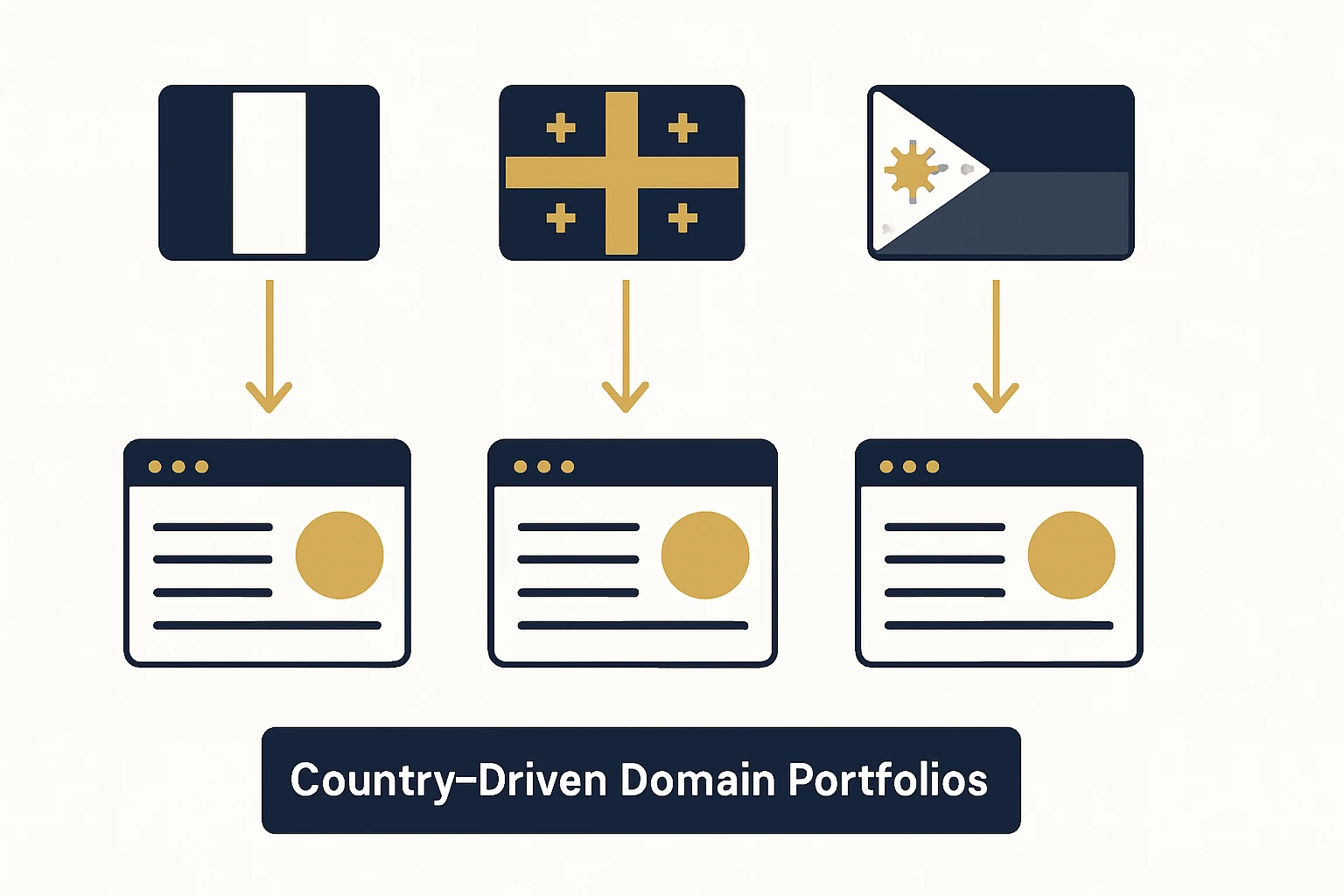
For global brands, a well-structured domain portfolio is more than a registry of web addresses - it is a strategic asset that underpins market relevance, brand protection, and predictable growth. Yet many teams treat domain assets as a compliance checkbox rather than a living pillar of international strategy. This article offers a practical, country-driven approach to building premium domain portfolios, with a framework you can apply to markets such as Peru, Georgia, and the Philippines. The aim is to balance editorial rigor with real-world applicability, so teams can move from ad-hoc acquisitions to coherent asset management that scales with the business.
Why country-driven portfolios matter
Country-focused portfolios align online identity with local expectations, improve trust, and reduce cross-border SEO risk when executed with governance. A structured multi-country approach typically blends country-code top-level domains (ccTLDs) and select gTLDs, guided by a clear policy for ownership, renewal, and risk management. Industry practitioners emphasize the need for deliberate ownership, disciplined sourcing, and ongoing governance to prevent fragmentation and rising costs. This perspective is echoed by governance-focused analyses of domain portfolios and multi-country strategies. (dn.org)
Practically, a mature framework treats domain assets as strategic capital - not merely as a byproduct of digital marketing. A tiered approach to portfolio construction helps manage complexity and costs, ensuring that every domain serves a concrete branding or market-entry purpose. This perspective is supported by best-practice guidance on enterprise domain management and multi-country portfolios. (authenticweb.com)
A practical framework for country-driven domain portfolios
Below is a pragmatic framework designed for brand teams, digital asset managers, and brokers who need to align country strategy with risk controls and budget. The framework is intentionally lean enough to implement in quarterly cycles, yet robust enough to scale across dozens of markets.
Country Portfolio Evaluation Framework (structured block)
- Define target markets and branding objectives. Clarify which markets matter for brand exposure, what the local audience expects, and how domain signals - such as ccTLDs - will support trust and conversion. A clear objective prevents over-portfolioing or misaligned assets.
- Decide on TLD architecture (ccTLDs vs. gTLDs). Weigh local authority and SEO signals against global consistency. In many cases, brands benefit from a disciplined mix: a core gTLD for international campaigns plus select ccTLDs for priority markets. A tiered approach helps manage cost and risk, and many industry practitioners advocate capping the number of country codes per brand per country to maintain governance and renewal discipline. (cscglobal.com)
- Source candidates ethically and with governance in mind. Build a plan around reputable data sources, registries, and brokers. Prioritize data privacy and governance to avoid opaque acquisitions or misaligned ownership trails. Multi-country portfolios benefit from centralized policy controls and auditable processes, reducing leakage and rogue registrations. (authenticweb.com)
- Structure acquisition and negotiation playbooks. Create standardized templates for outreach, offers, and due diligence. Maintain confidentiality and ensure that any negotiations integrate with brand protection objectives across markets.
- Governance, risk, and renewal management. Establish a portfolio owner, renewal calendar, risk alerts, and a centralized dashboard to monitor exposure, costs, and performance. This discipline turns domain management into strategic asset management. (authenticweb.com)
Country lenses: Peru, Georgia, and the Philippines
Applying the framework to specific markets illustrates how country context shapes decisions. Each market has its own regulatory, cultural, and SEO realities, which influence whether a ccTLD or a global approach makes the most sense.
Peru - the ccTLD .pe and local market signals. In markets like Peru, a country-specific domain can bolster local relevance and search visibility, particularly when content targets Peruvian users in Spanish and when local brand signals matter. While global strategies dominate some sectors, local domains can enhance trust and conversion in price-sensitive markets. This aligns with ongoing market analyses of ccTLD adoption and branding advantages in Peru.
Georgia - leveraging .ge for local presence. Georgia’s ccTLD presents a localized footprint for brands targeting the Caucasus region and adjacent markets. A well-structured portfolio that includes .ge can reinforce regional credibility, while a coordinated global strategy ensures consistency across markets. (For Georgia-specific policy and registration context, see the country’s registry practices and governance discussions.)
Philippines - the role of .ph and local registries. The Philippines remains an important growth market for many consumer and tech brands. A local ccTLD presence, such as .ph, can signal local relevance and support country-focused marketing initiatives, provided it is paired with a broader international strategy to preserve global brand coherence.
For teams evaluating country-focused domain work, webatla offers Peru-centered country insights visible at this Peru page and transparent pricing options at pricing. These resources help translate the framework into concrete actions for a given country portfolio.
Limitations and common mistakes
- Over-portfolioing without local relevance. Expanding across many markets without a clear, revenue-driven plan can dilute governance and inflate renewal costs. A disciplined cap on ccTLDs per brand per country is a practical safeguard. (cscglobal.com)
- Ignoring hreflang and localization nuances. Localized content, currency, and user experience matter, misalignment can undermine the value of a country-code asset. A coordinated international SEO approach helps prevent cannibalization and improves user relevance. (dn.org)
- Under-investing in governance and renewal planning. Without centralized ownership, renewals can slip, or assets may drift out of alignment with brand strategy. A formal governance model reduces risk and preserves value over time. (authenticweb.com)
- Relying on opaque data sources for acquisitions. Ethical sourcing, due diligence, and transparent ownership trails are essential to protect the brand and investor interests. A clear playbook and vetted data sources mitigate this risk. (authenticweb.com)
Putting the framework into practice
Here is a compact, actionable plan to start applying the framework within a typical quarterly cycle:
- Quarter 1: Define markets of interest, map branding objectives, and select a baseline TLD architecture (ccTLDs + core gTLDs).
- Quarter 2: Audit existing assets, identify gaps, and source candidate domains through reputable channels. Establish governance roles and a renewal calendar.
- Quarter 3: Initiate targeted acquisitions in priority markets (e.g., Peru, Georgia, Philippines) with a predefined negotiation playbook.
- Quarter 4: Review performance, adjust the portfolio strategy, and renew or sunset domains as needed to stay aligned with brand objectives.
Conclusion
Building a country-driven premium domain portfolio is a deliberate, measurable activity - not a one-off procurement sprint. A framework that combines clear objectives, a disciplined TLD architecture, ethical sourcing, and rigorous governance turns domain assets into strategic capital. By applying these principles to markets like Peru, Georgia, and the Philippines, brands can improve local relevance, protect brand integrity, and support international growth with a transparent, auditable process. For teams seeking a practical starting point, the Peru-focused resources on webatla provide country-specific context to ground your decisions.