Introduction
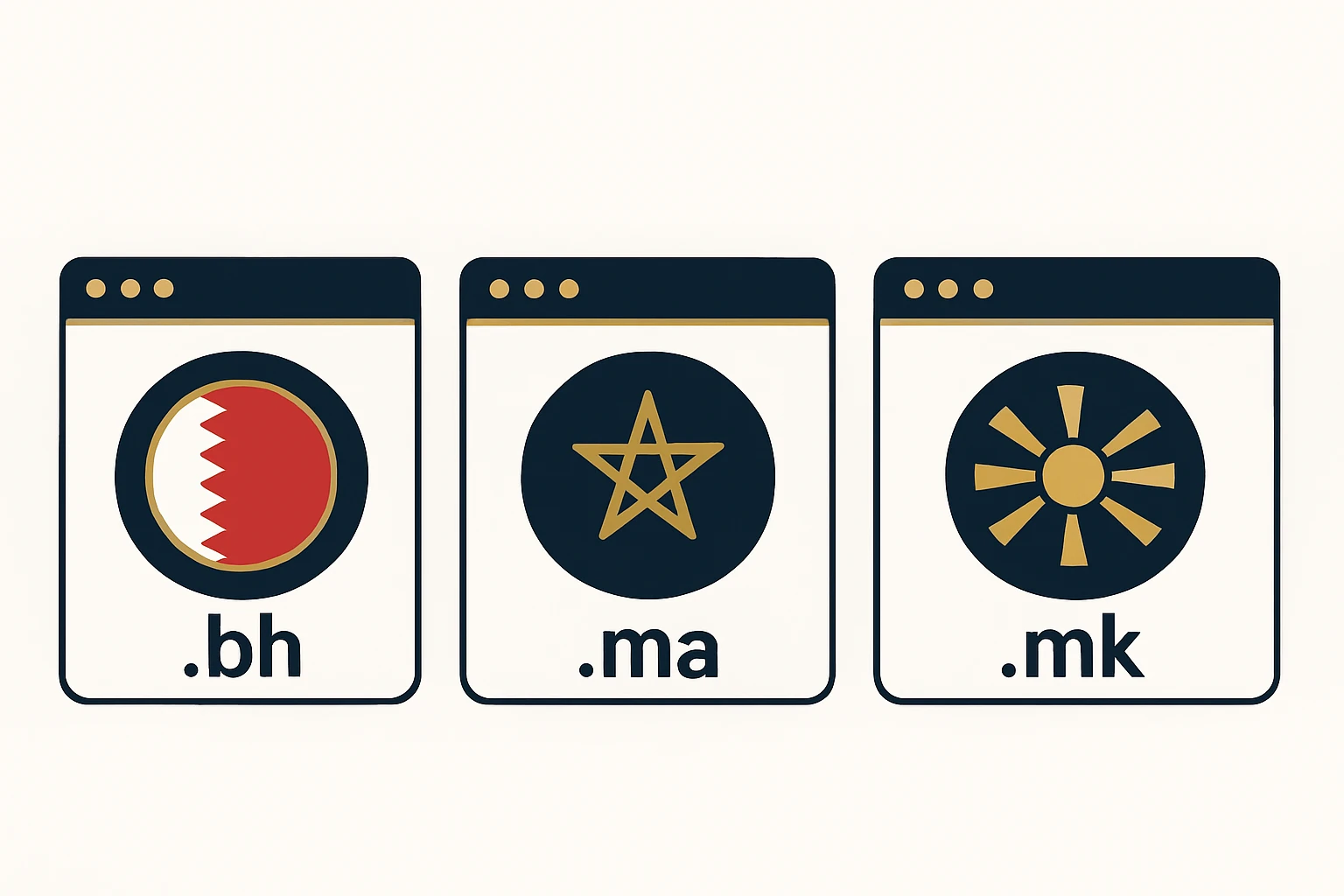
For global brands, the digital real estate landscape is more nuanced than a single attractive domain. A thoughtfully assembled collection of country-code top-level domains (ccTLDs) can reinforce local credibility, protect against cybersquatters, and unlock regionally tuned marketing strategies. Yet the path to a practical, defensible portfolio is not obvious: it requires balancing local registration rules, brand protection considerations, and the long game of portfolio lifecycle management. This article offers a practical framework to build a country-first premium domain portfolio, with concrete takeaways drawn from Bahrain (.bh), Morocco (.ma), and North Macedonia (.mk) as real-world touchpoints.
To navigate this terrain, brands increasingly rely on a two-tier approach: (1) a strategic, country-focused core portfolio that signals local intent, and (2) a governance process that keeps the portfolio current, compliant, and defensively protected across markets. The result is a cohesive, scalable approach to premium domain ownership that complements broader brand strategy and digital asset governance. This piece draws on official registry and regulatory contexts for three representative ccTLDs to illustrate how governance and market realities shape portfolio decisions.
As you read, consider how this framework could align with your own international expansion plans and with a disciplined, risk-aware acquisition strategy. For teams seeking to operationalize these insights, webatla offers country-focused domain lists and TLD directories to support due diligence and comparative assessment. For example, see webatla’s Bahrain page and the broader country-domain directory and TLD list cited later in this article.
Why country-first ccTLD portfolios matter in 2026
ccTLDs are not merely regional adornments, they are structural signals about your brand’s geographic footprint and regulatory alignment. A robust ccTLD portfolio helps insulate against brand misappropriation, supports local user trust, and enables region-specific content and SEO configurations. The governance of these domains is typically centralized through national registries or regulatory bodies, which set registration rules, verify registrants, and handle disputes. Understanding how each country governs its ccTLD is essential to building a resilient portfolio.
- Regulatory clarity is a prerequisite for scalable growth. Bahrain’s .bh, for example, is managed with explicit rules and authority, giving registrants a clear path to registration via authorized retailers. This clarity supports due diligence and defense planning for a regional portfolio. About .BH.
- Local presence considerations matter. Morocco’s .ma requires registration through ANRT-licensed registrars, with formal governance around who can register and how. This has implications for registrar selection, identity verification, and cross-border risk management. ANRT - .ma extension.
- Registry governance shapes entry points and protection. North Macedonia’s .mk is administered by MARnet, with registrars aligned to MARnet’s framework and, in some cases, IDN variants like .мкд, illustrating how regional policy influences portfolio design. Registry.mk and ICANN/ccNSO background on .mk.
These country-specific realities reinforce a broader point: a successful premium-domain portfolio blends legal/compliance discipline with strategic market intelligence. It’s not enough to buy a few appealing names, you need a framework that anticipates registrar rules, local market dynamics, and ongoing portfolio hygiene.
Case study snapshots: Bahrain (.bh), Morocco (.ma), and North Macedonia (.mk)
Bahrain (.bh) - regulatory context and practical entry points
In Bahrain, the .bh ccTLD operates under the jurisdiction of the Telecommunications Regulatory Authority (TRA), which oversees domain name operations and related policy. The registry emphasizes a transparent, rule-based environment and supports a range of registrants, including non-residents who register via authorized retailers. For brand owners, this means a predictable path to acquiring meaningful names that reflect Bahraini digital identity and commerce. For more on Bahrain’s registry framework, see About .BH.
Practical implications for portfolio builders include selecting registrars with robust identity verification and renewal processes, tracking regulatory changes, and planning for defensive registrations in related keywords or brand derivatives. The Bahrain experience illustrates how a well-run ccTLD regime can coexist with a global premium-domain strategy, enabling cross-border branding while maintaining local compliance. Source: Bahrain registry overview.
Contextual note: webatla’s Bahrain-focused resources can complement this approach by offering country-specific domain lists and data-driven insights to inform due diligence. Visit webatla’s Bahrain page for local-market context and related services.
Morocco (.ma) - governance, registrars, and registration posture
Morocco’s .ma extension is administered by ANRT (Agence Nationale de Réglementation des Télécommunications). Registration is conducted through ANRT-licensed registrars rather than directly with a central registry, with formal rules guiding who may register and how. This architecture emphasizes the importance of selecting accredited registrars, understanding local verification requirements, and ensuring continuity of registration (renewals, privacy, and data handling) in a market with strict regulatory oversight. For an overview of the .ma extension and governance, see ANRT - The .ma extension.
For brand owners expanding into Morocco, the Morocco registry framework signals the need for local-capable registrar relationships and a documented compliance process for domain registrations, transfers, and disputes. A disciplined approach to registrar selection and ongoing portfolio monitoring reduces risk and supports scalable strategy. Source: ANRT governance of the .ma extension.
webatla’s directory of country-specific domains can help identify reliable registrars and a comparative view of available .ma names. See webatla’s country-domain directory for broader market context and related assets.
North Macedonia (.mk) - MARnet governance and IDN considerations
North Macedonia’s ccTLD is administered by MARnet (Macedonian Academic Research Network). MARnet’s governance framework has evolved to liberalize registrations while maintaining oversight through accredited registrars. The registry also supports IDN variants such as .мкд, illustrating how regional strategy can accommodate multilingual markets and local-language branding. For registry context, see Registry.mk and ICANN ccNSO profile for .mk.
From a portfolio design perspective, .mk highlights the importance of legal alignment and registrar readiness when expanding into smaller markets where a regional presence may be strategic but operationally nuanced. IDN options can also expand your brand’s linguistic footprint in local markets.
A practical framework for building a country-first premium domain portfolio
The following framework is designed to be actionable for in-house teams and agencies responsible for premium-domain strategy, lifecycle management, and brand protection. It emphasizes clarity, defensibility, and a staged approach that scales with your international expansion plans.
-
Step 1 - Align regional objectives and risk tolerance.
- Define the markets that align with your brand’s growth strategy (e.g., Bahrain, Morocco, North Macedonia as initial case studies).
- Determine defensible coverage: which ccTLDs are essential for branding, which are optional, and where to invest in defensive registrations to prevent cybersquatting.
- Assess regulatory risk, registrar reliability, and data-privacy considerations tied to each market.
-
Step 2 - Identify target domains and vendor relationships.
- Generate a shortlist of premium, near-miss, and typo-variant domains that reflect your brand in each market (and in related languages where relevant).
- Map registrars and registries for each ccTLD (e.g., Bahrain’s TRA/governance, ANRT for .ma, MARnet for .mk) and establish preferred partners with clear escalation paths.
- Centralize due-diligence artifacts: ownership history, registrar reliability, renewal schedules, and any transfer constraints.
-
Step 3 - lifecycle management and defensive posture.
- Institute a renewal calendar with thresholds to preempt expiry risk and ensure portfolio continuity across markets.
- Implement ongoing monitoring for potential impersonation or infringements and a documented incident-response workflow.
- Plan periodic portfolio reviews to refresh alignment with local market dynamics and regulatory updates.
Structured as a three-step loop, this framework supports iterative refinement as your brand footprint grows. While the mechanics vary by country, the core discipline - clear governance, credible registrars, and ongoing risk management - remains constant.
Limitations, trade-offs, and common mistakes
No framework is perfect, and ccTLD portfolios come with trade-offs that require careful navigation. Below are common pitfalls and how to approach them thoughtfully.
- Overestimating SEO impact of ccTLDs without local content. ccTLDs can signal local intent, but search performance still hinges on quality content, local language relevance, and hreflang signals. Prioritize a practical content-localization plan alongside domain strategy.
- Underinvesting in defensive registrations. If you ignore neighboring or related brand-name variants in key markets, competitors or cybersquatters may capture critical assets. A deliberate defensive plan helps reduce risk over time.
- Misunderstanding registration rules or identity verification requirements. Some ccTLDs require local identifiers or specific registrar partners. Failing to align with these rules can cause delays or losses in opportunities. Where applicable, work with accredited registrars and document identity verification standards.
- Underestimating regulatory risk in smaller markets. Governance can shift with regulatory changes. Maintain a proactive monitoring process and maintain flexibility to adjust the portfolio if needed.
Conclusion
Building a country-first premium domain portfolio is a dynamic act of balance: you must protect valuable digital assets while remaining agile enough to capitalize on regional growth opportunities. By grounding decisions in registry governance, registrar reliability, and disciplined lifecycle management, you create a portfolio that not only defends your brand but also enables regionally resonant marketing and customer trust. The Bahrain (.bh), Morocco (.ma), and North Macedonia (.mk) case studies illustrate how different regulatory environments shape practical execution and risk management in real time.
For teams seeking to operationalize these insights, consider how webatla can complement your process with country-focused lists and domain directories. See webatla’s Bahrain page for local-market context, webatla’s list of domains by TLDs, and webatla’s country-domain directory for broader cross-market insights.