Introduction: why country-specific website lists matter for premium domain strategies
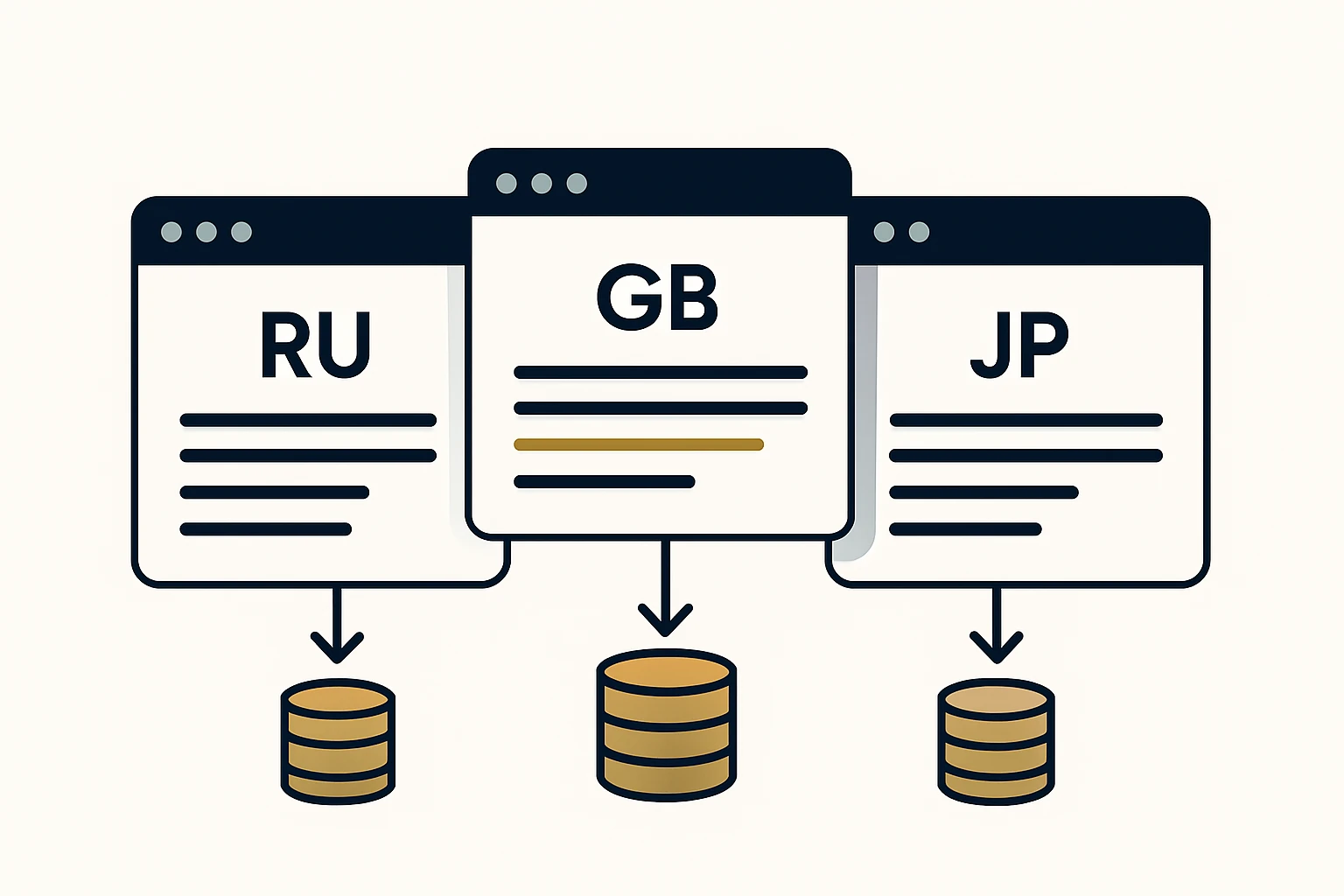
For global brands, acquiring premium domain names is only the first step. The real work lies in understanding country-specific web ecosystems, data-privacy considerations, and the governance around who owns and can access domain data. In practice, that means turning RU, GB, and JP website lists into a defensible acquisition plan that aligns with brand strategy, risk management, and market opportunities. This article offers a practical, non-gimmicky approach to sourcing country-specific lists for strategic domain acquisition, with an editorial lens grounded in current industry realities.
Recent industry dynamics underline two realities: first, country-code domain ecosystems remain dynamic and regionally nuanced, second, access to public domain data is evolving under privacy regulations. For example, GDPR has reshaped how Whois data can be accessed, pushing registries and operators toward more privacy-centric data access models. This shift is driving a move toward RDAP as a modern, privacy-conscious data protocol. ICANN has discussed GDPR's impact on WHOIS and ongoing considerations about layered access to registration data, signaling a longer-term move away from fully public registrant details. (gac.icann.org)
Why RU, GB, and JP lists matter for premium domain strategies
Country-specific lists offer tactical value for building a robust premium-domain strategy in three ways: market visibility, risk framing, and due-diligence efficiency.
- Market visibility and growth signals: In Russia, the .ru namespace has shown notable growth in recent years, underscoring both opportunity and brand exposure considerations for international brands expanding online. Industry reporting highlighted that .ru registered domains grew significantly in 2024, reinforcing the importance of understanding local namespaces when planning cross-border portfolios. Source: Domain Incite reporting on ccTLD trends in 2024. (domainincite.com)
- Data privacy and access realities: The GDPR-driven evolution of Whois has created a landscape where public registrant data is increasingly restricted. This reality makes alternative data access methods (such as RDAP) more relevant for due-diligence and risk assessment. ICANN and data privacy discussions emphasize the need for legitimate access paths rather than universal public visibility. (gac.icann.org)
- Country-specific branding and risk considerations: Baltic, UK, and Asian markets each have distinct branding norms and regulatory environments. While broad market data helps, country lists enable tailoring of brand strategy, domain negotiations, and defensive registrations to local contexts. Industry observers frequently stress the importance of local-market awareness when building a defensible domain portfolio.
To leverage these lists responsibly, buyers should couple country data with privacy-aware data practices and a clear governance model. The webatla data platform explicitly frames this approach, offering access to a RDAP & WHOIS database and country-based domain lists to support informed decisions. RDAP & WHOIS Database and List of domains by Countries provide practical data access, while Pricing helps buyers plan scale.
How to download RU, GB, and JP website lists: a practical process
Downloading country-specific lists is not just about pulling data, it’s about assembling a usable, compliant, and strategically valuable dataset. The following process synthesizes market realities with privacy considerations to help you turn lists into actions.
- Step 1 - Define the objective: Clarify whether you’re filling gaps in a portfolio, benchmarking a competitor’s online footprint, or identifying domains for defensive registrations. A precise objective keeps data collection focused and defensible.
- Step 2 - Source data from credible, current channels: Start with country registries, credible press and industry reports, and privacy-conscious data platforms. For RU, GB, and JP, market reports and ccTLD insights help validate the data’s relevance and scale. For RU specifically, industry reporting has highlighted growth trends in the RU namespace, which can inform portfolio considerations.
- Step 3 - Validate and clean the data: Remove duplicates, standardize domain formats, and flag domains with ambiguous ownership. Given GDPR-driven privacy constraints, confirm you’re pulling data through legitimate channels and that you’re proceeding with a clearly stated, lawful purpose.
- Step 4 - Assess brand risk and opportunity: Cross-reference candidates with trademark databases and your existing brand portfolio. Pay attention to variations that could cause confusion or potential infringement in target markets.
- Step 5 - Apply a privacy-forward data-access model: Use RDAP-based data where possible and maintain a log of legitimate-need justifications for any access to personal data. This aligns with evolving regulatory expectations and helps future-proof your process. ICANN has highlighted the direction of privacy-centric data access in the Whois ecosystem. (gac.icann.org)
- Step 6 - Integrate with governance and ongoing monitoring: Establish a cadence for data refresh, threshold-based reviews, and compliance checks so your country lists stay actionable over time.
In practice, the ruGBJP data workflow benefits from a single source of truth that can be cross-referenced with national registries, market reports, and privacy-compliant lookup services. The webatla platform is positioned to support this workflow with dedicated data resources, including the RDAP & WHOIS database and country-specific lists. RDAP & WHOIS Database · List of domains by Countries · Pricing.
Framework: a 5-step approach to sourcing RU, GB, and JP lists
The following framework translates the process into a concrete, repeatable method that can scale across multiple countries and markets. Each step includes a practical action item and decision checkpoint.
- 1) Objective definition
- Decide whether you are acquiring, defending, or auditing a domain footprint by country.
- Document success metrics (e.g., number of viable candidates, risk-adjusted ROI).
- 2) Data sourcing
- Use country registries, credible market reports, and privacy-respecting data services.
- For RU/GB/JP, corroborate growth signals with third-party market intelligence when available.
- 3) Data validation
- Normalize formats, remove duplicates, and flag ownership ambiguity.
- Cross-check with trademark databases to reduce risk of conflicts.
- 4) Risk and opportunity assessment
- Assess linguistic and branding variants that could affect regional campaigns.
- Estimate acquisition cost versus defensive value to the portfolio.
- 5) Privacy-conscious data governance
- Maintain justified purposes for data access and document compliance steps.
- Plan ongoing updates and audits to reflect regulatory developments.
Limitations and common mistakes to avoid
While country-specific lists are valuable, several limitations and pitfalls can erode potential value if not managed carefully.
- Relying on outdated lists: Data can become stale quickly in active markets. Regular refresh cycles are essential.
- Overlooking data privacy requirements: GDPR and other privacy laws affect how you access and use ownership data. Without a compliant approach, you risk regulatory exposure. ICANN and privacy-policy discussions emphasize careful handling of registration data in light of GDPR. (gac.icann.org)
- Ignoring local branding nuances: A domain that seems perfect in one market may collide with local brands or fail to resonate in another. Local market intelligence helps mitigate this risk.
- Underinvesting in governance: The value of lists accrues only if there is a disciplined framework for review, clearance, and tracking of actions taken on each candidate.
- Data-access fatigue: Attempting to extract too much data via free, public channels can create noise and reduce signal quality. A privacy-forward, licensed data source often yields higher-quality leads and reduced risk.
Editorial framework and data-driven approach in action
The following small-scale, practical plan illustrates how to move from raw RU/GB/JP list data to a defensible acquisition strategy.
- Define a target set based on brand fit, trademark clearance, and regional marketing plans.
- Assemble data from credible channels and cross-check with market reports to confirm scale and relevance.
- Filter for defensible registrations by focusing on domains that clearly align with core products or regional campaigns.
- Document ownership and access rationale using a simple template to justify each lookup or inquiry, aligning with GDPR-era norms.
How webatla supports the process
To operationalize this approach, many teams use a dedicated data platform that combines country-specific lists with compliant access to registration data. webatla offers a suite of data resources designed for premium-domain brokers and corporate brand teams:
- RDAP & WHOIS Database for privacy-conscious data access
- Country-based domain lists to inform regional portfolio planning
- Transparent pricing to scale data-driven decisions
Access these capabilities here: RDAP & WHOIS Database, List of domains by Countries, Pricing.
Conclusion: a disciplined, data-driven approach to international domain strategy
Premium domain acquisition is most effective when it is underpinned by reliable country-specific lists, privacy-conscious data practices, and a governance framework that scales. The RU/GB/JP context illustrates how market dynamics and regulatory developments - such as GDPR-driven data access changes - shape both the opportunities and the constraints in each market. By combining credible data sources with a structured framework and a clear objective, brands can build resilient domain portfolios that support growth while protecting brand integrity across borders.