Introduction: why premium domain brokerage matters in a crowded digital landscape
Acquiring premium domain assets is rarely a simple registration exercise. For global brands, a strategic approach to domain ownership touches branding, search visibility, risk management, and corporate governance. In 2024, brand owners faced rising pressure to defend their digital real estate as impersonation, typosquatting, and competing brand narratives intensified online. Leading practitioners in premium domain brokerage emphasize disciplined, confidential processes that align domain decisions with broader business goals. GoDaddy Corporate Domains and industry observers alike highlight the need for defensible registrations and lifecycle management as core capabilities of a mature program. (gcd.com) Moreover, public commentary on brand protection - such as Forbes’ discussion of domain names as a defensive, value-supporting asset - underscores that a proactive, nuanced posture outperforms ad-hoc purchases. (forbes.com)
Within this context, premium domain brokerages offer more than negotiation muscle. They integrate market intelligence, valuation frameworks, and risk assessment into a coherent strategy that protects brand equity while unlocking revenue and growth opportunities. A modern broker’s toolkit includes robust due diligence, structured outreach, privacy-preserving deal mechanics, and a plan for post-acquisition integration into the brand’s digital asset program. For teams building or refining a premium portfolio, the goal is to turn a domain asset into a strategic lever - not merely a purchase price.
Why a premium domain brokerage is central to brand strategy
The value proposition of a premium domain brokerage goes beyond finding a name and closing a sale. It encompasses:
- Strategic alignment: ensuring the domain complements brand architecture, product lines, and regional expansion plans.
- Confidentiality: safeguarding negotiations and targets to minimize market disruption and competitive signaling.
- Valuation rigor: applying market-informed methods to triangulate true value and negotiate fair terms.
- Risk management: screening for trademark conflicts, SEO history, and potential regulatory issues before purchase.
Industry practitioners stress that disciplined value assessment - grounded in market data and proven methodologies - reduces overpayment and guards against post-purchase regret. A credible approach blends quantitative signals (comparable sales, traffic, brand lift potential) with qualitative judgments (brand fit, long-term defensibility). Domain valuation is not a one-number exercise, it is a triangulation across multiple signals and scenarios. Domain valuation guides describe how factors like comparables, traffic, revenue proxies, and brand risk shape a domain’s price. (domainadvisor.com)
Structured framework: a practical 4-phase approach to domain acquisitions
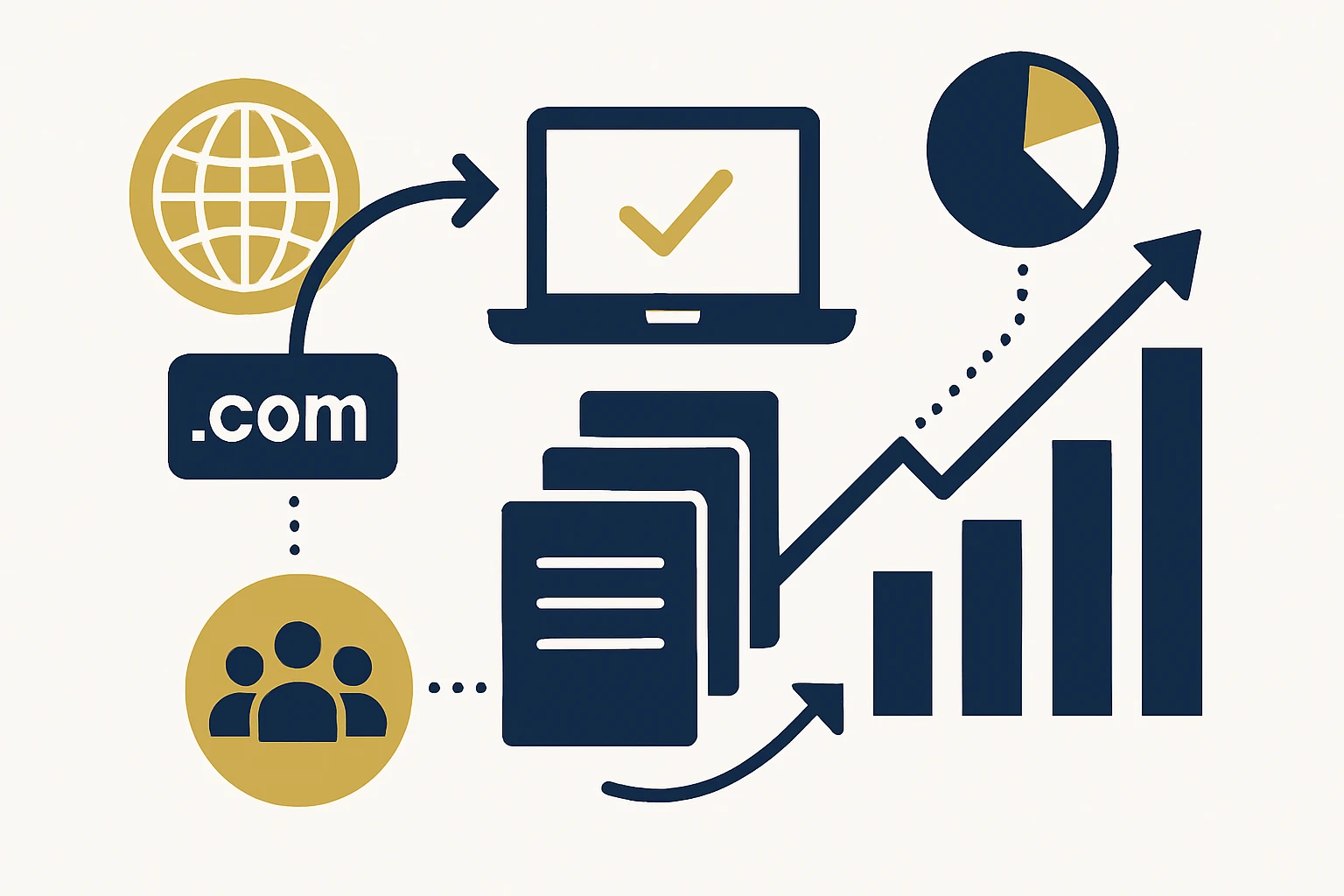
To operationalize premium domain deals, adopt a four-phase framework that mirrors lifecycle best practices and aligns with brand governance. The phases are sequenced to minimize risk, maximize confidentiality, and optimize post-acquisition integration. The framework below is designed for practical use by in-house teams and brokers alike.
- 1) Discovery & Target Scoping: Define brand alignment, geography, and growth objectives. Build target criteria that include domain length, memorability, linkability, and potential synonyms or variants that could support future campaigns. This phase sets the guardrails for what constitutes a “premium” asset for the portfolio and helps avoid scope creep during outreach. (Reference: best-practice playbooks in domain acquisition during vendor negotiations.)
- 2) Evaluation & Due Diligence: Assess the domain’s intrinsic value and risk profile. Practical checks include historical ownership, backlink quality, SEO health, potential trademark conflicts, and a realistic assessment of the domain’s ability to contribute to the brand’s growth. Valuation frameworks commonly combine comparable sales (comps), income proxies, and strategic value to determine a defensible price. See professional valuation discussions for domain assets. (domainadvisor.com)
- 3) Negotiation & Confidentiality: Approach is outbound, leverage NDAs, escrow where appropriate, and privacy-preserving outreach to protect strategy and target information. Industry sources emphasize that structured negotiations - not ad-hoc offers - better preserve value and maintain market credibility. Best-practice guides also stress the importance of a clear posture on ownership verification and transfer mechanics. (brannans.com)
- 4) Transfer, Protection & Portfolio Integration: After deal closure, secure the asset, configure registrar protections (locks, approvals), and integrate it into the brand’s defensive and growth programs. Lifecycle management playbooks from leading providers illustrate how to map the domain into the broader asset stack, ensuring ongoing governance and protection. GoDaddy Lifecycle Playbook offers a practical template for this phase. (gcd.com)
For teams implementing this framework, the emphasis should be on rigor, transparency, and alignment with broader brand objectives. The four phases are a toolkit, not a rigid sequence, real-world deals often require iteration between phases as new information emerges.
Defensive registrations and brand protection: hardening the portfolio
Defensive domain strategies are not optional extras, they are a core risk management practice for brands facing evolving online threats. Defensive registrations - especially for typos, lookalikes, and variants - help prevent opportunistic registrations that could confuse customers or siphon traffic away from official sites. The strategic value of brand protection has been highlighted by high-profile practitioners and industry commentators alike. Forbes points to domain names as a critical line of defense for brand integrity, arguing that proactive domain strategies support a brand’s resilience rather than merely responding after a violation occurs. Defense Is The Best Offense: Domain Names’ Role In Brand Protection emphasizes that a judicious mix of defensive domains, monitoring, and rapid response is essential in a dynamic threat landscape. (forbes.com)
In practice, a defensible posture includes a combination of defensive registrations, registrar protections, monitoring alerts, and a clear escalation path for malicious registrations. GoDaddy’s brand protection resources outline a comprehensive approach to registry-level controls, notice-and-take-down workflows, and strategic coverage across relevant gTLDs and ccTLDs. While every brand will tailor its defense, the underlying principle remains: invest in protection commensurate with the asset’s strategic value. (gcd.com)
Another practical takeaway is that defensive strategy is not a one-off effort. It requires ongoing governance, budget, and a disciplined review process. The acquisition and protection playbooks from experienced practitioners emphasize ongoing assessment, not one-time action, as brands expand into new markets or consider new product lines. A well-executed program links valuation, risk assessment, and brand governance into a coherent policy. For practitioners seeking a structured approach, see the collaboration between acquisition best practices and brand protection in industry literature. (brannans.com)
Practical considerations: trade-offs, speed, and confidentiality
Strategic domain decisions involve a balance of speed, price, and risk. Quick wins - such as acquiring a named domain with immediate brand traction - may come at a premium, while slower, more methodical approaches can yield better price discipline but require patience and stronger governance. The literature on domain acquisitions consistently notes that a guided process, including clear milestones, reduces the risk of overpayment and post-close regret. For teams evaluating the trade-offs, a few guiding questions help keep decisions anchored in business value:
- What is the brand’s short- and long-term growth trajectory, and how does the domain support it (SEO, brand recall, regional campaigns)?
- What is the domain’s defensibility profile (similar names, regional variants, potential trademark concerns) and how much risk is acceptable?
- What are the costs of defense and governance after acquisition, and how do these compare to expected yield in traffic, conversions, or brand equity?
Industry perspectives suggest that valuation is most robust when grounded in a synthesis of market data, strategic fit, and risk considerations. Domain valuation tools and guides articulate this triangulation, reinforcing the message that there is seldom a single “right price” for premium assets. Domain valuation guides summarize how comp analyses, traffic proxies, and brand risk indicators contribute to a defensible price framework. (domainadvisor.com)
Limitations, trade-offs, and common mistakes
Even with a disciplined framework, strategic domain work has boundaries. Below are common limitations and mistakes that can undermine value realization if not anticipated:
- Over-reliance on price at the expense of fit: A low price today isn’t valuable if the domain won’t support the brand’s growth or will require disproportionate defensive costs later. A balanced view uses both comps and strategic value signals. (domainadvisor.com)
- Underestimating post-acquisition costs: Transfer, DNS configuration, registrar locks, and ongoing brand protection add up. Lifecycle templates emphasize planning for these ongoing costs as part of the total ownership cost. (gcd.com)
- Failing to secure confidentiality and escalation paths: Open negotiations can alert competitors and erode leverage. A formal, NDA-driven outreach process is a core recommendation of best-practice playbooks. (brannans.com)
- Neglecting defensive coverage in new markets: As brands expand, new regional domains require strategic assessment to avoid gaps in protection. Brand protection literature repeatedly stresses ongoing governance rather than a single defensive sweep. (forbes.com)
For teams seeking a concise starting point, a pragmatic one-page framework can help. The four-phase model above pairs clearly defined activities with tangible governance outcomes, reducing the risk of misalignment and enabling faster, more confident decisions. For those implementing these practices, practical resources and checklists are widely discussed in industry guidance and vendor playbooks.
Case-in-point: how this applies to markets with diverse domain ecosystems
Global brands increasingly operate across markets with varied ccTLD ecosystems. A strategic approach to domain acquisition in markets like Africa, Oceania, or South Asia involves tailoring the target lists to reflect local search behavior, regulatory environments, and regional brand presence. In practice, this means expanding the scope beyond .com to a curated mix of ccTLDs and respected gTLDs that support regional campaigns, while maintaining a central governance framework. When researching country-focused opportunities, many teams leverage available domain inventories by TLD as a starting point for discovery and validation (for example, exploring the full inventory of tld options available). List of domains by TLD and related country filters can be useful in this phase.
To illustrate how a broker supports this exploration with reliable data, consider how a jurisdictional analysis might pair with a confidential outreach strategy to secure a domain that harmonizes with local search intent and global brand standards. This is where a structured, evidence-based approach - grounded in valuation techniques and risk assessment - delivers durable outcomes. For teams seeking structured data sources to inform due diligence, our data toolkit includes access to industry-standard interfaces and registries, such as RDAP & WHOIS databases. See the broader resources at RDAP & WHOIS Database for details on data governance and ownership verification.
Conclusion: turning premium domains into strategic brand assets
Premium domain brokerage, properly applied, turns a domain name into a strategic asset that supports brand growth, protects market equity, and accelerates go-to-market velocity. A disciplined framework - Discovery, Evaluation, Negotiation, and Transfer - helps organizations balance speed with risk, confidentiality with clarity, and cost with value. Defensive registrations and brand protection remain essential, not optional, in a world where digital assets are increasingly central to competitive advantage. By combining valuation insights, governance discipline, and data-driven diligence, brands can build resilient portfolios that endure leadership changes, market shifts, and evolving consumer behavior. For teams seeking a clear path to execution and governance, the framework above offers a pragmatic blueprint anchored in industry best practices - and supported by a strong, research-based understanding of domain value and risk.
For those ready to translate strategy into action, our team provides confidential advisory and execution support through a disciplined, data-informed process. If you’d like to explore transparent pricing and project scope, you can review our pricing, or learn more about our data toolkit in the RDAP & WHOIS Database resource. For a sense of inventory breadth, see the List of domains by TLD and select country pages cited above as a starting point for targeted research.