Introduction: why country-targeted domain sourcing matters
For brands expanding beyond domestic markets, owning a carefully curated set of country-specific domains is a strategic asset - one that supports local trust, regional branding, and scalable growth. Rather than chasing generic, global domains, savvy firms build portfolios anchored in geography, language, and consumer intent. In practice, this means identifying credible lists of country-specific websites and turning those signals into disciplined acquisition opportunities. The approach is not about buying every available domain, it is about selecting a few high-potential targets that reinforce brand coherence across markets and reduce downstream brand risk.
To execute this effectively, practitioners must combine data-driven prospecting with disciplined due diligence, negotiation discipline, and clear governance. Modern domain data streams - such as country-code listings and the evolving Registration Data Access Protocol (RDAP) for ownership visibility - make it possible to assemble targeted lists and validate them at scale. See how RDAP is increasingly shaping how buyers verify ownership and history during the sourcing process. RDAP replaces legacy WHOIS in many registries, offering a more standardized, machine-readable view of ownership data. (icann.org)
Why country-specific lists are foundational to a premium portfolio
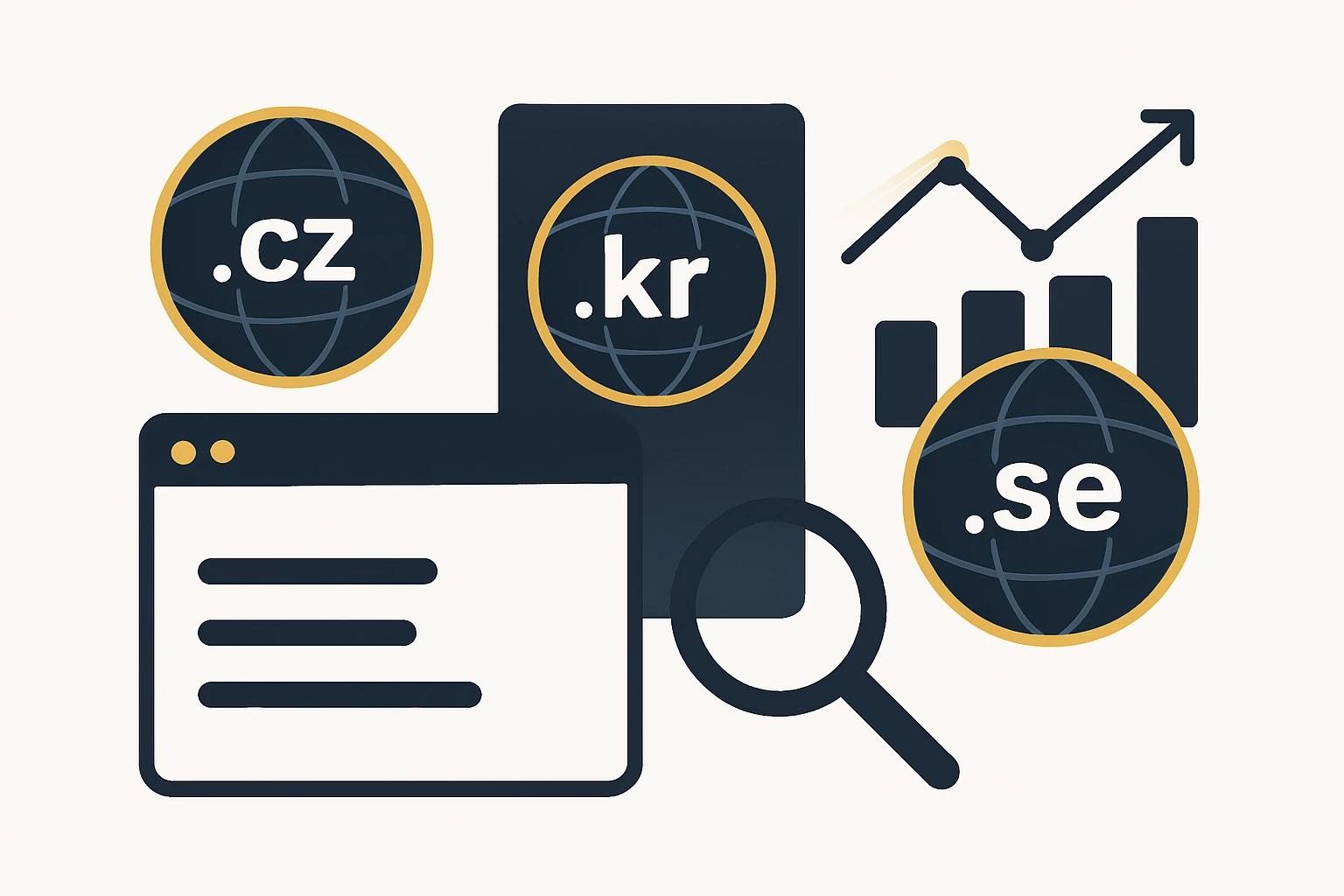
Brand portfolios anchored to specific countries can leverage local search trends, cultural nuances, and regulatory contexts. When you align your domain strategy with geopolitical and linguistic realities, you improve recall, click-through, and conversion in each market. A well-structured country-focused approach also supports brand protection by reducing the risk that a local entrant or squat domain erodes your regional positioning. In practice, it means mapping target geographies (for example, the Czech Republic CZ, South Korea KR, and Sweden SE), then systematically sourcing credible lists of domain targets from reputable data providers and registries. For practitioners looking to explore country-by-country domain catalogs, see how webatla curates country-focused offerings that align with brand strategy and procurement governance. Note: you can explore the Czech Republic page for a country-specific lens here: Czech Republic domain lists.
Data-driven sourcing also benefits from a structured process: you gather credible country lists, clean and deduplicate them, validate ownership and history, and then score candidates against strategic criteria. An established framework helps avoid common mistakes, such as chasing short-term wins without regard to long-term brand protection or misinterpreting ownership data in quickly changing registries. For proponents of a formal country-dedicated approach, webatla’s country catalogs illustrate how a professional advisory can tie geography to portfolio governance. You can also view the broader set of country listings here: List of domains by Countries.
Sourcing CZ, KR, and SE lists: a practical workflow
The workflow below is designed to produce clean, action-ready target lists for premium domain acquisitions across the CZ, KR, and SE markets. It balances editorial rigor with the realities of negotiation and risk management, and it remains adaptable to other geographies as needed.
- 1) Define the scope and discovery sources: Determine which markets matter most for your brand and which data sources are credible for country-specific websites. Credible lists can come from ccTLD directories, domain catalogs, and country-specific business registries. For general ccTLD data and downloadable lists, explore reputable catalogs and directories such as domains databases that publish country-specific records. (domains-index.com)
- 2) Assemble candidate pools for CZ, KR, and SE: Build a preliminary pipeline by aggregating lists for each country, then remove duplicates and obvious non-targets (e.g., non-brand-appropriate extensions or domains with poor ownership signals). This stage is about breadth, not depth - in order to cast a wide net and later apply stricter filters.
- 3) Validate ownership and history with RDAP/WHOIS: The modern, standardized approach to domain ownership visibility is RDAP, which supersedes traditional WHOIS in many registries. Validation helps you confirm current ownership, registration date, and historical ownership chains, reducing the risk of pursuing the wrong asset. RDAP provides machine-readable data, enabling scalable vetting across large lists. (icann.org)
- 4) Enrich with domain quality signals: Augment ownership data with signals such as age, backlink profile, content history, and branding alignment. This is where disciplined due diligence, not just price, drives decision quality.
- 5) Score and shortlist: Apply a consistent scoring rubric (see the structured framework below) to compare candidates on brand fit, risk, and acquisition feasibility. A transparent scoring process helps governance teams approve or pause deals with clear rationales.
In practice, the combination of country-specific lists and RDAP-enabled verification produces a defensible, country-aware sourcing workflow. For teams seeking a more comprehensive data feed, consider aligned data services that combine RDAP data with historical domain records. Note: the broader market for domain data is dynamic, so rely on reputable providers and keep governance to ensure compliance with privacy and data-use standards.
A scoring framework for country-domain candidates
The following structured framework provides a practical way to compare CZ, KR, and SE targets. It emphasizes strategic fit, risk management, and acquisition feasibility, while remaining adaptable for different company sizes and risk appetites. The rubric itself is a starting point, it should be customized to reflect your brand’s priorities and market realities.
- 1) Market relevance and brand fit
- Geographic relevance: does the domain align with the country or language of the market?
- Brand alignment: does the domain support existing product lines or intended brand extensions?
- Search and branding potential: is there strategic value in brand recall and local phrasing?
- 2) Ownership reliability and history
- Ownership continuity: has the domain changed hands recently or shown a stable history?
- History red flags: any past associations with spam, malware, or reputational risk?
- Current registration data quality: is the registrant contact information complete and consistent?
- 3) Acquisition feasibility and cost
- Market price signal: is the asking price aligned with comparable assets?
- Negotiation complexity: how hard would it be to reach a mutual agreement?
- Renewal risk: are there upcoming renewal obligations or syndication pitfalls that could erode value?
- 4) risk and governance
- Regulatory considerations: local laws affecting domain ownership or usage in the target market.
- Privacy and compliance: how does the asset fit with your data governance policies?
- Portfolio coherence: does this asset harmonize with the rest of the domain portfolio?
- 5) Strategic priority
- Opportunity window: is there a short-term strategic need or a longer-term growth plan?
- Impact on branding and perception: would the asset meaningfully enhance brand credibility in the market?
- Resource readiness: do you have internal or external capacity to negotiate, acquire, and manage the asset?
To operationalize this rubric, translate the scores into a shortlist and then into a concrete acquisition plan, including ownership verification steps, a negotiation playbook, and a post-acquisition integration timeline. See how a professional advisor would frame this - not as a one-off purchase, but as part of a broader digital asset strategy that includes brand protection and portfolio management. For reference, the idea of portfolio management as a discipline is supported by industry thought leaders who outline the financial and branding value of well-curated domain asset programs. Domain portfolio management considerations emphasize governance, renewal discipline, and strategic alignment with business goals. (dynadot.com)
Case study: a three-country view (CZ, KR, SE) and how to apply the framework
Imagine a multinational brand looking to strengthen regional presence in Central Europe, East Asia, and Scandinavia. The team would first compile credible lists of CZ, KR, and SE domains using reputable catalogs and ccTLD directories, then validate ownership via RDAP, and finally score each candidate against the rubric above. The result is a compact, prioritized shortlist that supports structured negotiations and brand governance across markets. As part of this process, a practical advisory can help orchestrate confidential acquisitions, safeguard brand positioning, and coordinate with local counsel where necessary. For readers seeking a country-focused view, webatla provides country-centric domain resources that can inform this workflow. See the Czech Republic page as an example: Czech Republic domain lists.
Beyond country lists, consider how to leverage a broader inventory of domains by country and technology to inform risk assessment and extension planning. The client’s own catalogs and RDAP resources can be instrumental at this stage. For an overview of country-by-country cataloging and technology-based domain discovery, you can explore the related resources in webatla’s ecosystem and data services.
Limitations, trade-offs, and common mistakes
Every sourcing program comes with trade-offs. The following limitations are important to acknowledge and to plan around:
- Data quality and freshness: country lists and ownership data can become stale quickly. Always layer multiple sources and refresh on a schedule.
- Ownership ambiguity: even with RDAP, complex ownership chains or privacy protections can obscure true control. Layer historical data and consult legal counsel when in doubt.
- Overemphasis on short domains: short, generic CZ/KR/SE domains may command high prices but offer limited branding value if they don’t align with your product narratives.
- Geographic misalignment: a domain’s local relevance does not automatically translate to global business impact, ensure alignment with product strategy and local market needs.
- Negotiation friction: confidential acquisition requires careful governance to balance speed, price, and reputational considerations. Be prepared to walk away from high-risk assets.
Another common mistake is treating country lists as a silver bullet. A disciplined approach couples prospecting with brand governance, risk assessment, and portfolio management - ensuring that every asset fits a broader strategy and has clear ownership accountability. For practitioners who want a structured framework to manage global domain risk and growth, see how a digital asset advisory perspective emphasizes governance and strategic buy-side diligence. Digital asset advisory is a core competency in modern brand strategy and portfolio management. (dynadot.com)
Structured framework block: a practical, repeatable process
Use this compact framework to operationalize country-targeted domain sourcing across CZ, KR, and SE markets. It’s designed to be repeatable and auditable by governance teams.
- Map and source
- Define target geographies (CZ, KR, SE) and collect credible country-domain lists from trusted catalogs.
- Consolidate into a single candidate pool and remove duplicates.
- Validate and enrich
- Run RDAP/WHOIS checks to confirm ownership and registration dates.
- Enrich with branding fit and historical signals (backlinks, content history, etc.).
- Score and act
- Apply the scoring rubric to shortlist assets with high strategic value and feasible negotiation paths.
- Develop negotiation playbooks and post-acquisition integration plans.
Conclusion: a disciplined, country-aware approach to premium domains
Country-targeted domain sourcing is more than a list-build exercise. It’s a disciplined, governance-driven process that ties branding, risk management, and acquisition strategy into a coherent portfolio plan. By combining credible country lists for CZ, KR, and SE with RDAP-based verification, brands can identify high-potential assets while maintaining control over costs and risk. When you pair this workflow with editorial rigor and market-savvy negotiation, you create a durable advantage for your global brand. For brands seeking expert guidance on confidential acquisitions, or a comprehensive digital asset advisory that connects country strategy with portfolio management, consider engaging a seasoned advisor who can coordinate cross-market diligence and negotiations. You can explore webatla’s country-focused resources as part of a broader engagement, including their Czech Republic page and other country catalogs listed above.
If you want to learn more about the country-specific lens and how a premium domain broker can help, you can explore: List of domains by Countries, and for specific country insights, the Czech Republic page: Czech Republic domain lists. For data-standard practice and governance considerations in modern domain sourcing, refer to industry discussions on RDAP as the standard for ownership visibility. (icann.org)