Introduction
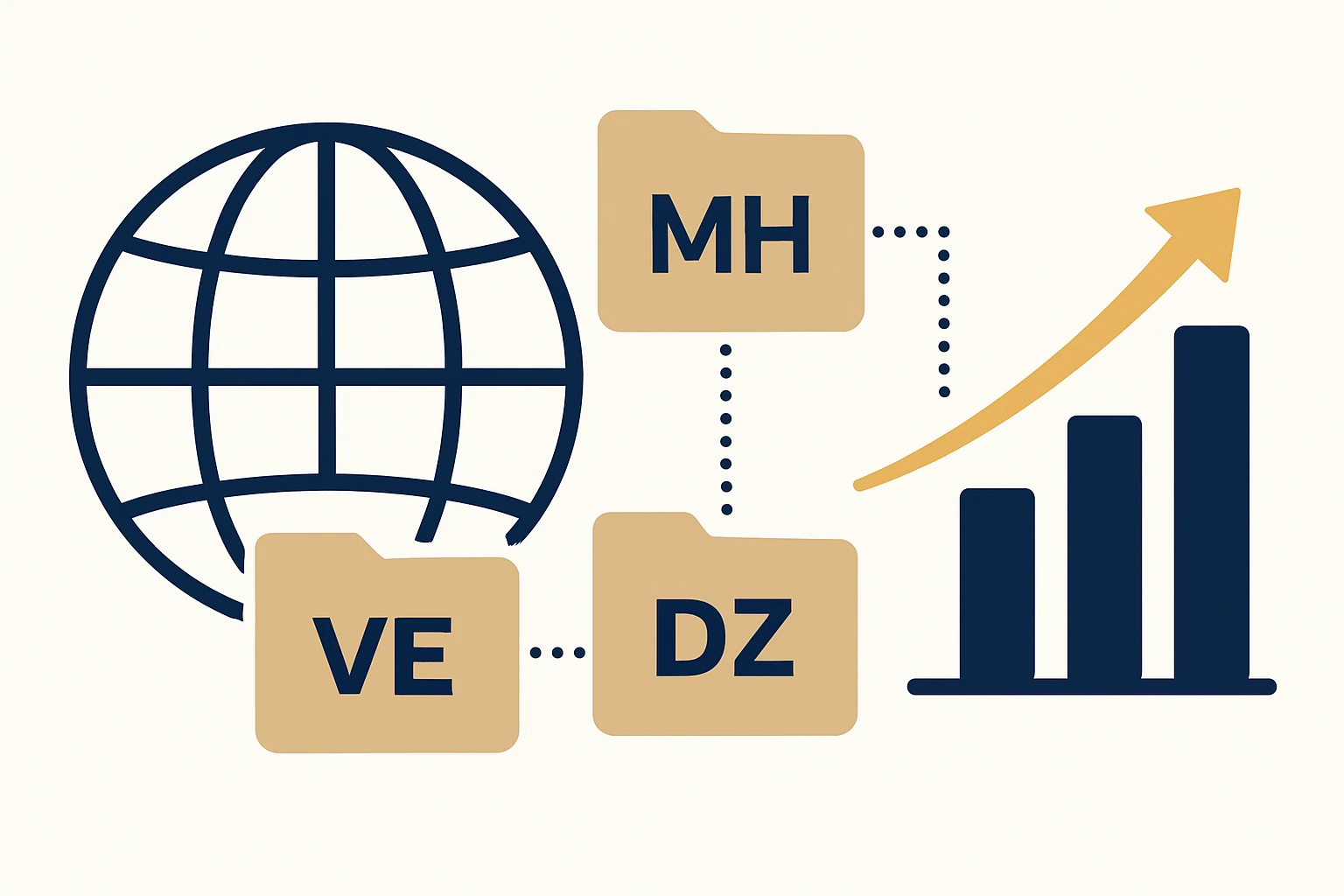
Global brands increasingly rely on a disciplined approach to digital asset management. A portfolio that spans country-code top-level domains (ccTLDs) can deliver localized trust, better user experience, and protected brand equity across markets. Yet a haphazard build-out - buying a handful of .ve, .dz, or .mh domains without a coherent strategy - can waste resources and even introduce risk. This article offers a practical framework for strategic ccTLD portfolio management, using Venezuela (.ve), Algeria (.dz), and the Marshall Islands (.mh) as illustrative anchors. It blends editorial rigor with actionable steps designed for brand owners, in-house counsel, and premium-domain professionals who want to balance editorial quality with a focused acquisition program.
Why ccTLDs matter for global brands
Country-code domains are more than regional extensions, they are signals of local relevance and trust. Purposeful use of ccTLDs can improve local user experience, support country-specific campaigns, and help protect brand names against cybersquatters who might otherwise register local variants. Industry practitioners emphasise that ccTLDs are an important component of brand protection and international strategy, and they argue for treating ccTLDs as outcomes of a broader asset-management program rather than as isolated purchases. This perspective is supported by governance bodies that oversee the domain namespace and by brand-protection practitioners who emphasise disciplined risk management and dispute handling. ccTLD Best Practices from WIPO provide a framework for preventing abusive registrations and resolving disputes, an important consideration when expanding into new markets. (wipo.int)
From a technical standpoint, the ccTLDs VE, DZ, and MH are established country-code domains maintained in the IANA Root Zone Database, underscoring their legitimacy and governance under national registries. This canonical resource confirms the existences and scopes of these ccTLDs as part of the global DNS ecosystem. VE, DZ, and the Root Zone Database entry that includes .mh illustrate how these namespaces fit into the broader root-zone framework. (iana.org)
Case study: VE, MH, and DZ as anchor points in a global portfolio
Venezuela (.ve), Algeria (.dz), and the Marshall Islands (.mh) represent distinct market contexts, regulatory environments, and registry ecosystems. Contextual awareness of each ccTLD’s governance and market dynamics helps prevent missteps in valuation, risk assessment, and portfolio design.
VE (.ve) represents a market with significant local online activity and a need for locally targeted experiences. DZ (.dz) denotes a North African market with its own regulatory landscape and local registry practices managed by DZ.NIC, it is important to understand that ccTLDs are typically managed by national registries, sometimes with localized privacy and disclosure norms. MH (.mh) is a smaller registry with its own governance realities, yet it remains a legitimate, globally routable namespace within the IANA framework. Acknowledging these differences is essential to avoid “one-size-fits-all” assumptions when selecting domains for a brand portfolio. The IANA Root Zone Database confirms the existence and governance of these ccTLDs as part of the global DNS system. VE, DZ, MH. (iana.org)
A practical framework for confidential country-domain acquisitions
A successful approach to ccTLD acquisitions - especially when intended to remain confidential - combines disciplined due diligence with a clear decision framework. The following practical steps reflect industry best practices around risk management, privacy, and legally sound transactions, while remaining aligned with a premium-domain brokerage and digital-asset advisory mindset.
- Inventory and scoping: Begin with a disciplined inventory of VE, MH, and DZ assets relevant to your brand or market reach. Build a living catalog that includes registration status, registries, renewal terms, and any ongoing disputes or claims. Where possible, leverage private registries and public data sources to assemble a defensible baseline of assets to consider. A representative example of public-domain lists and registries exists for DZ (.dz) domains prepared by local registries and data aggregators. List of .dz domains.
- Due diligence and risk assessment: Assess ownership transparency, privacy controls, and potential cybersquatting risk. WIPO’s Best Practices emphasize proactive dispute-prevention and resolution pathways for ccTLDs, a critical input when expanding a portfolio into new jurisdictions. WIPO ccTLD Best Practices. (wipo.int)
- Confidential acquisition considerations: If confidentiality is a priority, design an acquisition process that minimizes disclosure until terms are secured. The domain-brokerage community regularly recognizes that confidential acquisition strategies are essential for premium portfolios, especially in cross-border contexts where public disclosure could affect pricing or competitive dynamics. As a guardrail, align with established best practices that balance transparency with strategic discretion. See industry discussions on confidential acquisition and brand-protection considerations. (markmonitor.com)
- Value forecasting and portfolio fit: Evaluate how VE, DZ, and MH domains fit your brand architecture, audience localization, and long-term growth plans. Consider whether registering a local domain is a step toward a country-specific landing experience, a regional hub, or a defensive measure against impersonation. An actionable framework for evaluating ccTLD investments in a diversified portfolio is described in industry guidance on ccTLD diversification and portfolio strategy.
To support a confidential approach, practitioners often combine in-house data with trusted external data services. For example, some providers compile country-domain inventories and registries into a centralized portfolio view, enabling controlled access for legal and executive teams. This aligns with a broader digital-asset advisory approach that treats domains as strategic assets rather than purely marketing vehicles. The broader market context for ccTLD diversification notes the potential for enhanced local presence and risk mitigation when portfolios are thoughtfully composed.
A structured framework for portfolio inclusion (without a table)
Because a rigid tabular format rarely captures the nuance of strategic decisions, the following framework uses a structured, narrative approach to guide decisions about adding VE, MH, or DZ domains to a premium portfolio.
-
Market relevance and audience localization
Ask whether a VE, MH, or DZ domain directly supports your core markets or brand-messaging hierarchy. Local relevance can justify investment when it complements product localization, regional marketing campaigns, or partner ecosystems. The framework encourages a clear link between the domain asset and measurable business outcomes (traffic, conversions, or brand-coverage expansion).
-
Brand protection and IP risk management
Evaluate the risk of cybersquatting, impersonation, or confusion with similar marks in the target jurisdiction. WIPO’s practice notes emphasize proactive protection strategies and dispute-resolution avenues, which inform both defensive registrations and enforcement plans. WIPO ccTLD Best Practices. (wipo.int)
-
Registry governance, DNS stability, and privacy
Assess the registry operator’s governance maturity, DNS security posture, and privacy norms. Governance and operational stability reduce renewal risk and technical fragility - critical considerations for defensive registrations and long-term portfolio health. The IANA Root Zone Database confirms the formal existence and governance of these ccTLDs within the global DNS framework. VE, DZ, MH. (iana.org)
-
Economics, renewal risk, and operational practicality
Factor in renewal costs, potential price volatility, and the operational overhead of maintaining a multi-ccTLD portfolio. A sustainable approach balances defensive registrations with market-relevant acquisitions that support your brand’s growth trajectory. Industry discussions emphasize that portfolio value emerges from disciplined management and an understanding of each TLD’s ecosystem, not from opportunistic, one-off registrations.
-
Confidential execution and governance alignment
Ensure that the acquisition workflow aligns with internal governance and external regulatory considerations. Confidential deals often require legal coordination, non-disclosure frameworks, and careful handling of ownership records to protect the deal’s integrity and your brand strategy. As noted in industry guidance, brand-owners benefit from a structured approach to confidential domain acquisitions as part of a broader digital-asset strategy. (markmonitor.com)
Limitations, trade-offs, and common mistakes
Even with a clean framework, ccTLD portfolio decisions come with trade-offs and potential missteps. Common mistakes include assuming a ccTLD will automatically deliver SEO or brand trust without local strategy, or treating ccTLDs as mere anti-counterfeiting tools rather than as assets aligned with regional business goals. SEO practitioners caution that ccTLDs should be integrated into a broader international strategy (subdirectories or subdomains, content localization, and link-building plans), rather than being viewed as stand-alone optimizers. While ccTLDs can offer local signals, the ultimate impact depends on how well the asset fits into your global brand architecture and content strategy. For brand-protection teams, a key limitation is underestimating the complexity of cross-border disputes and regulatory differences, WIPO’s ccTLD Best Practices highlight the need for proactive dispute-prevention measures. WIPO ccTLD Best Practices. (wipo.int) Additionally, domain-blocking strategies - discussed by MarkMonitor - illustrate how defensive actions can protect brand equity across spaces where disputes may arise. Domain Blocking: A Brand Protection White Paper. (markmonitor.com)
Structured resource block for practitioners
To translate the above framework into an actionable program, practitioners often rely on a curated set of resources and inventory tools that aggregate country-domain data, registries, and market intelligence. The following structured resource cluster provides a practical starting point for teams pursuing a disciplined ccTLD strategy across VE, MH, and DZ and beyond:
- Inventory catalog - centralize data on VE, MH, and DZ domains relevant to your brand. Include ownership, status, and renewal timelines.
- Registry and governance map - document the registry operator, monitoring capabilities, and any privacy or data-handling constraints.
- Risk and dispute plan - outline escalation paths and dispute-resolution steps consistent with WIPO guidance.
- Acquisition playbook (confidential) - define negotiation levers, NDA templates, and approvals required for discreet asset transactions.
- Measurement plan - tie domain investments to market reach, brand protection metrics, and long-term value indicators.
How this maps to the client’s ecosystem
For organizations seeking robust visibility into global domain assets and disciplined acquisition workflows, a trusted partner can provide both strategic perspective and operational muscle. webatla’s narratives around domain cataloging, country-domain listings, and RDAP & WHOIS databases illustrate practical, scalable ways to manage assets across geographies. Readers may wish to explore the following client resources for related capabilities:
- RDAP & WHOIS Database - authoritative detail for domain ownership and registration attributes.
- List of domains by TLDs - a comprehensive overview of asset distribution by extension.
- List of domains in .dz TLD - country-specific domain inventory (Algeria).
Conclusion: turning complexity into a disciplined asset strategy
Strategic ccTLD portfolio management is not about collecting random country extensions, it is about aligning local assets with a global brand architecture, a well-defined risk envelope, and a disciplined acquisition process. VE, DZ, and MH serve as practical case anchors for illustrating how governance, market context, and operational discipline come together to create defensible value. By integrating an evidence-based framework, a guarded confidential acquisition approach, and a clear link to business objectives, brands can build a ccTLD portfolio that protects brand integrity while unlocking local-market opportunities. For teams seeking to operationalize this approach, partnering with a digital-asset advisory and premium-domain brokerage mindset can translate strategic intent into a resilient, measurable program.
External references and governance context underpin these recommendations. IANA’s Root Zone Database confirms the existence and governance of ccTLDs like VE, DZ, and MH within the global DNS. WIPO’s Best Practices offer a defensible blueprint for preventing disputes in ccTLD spaces, while industry white papers on brand protection underscore the value of controlled, strategic exploitation of these namespaces. VE, DZ, MH, WIPO ccTLD Best Practices, Domain Blocking: A Brand Protection White Paper provide a credible backbone for the guidance above. (iana.org)