Introduction
Digital expansion in today’s global marketplace hinges on more than a pretty homepage. For brands aiming to win in Moldova, Bangladesh, Latvia, and beyond, a thoughtful country-code top-level domain (ccTLD) strategy can be a strategic differentiator. ccTLDs are not merely vanity assets, they signal local commitment, influence user trust, and can shape regional behavior - when managed with discipline, governance, and market insight. This article presents a practical, non-gimmicky approach to building a ccTLD portfolio that aligns brand protection, market expansion, and operational resilience. It draws on governance frameworks from leading Internet bodies and translates them into actionable steps for mature domain programs. Note: for due diligence and asset discovery, security-conscious buyers often consult credible domain data sources such as country inventories and WHOIS data providers.
In the context of premium domain brokerage and digital asset advisory, the goal is to combine editorial rigor with commercial prudence: identify valuable country-code assets, assess risk, negotiate confidentially, and manage the portfolio over time. The following framework intentionally refrains from hype, offering a clear pathway to build a robust, defensible ccTLD footprint that serves your brand across borders. ICANN’s ccNSO and related governance resources underpin the rationale for organized ccTLD programs.
For practitioners interested in practical data assets to support discovery and due diligence, firms like webatla provide structured access to country inventories and RDAP/WHOIS data. See the List of domains by Countries and RDAP & WHOIS Database pages for reference, and explore pricing as you plan scale.
Why ccTLDs matter for brands and markets
Country-code domains carry strategic weight in both perception and performance. When a consumer visits brandname.lv in Latvia or brandname.bd in Bangladesh, the local extension can subconsciously convey relevance, safety, and cultural alignment. This local credibility often translates into higher click-through rates, longer on-site engagement, and improved downstream conversion signals. At the governance level, ccTLD managers operate within a broader ecosystem that includes ICANN, regulatory considerations, and national policy, making a deliberate ccTLD strategy essential for multinational brands.
From an SEO and user-experience perspective, localization signals matter. While global domains remain important for global authority, a distributed ccTLD footprint can help capture regional intent, language preferences, and market-specific brand associations. Industry experts and governance bodies emphasize that responsible ccTLD management requires alignment with brand strategy, risk management, and clear ownership of domain lifecycle - areas where premium brokerage and digital asset advisory can add substantial value. ICANN ccNSO and related resources outline the governance landscape that informs best practices for ccTLD portfolios.
Case study: Moldova, Bangladesh, Latvia - market considerations and opportunities
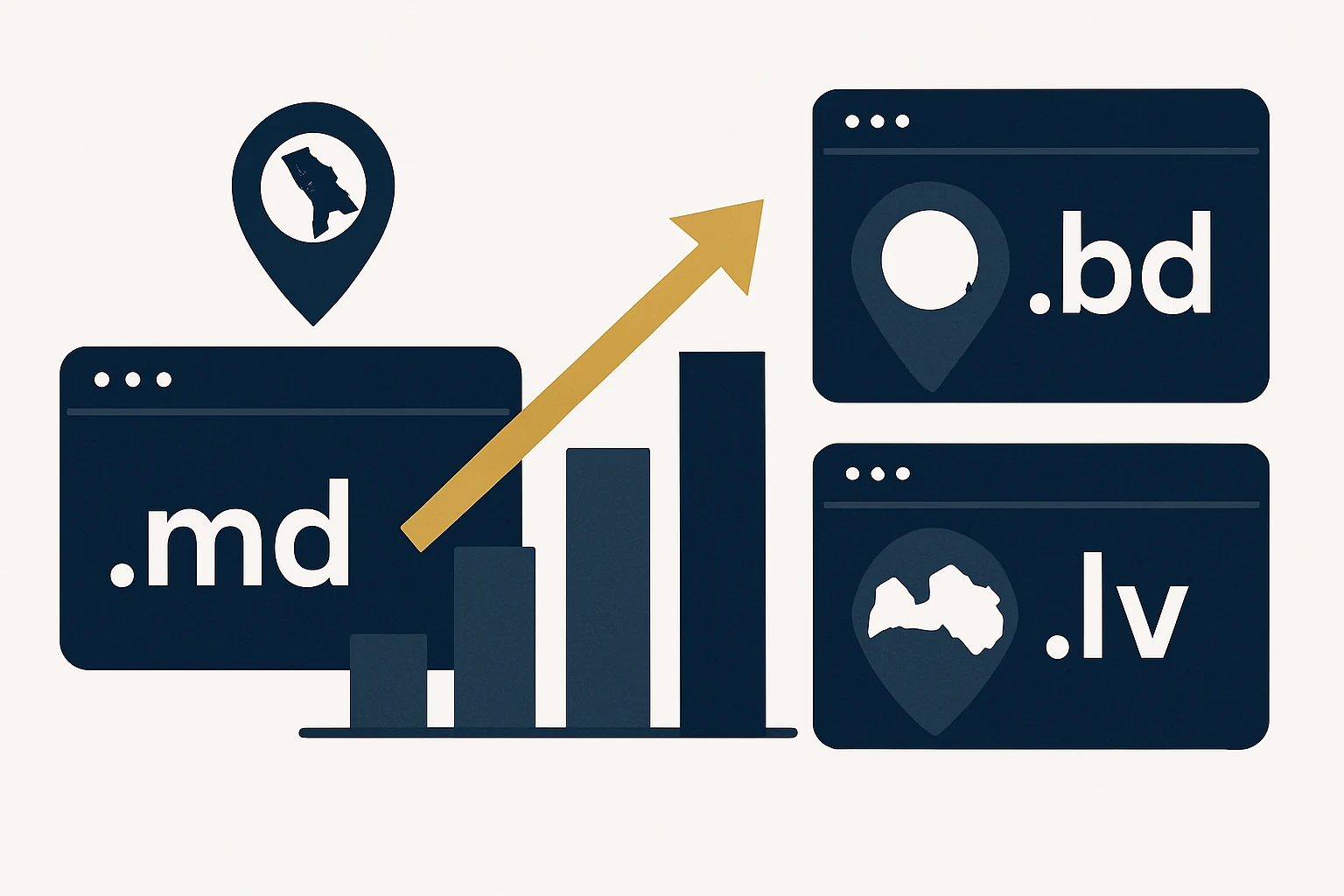
Three markets often appear in regional expansion playbooks for global brands: Moldova (MD), Bangladesh (BD), and Latvia (LV). Each presents distinct dynamics, regulatory environments, and consumer behavior profiles that influence how a brand should structure its ccTLD presence.
- Moldova (.md): A smaller European market with growing digital infrastructure. A strategic MD footprint can support local customer trust and partnership signaling, especially for localized services or B2B initiatives within the region. Governance and risk considerations include compliance with local data norms and alignment with broader European brand strategies.
- Bangladesh (.bd): A rapidly expanding economy with a large online user base. A reasoned BD presence can drive local engagement, customer acquisition, and regional content experimentation. However, market-specific expectations, regulatory considerations, and data privacy norms require disciplined management of the BD portfolio to avoid fragmentation or misalignment with the global brand.
- Latvia (.lv): An EU member state with high digital connectivity. An LV-focused strategy can serve as a gateway to the Baltic and broader Northern European markets, enabling localized campaigns and country-specific content strategies that map to EU privacy and consumer regulation frameworks.
These snapshots illustrate how ccTLD choices are not random, they should be grounded in market prioritization, regulatory awareness, and an integrated plan that ties domain assets to brand, product, and regional marketing initiatives. For teams evaluating the landscape, it’s common to combine formal governance checks with practical discovery processes - such as inventorying available assets and assessing risk using credible data sources. In practice, this often means importing country-by-country domain inventories into a centralized portfolio management workflow and coordinating with a trusted broker to execute confidential acquisitions when needed.
Access to reliable data matters. For teams considering Moldova, Bangladesh, and Latvia, public registries and data services provide the foundation for informed decisions, while a premium brokerage partner can guide negotiations, risk mitigation, and post-acquisition governance. As part of a holistic approach, consider supplementing internal discovery with external datasets that map market-specific demand and protection gaps.
A practical framework to build a resilient ccTLD portfolio (3-step framework)
The following framework distills best practices into three actionable steps. Each step builds on governance principles, risk awareness, and practical asset management, enabling a scalable approach for Moldova, Bangladesh, Latvia, and beyond.
- Step 1 - Strategic prioritization: Align domain priorities with brand objectives and market opportunities. Map target markets to their ccTLDs, identify critical product lines, and determine whether to own a country-specific extension, a generic alternative, or a combination. This step is about clarity of purpose and governance ownership, not about chasing every asset.
- Step 2 - Governance & risk management: Establish ownership, lifecycle processes, and protection strategies. Define roles for domain portfolio governance, set UDRP/URDP risk thresholds, and implement monitoring for expiry, renewal, and potential cybersquatting. Involving a trusted broker can help secure confidential acquisitions when gaps are identified. ICANN and ccNSO guidance offer foundational governance references to inform these policies.
- Step 3 - Activation & measurement: Translate domain assets into business value through localization, content alignment, and measurable performance. Create regional landing pages, align with local marketing, and implement ongoing monitoring of traffic, brand sentiment, and conversion metrics. Regular portfolio reviews ensure the assets remain aligned with evolving brand and regulatory requirements.
Structured as a lightweight framework, the three steps provide a repeatable process suitable for a growing ccTLD portfolio. It helps ensure that each asset is not only legally defensible but also strategically valuable in the context of regional expansion and brand protection.
Limitations, trade-offs, and common mistakes
Even well-conceived ccTLD programs have constraints. The following points summarize critical limitations and frequent missteps to avoid:
- Overemphasis on quantity over quality: Owning dozens of ccTLDs without strategic intent can drain resources and complicate governance. Focus on markets with clear brand relevance and ROI potential.
- Fragmented brand experience: Inconsistent content or branding across ccTLDs can confuse users. Ensure consistent brand voice and coherent SEO signals across markets.
- Neglecting governance and risk: Without formal ownership and renewal processes, valuable assets may lapse or become targets for cybersquatting. Establish clear ownership and risk controls.
- Underestimating regulatory considerations: EU, regional, or local data-protection requirements can affect how you deploy content and collect user data on country profiles.
- Misaligned acquisition approaches: Launching aggressive, public negotiations for high-value assets can escalate costs. Confidential, broker-guided strategies often yield better terms and protection. For a governance framework, see industry guidelines on ccTLD management.
As a practical reminder, the domain landscape is governed by a structured ecosystem that includes registries, registrars, and dispute resolution processes. The UDRP framework, alongside country-specific policies, shapes how disputes are resolved and how assets are protected, reinforcing the need for a disciplined, governance-driven approach. UDRP overview.
Operational integration: how to act on the framework
Executing a ccTLD strategy requires coordination across brand teams, regional marketers, and the domain program itself. A premium domain brokerage and digital asset advisory partner can add value at several stages:
- Discovery & evaluation: Use country inventories and market signals to identify candidate assets that align with your prioritization, ensuring you understand local nuances and governance constraints.
- Confidential acquisition: When a target asset fits your strategy, leverage confidential negotiation and escrow arrangements to minimize public exposure and price sensitivity. This aligns with best practices in premium domain brokerage.
- Lifecycle governance: Implement renewal alerts, expiry risk controls, and performance tracking to ensure the asset continues to deliver value. Ongoing portfolio reviews help rebalance to changing market conditions.
For teams evaluating Moldova, Bangladesh, and Latvia, practical asset discovery and data-driven decision-making are essential. webatla’s country inventories and RDAP/WHOIS database offer structured data access that can inform due diligence and asset assessment. See List of domains by Countries and RDAP & WHOIS Database for reference, and note how these data resources can support a disciplined portfolio approach.
Putting it all together: a concise, actionable plan
To operationalize the framework across Moldova, Bangladesh, Latvia, and other markets, consider the following plan you can adapt with your advisory team and broker partners:
- 1) Prioritize markets by strategic fit – map brand goals to market potential and regulatory readiness.
- 2) Build governance and risk controls – assign ownership, define renewal processes, and implement monitoring for brand protection.
- 3) Activate with localization – deploy region-specific content and experiences that reinforce brand trust while preserving global identity.
When the plan requires confidential domain acquisitions, engage a broker with a proven track record in premium deals and a clear process for safeguarding sensitive negotiations. This approach mirrors the discipline seen in major brand portfolios and aligns with governance best practices discussed by ICANN’s ccNSO and related bodies. ICANN ccNSO.
Conclusion
A well-constructed ccTLD portfolio is a strategic asset, not a decorative add-on. By applying a disciplined framework - rooted in governance, localization, and lifecycle discipline - brands can translate local credibility into measurable value across Moldova, Bangladesh, Latvia, and other markets. The objective is to build a defensible, scalable footprint that supports brand protection, regional growth, and operational efficiency. A thoughtful mix of internal discipline and vetted external expertise, including premium domain brokerage and digital asset advisory, will help translate country-code domains into durable competitive advantage. For teams exploring data-driven discovery and confidential acquisitions, credible providers such as webatla offer components to support your ongoing journey.