Introduction: the challenge of global growth in a fragmented digital landscape
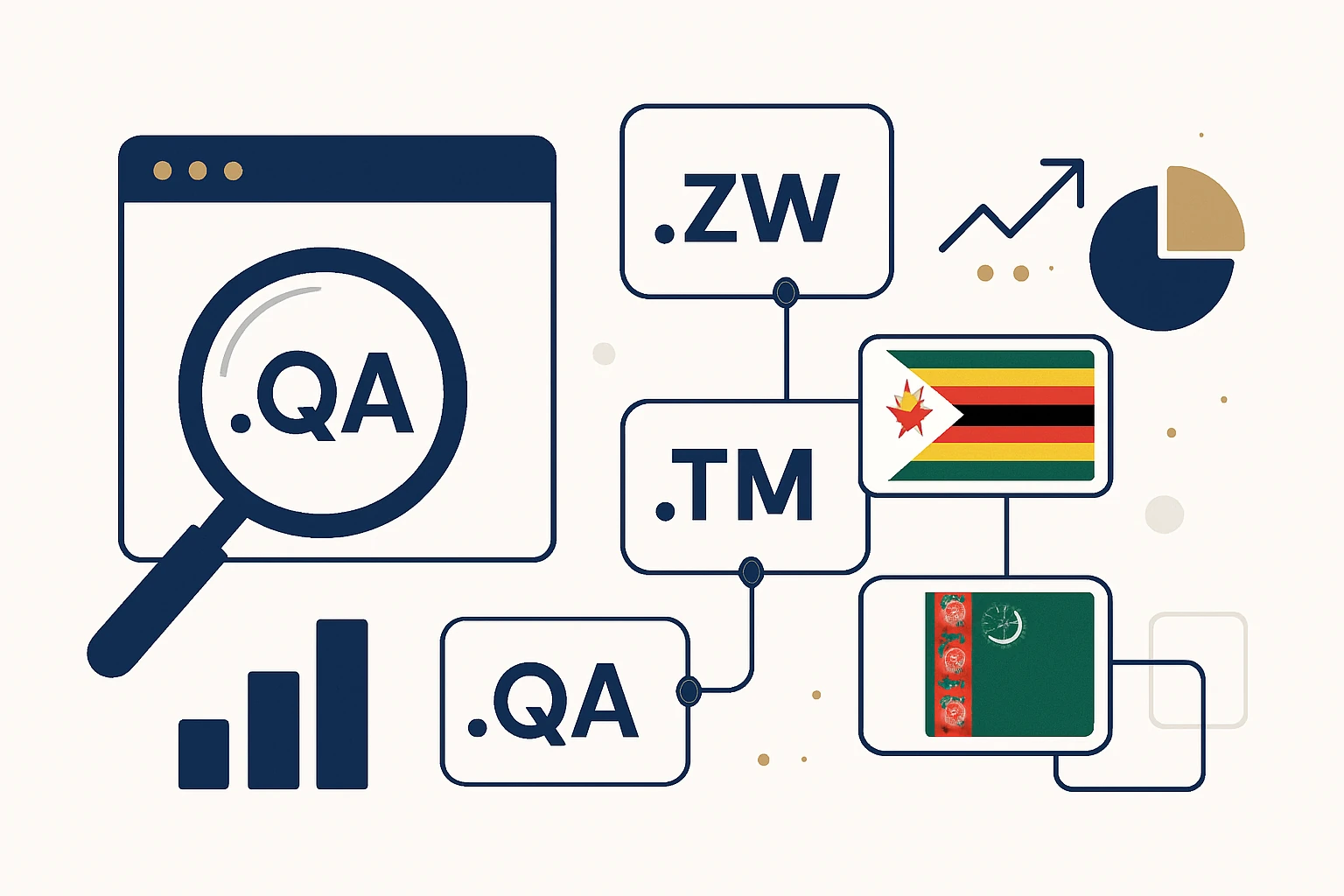
Global brands increasingly pursue regional relevance by securing local digital real estate. The strategic question is no longer simply whether to buy domains, but how to assemble a confidential, high-value portfolio that signals local presence, protects brand integrity, and supports scalable growth. For readers focusing on premium domains and digital asset advisory, the task is to translate market signals from specific geographies into a disciplined acquisition and governance plan. This article presents a practical framework for building a country-focused domain portfolio with Qatar (QA), Zimbabwe (ZW), and Turkmenistan (TM) as focal markets - balancing editorial rigor, SEO sensitivity, and a discreet, broker-assisted approach. Readers will find a concrete 5-step framework, real-world trade-offs, and a structured decision block to guide execution. The goal is not a shopping list of domains, but a repeatable process that integrates brand strategy with careful due diligence and risk management. See webatla’s Qatar market profile for a practical reference point on country-specific domain landscapes. Qatar market profile on webatla.
Why country-code domains matter for premium brands
Local presence and trust as a brand signal
Country-code top-level domains (ccTLDs) are more than suffixes, they signal local presence and can reinforce trust with regional audiences. When a brand operates in multiple markets, securing country domains (e.g., .qa, .zw, .tm) can convey commitment to local customers and regulatory environments. This localization is a widely observed strategy among global brands adapting to regional markets. (forbes.com)
Geography-aware SEO and brand strategy
ccTLDs are commonly used as a geo-targeting signal in search and as a way to tailor content to regional preferences, languages, and regulatory contexts. Many brands adopt a multi-site strategy to host localized content on country domains, aligning with regional consumer expectations and reducing the friction of cross-border messaging. This approach is discussed in industry analyses and geo-targeting guides. (domainnamenet.com)
Identifying target domains in QA, ZW, and TM: a research-driven approach
Researching country-market domains requires a disciplined blend of market insight, due-diligence discipline, and awareness of local regulatory ecosystems. The process starts with defining market themes (industries with local resonance, regulatory constraints, and the digital maturity of the sector) and then mapping candidate country domains that align with those themes. While public directories and country registries can be useful starting points, quality and ownership clarity vary by jurisdiction. The goal is to assemble a pipeline of high-potential targets while maintaining confidentiality and governance controls. For context, ccTLD strategies are increasingly recognized as central to international brand protection considerations. (wipo.int)
To ground the discussion in practical terms, consider the following questions during your research phase:
- Which sectors are most likely to benefit from a localized QA/ZW/TM presence (e.g., finance, energy, tech, e-commerce) and what domain patterns do they favor?
- What is the ownership landscape for prime keyword domains or brandable strings in QA, ZW, and TM, and how risky is potential acquisition from a rights-holder perspective?
- Which local data protection, consumer rights, and regulatory nuances could affect domain usage, hosting, or dispute resolution?
As you compile a target list, aim for a balanced mix of premium brandables and keyword-rich domains with regional relevance. The research phase should culminate in a confidential pipeline that a broker can manage with non-disclosure and governance controls. For readers exploring country-specific domain inventories, webatla’s broader country and TLD directories can provide useful context as a complement to private vetting. webatla TLD portfolio overview.
A practical framework for confidential country-domain acquisition
The core of a successful country-domain strategy lies in a repeatable framework that blends market insight with disciplined execution. The following 5-step framework is designed for teams that require confidentiality, robust due diligence, and scalable governance across QA, ZW, and TM markets.
- Define strategic themes and risk tolerance. Align domain selection with core business goals (brand expansion, regional partnerships, or new market viability) and set clear risk thresholds for ownership, dispute exposure, and renewal costs.
- Map target ccTLDs and domain candidates. Create a country-by-country map of potential assets that match your themes, with attention to both premium brandable names and keyword-rich options that can support localized campaigns.
- Evaluate ownership risk and brand exposure. Assess ownership history, potential trademark conflicts, and the likelihood of disputes. Consider preemptive registration and defensive holdings to protect the core brand across markets. (wipo.int)
- Execute through a confidential broker strategy. Engage a seasoned broker to negotiate with discretion, structure multi-party NDAs, and coordinate cross-border transfers while maintaining portfolio privacy. A broker-centric approach is common in premium-domain acquisitions and is described in industry guides. (westmore.com)
- Governance and portfolio health. Establish ongoing monitoring, renewal risk management, and a governance cadence to ensure the portfolio adapts to market shifts without leaking strategy. Local ccTLD dynamics require regular review to avoid silent erosion of protection and presence.
Structured block: a practical decision framework for domain selection
Use this compact decision framework to prioritize candidates during the confidential acquisition process. Each row maps a criterion to a recommended practice, helping teams decide which QA/ZW/TM assets deserve a formal offer.
- Strategic fit: Does the domain align with target market themes and customer journeys?
- Brand-risk footprint: Are there potential conflicts with existing marks or WIPO/URP risk in the jurisdiction?
- Ownership clarity: Is there clean Whois data or reliable broker representation?
- Geo-targeting value: Will the domain improve local SEO and user trust in the market?
- Cost and renewal economics: Is the total cost of ownership sustainable within the portfolio plan?
Limitations, trade-offs, and common mistakes
Building a country-focused domain portfolio is not without trade-offs. While ccTLDs can improve local signal and trust, they may introduce governance complexity, regulatory variance, and cost considerations that differ from a global gTLD strategy. For brands with global ambitions, a hybrid approach - combining select ccTLDs with a strategic global presence - can provide the best of both worlds, balancing local relevance with scalable brand identity. A thoughtful CCtLD strategy should anticipate disputes and regulatory nuance, which is increasingly recognized in industry analyses and policy discussions. (nominus.com)
- Limitation: Not all CCtLDs offer the same dispute-resolution clarity or enforcement rigor, some jurisdictions have bespoke procedures that affect cost and speed of protection.
- Trade-off: Localized domains may require separate hosting, content localization, and ongoing governance that add ongoing cost and complexity.
- Common mistake: Focusing on vanity domains without a clear extension into a localized marketing or product strategy can waste capital and reduce ROI.
Putting it into practice: a sample Qatar, Zimbabwe, and Turkmenistan strategy
To illustrate a practical path, consider a multinational brand seeking to establish a cautious, growth-oriented country-domain portfolio around QA, ZW, and TM. The plan emphasizes high-potential premium domains, defensible brand holdings, and a disciplined expansion schedule.
- Phase 1 – Discovery and scoping: identify 6–12 candidate domains per market that pair brand relevance with regional search intent.
- Phase 2 – Risk-aware due diligence: confirm ownership and assess potential disputes, prepare alternative variants to reduce risk exposure.
- Phase 3 – Confidential negotiation: engage a broker to preserve confidentiality while securing favorable terms and transfer-ready assets.
- Phase 4 – Localized deployment plan: map hosting, redirection, and local content strategy tailored to QA, ZW, and TM audiences.
- Phase 5 – Governance and renewal strategy: assign owners, set renewal alerts, and define defensible holdings for each market.
Why this topic fits the publisher and client needs
For a premium domain brokerage and digital asset advisory firm, the intersection of country-specific markets and confidential acquisition is highly relevant. The article’s focus on a disciplined framework, risk-aware decision making, and governance aligns with editorial expectations while offering practical guidance for executives evaluating or expanding a country-focused domain portfolio. The client’s resources can be positioned as a practical reference point for readers seeking to translate market insights into actionable steps. Readers may also benefit from exploring related resources in webatla’s catalogue, including country-specific profiles, TLD lists, and pricing pages. For further context, see the Qatar market profile on webatla: Qatar market profile on webatla, the broader TLD directory: webatla TLD portfolio overview, and pricing options: webatla pricing.
Important notes on data sources and reliability
Industry observers emphasize that ccTLDs require careful, jurisdiction-aware management. Disputes, local regulations, and market dynamics can shape both the feasibility and value of a given domain asset. When considering the three markets highlighted here, your approach should balance local trust signals with broader branding strategy. For readers seeking a broader perspective, reputable analyses and policy perspectives discuss the strategic role of ccTLDs in global branding and regional trust-building. (forbes.com)
Conclusion: a repeatable path to strategic, confidential domain growth
Building a country-focused domain portfolio is a strategic discipline, not a one-off purchase. By starting with clear objectives, mapping target assets, and applying a disciplined due-diligence and governance framework, brands can establish meaningful local presence across QA, ZW, and TM markets while preserving confidentiality and controlling costs. The framework outlined here translates business strategy into practical actions - an approach exactly aligned with the needs of premium domain portfolios, brand protection, and strategic domain consulting. For organizations exploring this path, consider using a broker-assisted, governance-driven process to ensure discipline across acquisitions, transfers, and renewals. Readers may also wish to consult webatla’s country profiles and pricing resources as part of their ongoing portfolio management workflow.