Introduction
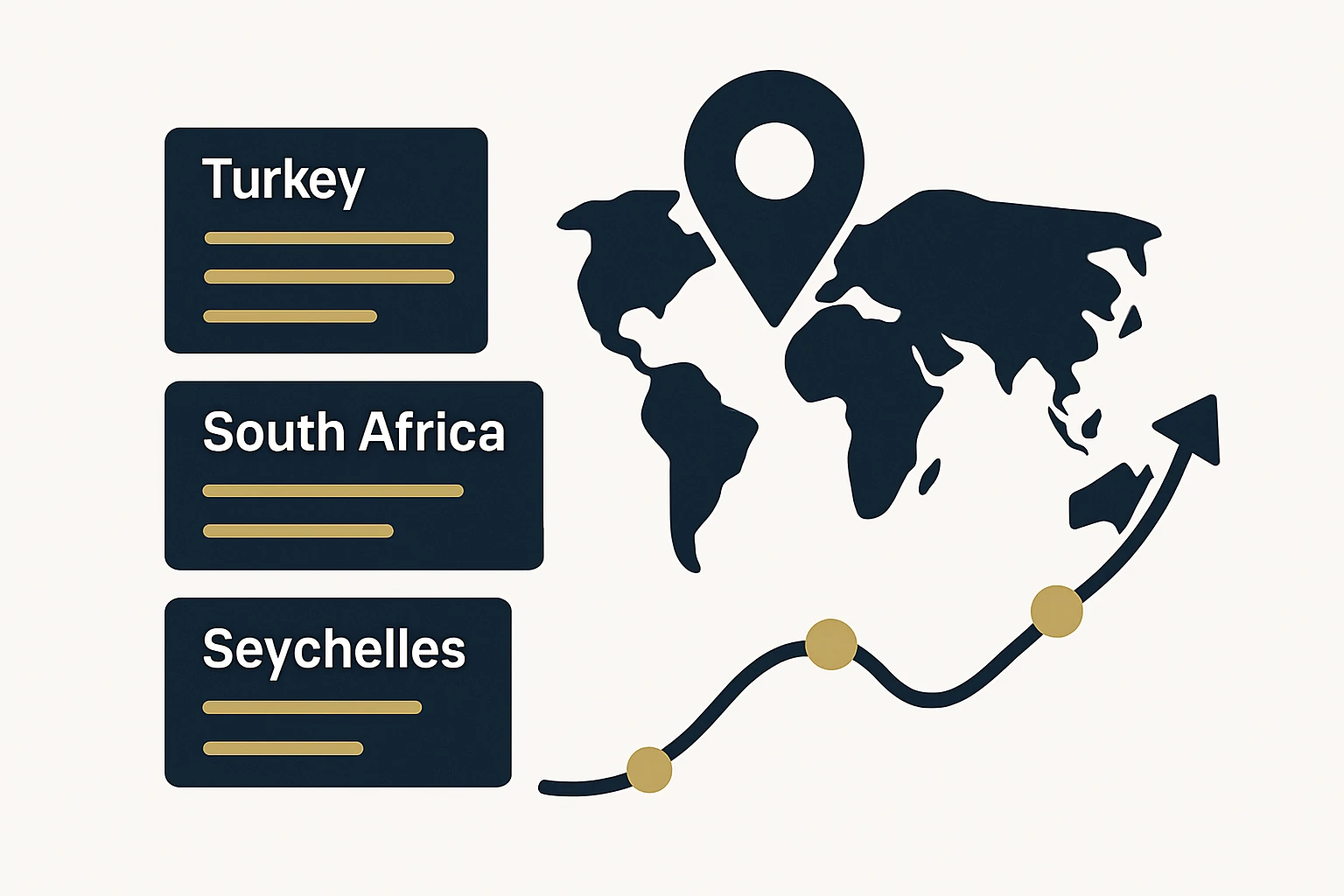
Expanding a global brand into new markets is as much a digital real estate challenge as it is a go‑to‑market one. Beyond product fit and localization, the availability and defensibility of domain assets shape how customers discover you, how you protect your brand, and how efficiently you can compete online. This article provides a practical framework for using country-specific domain lists to support market entry in Turkey (TR), South Africa (ZA), and Seychelles (SC) - with a defensible portfolio mindset that aligns with strong brand strategy and risk controls.
The value of country-specific domain lists for market expansion
Country-specific domain lists offer a targeted window into regional online behavior, local competition, and the practical opportunities for brand presence on local and regional web spaces. Rather than a broad, generic domain buy list, country lists help you prioritize assets that align with local search patterns, consumer expectations, and regulatory considerations. In practice, a well-curated country list informs decisions about which domain names to acquire, defend, or redirect into regional microsites that support local campaigns. This approach resonates with modern brand protection and portfolio management advice from industry thought leaders, who emphasize balancing defensibility with scalable growth. Forbes highlights the strategic value of a well‑timed defensive domain strategy as part of brand protection.
Turkey (TR) market implications
Turkey presents a unique digital landscape with strong local search tendencies and a growing e‑commerce ecosystem. A TR‑focused list helps identify defensive domains that protect Turkish consumer pathways, while also highlighting candidate names for localized product pages or campaigns. When evaluating Turkey assets, emphasize local language variations, proper transliteration, and meaningful Turkish branding signals that resonate with Turkish users. In this context, downloading a TR websites list can be a practical first step to map partnerships, marketplaces, and regional publishers that matter for a brand’s Turkish strategy.
South Africa (ZA) market implications
South Africa combines a multilingual landscape with vibrant digital commerce. ZA‑specific lists support market‑entry planning across major metros and local industry segments, helping teams defend against cybersquatting while building campaign hubs in regional domains. A ZA‑focused domain list should be paired with local privacy, data protection considerations, and mobile‑first accessibility, given the country’s varied device usage. The process of sourcing ZA domains should balance price, registrant legitimacy, and potential brand risk exposure.
Seychelles (SC) market implications
Seychelles is smaller in scale but increasingly relevant for niche tourism, luxury brands, and offshore service sectors. An SC‑specific list helps identify defensible redirections or regional landing pages that preserve brand integrity while avoiding over‑extension. In many cases, Seychelles domains function as strategic touchpoints for regional campaigns or as part of a broader offshore strategy, the key is to ensure alignment with global policy and local compliance standards.
Sourcing, validating, and organizing country lists
The practical utility of country lists hinges on data quality and governance. You should define a clear scope (which countries, which TLDs, which industries), then validate the data against reputable sources and your own brand rules. A robust process reduces the risk of acquiring low‑quality domains, avoids duplication, and improves the efficiency of post‑purchase management.
In real-world workflows, practitioners often rely on dedicated data sources and platforms that provide country-based domain inventories, along with reliable RDAP/WHOIS data where available. For organizations seeking a structured, defensible approach to country-domain data, platforms that offer curated country lists and access to reliable registration data can be valuable. See how industry teams discuss the importance of data quality, defensible decisions, and governance in domain portfolios. Com Laude argues that portfolios must be aligned with brand strategy rather than sheer size, a principle that applies directly to country-specific lists. Similarly, Brandsec emphasizes that a defensive domain strategy should cover country variants and key market entries to protect brand integrity.
When looking for country data, a practical starting point is to review dedicated country resources and data services, such as country-focused domain databases, as well as general market intelligence that informs purchasing decisions. As you design your workflow, consider tying data procurement to your broader domain portfolio management goals, ensuring that country lists complement your existing brand protection and expansion efforts. For ongoing access to country-oriented domain insights and related services, many organizations turn to specialized platforms that provide country lists, TLD mappings, and related analytics.
A practical framework for using country lists in brand strategy
The following three-step framework translates country-domain data into actionable portfolio decisions. It is written to feel native to a domain strategy practice and is designed to work with, rather than replace, your existing brand governance processes.
-
Step 1 - Define scope and geotargets:
- Identify strategic markets (for this article: TR, ZA, SC) and map them to brand objectives (awareness, lead generation, e‑commerce).
- Decide which domains to consider defensively (brand + local language variations) versus opportunistic (campaign landing pages, product pages).
-
Step 2 - Assess defensibility and risk:
- Evaluate domain ownership quality, registrant legitimacy, and potential impersonation risk.
- Prioritize domains that protect core brand terms, avoid high‑risk markets with weak enforcement, and align with regulatory requirements.
-
Step 3 - Build and manage the portfolio:
- Curate a defensible list of target domains for each country, integrating them into a unified brand architecture that supports local campaigns and global governance.
- Establish renewal cadences, monitoring, and reporting tied to risk thresholds and budget constraints.
Expert insight and practical considerations
Market‑leading practitioners consistently underline the value of a strategic, risk‑aware approach to domain portfolios. An expert view echoed across industry outlets emphasizes that a defensible portfolio should balance protection with pragmatic growth opportunities and be aligned with brand architecture. This perspective aligns with the broader industry discourse on brand protection and domain strategy, including analyses that stress the importance of defensive domain registrations as part of a cohesive brand plan. Forbes highlights that a well‑considered domain strategy is a core component of brand protection.
Limitations, trade-offs, and common mistakes
- Overemphasis on volume: A large list may seem impressive, but without strategic alignment, it wastes budget and creates governance complexity. Com Laude cautions that portfolios should match brand needs and markets rather than pursuing size for its own sake.
- Misalignment with brand strategy: Treating country domains as standalone assets rather than components of an integrated brand architecture leads to fragmented customer experiences and inconsistent messaging. See the broader strategic discussion on defensive registrations and brand protection.
- Underestimating governance and privacy: Country domains introduce local regulatory considerations (privacy, consent, local data rules) that require explicit policies and process controls.
In practice, a disciplined approach - grounded in brand strategy and risk management - serves as a guardrail against these common mistakes. For a thoughtful critique of portfolio size versus strategic fit, see Com Laude, and for a perspective on how defensive strategy should be implemented, refer to Brandsec.
How webatla can help: integrating country lists into a holistic domain strategy
For organizations seeking robust country-specific data and practical tools to operationalize them, webatla offers access to curated country lists and related data services. These resources can be integrated with your existing brand governance to support defensive registrations and market-entry planning. Practical entry points include:
- Country-domain databases that help you visualize and compare territory-focused assets.
- RDAP & WHOIS database for reliable registration data and risk assessment.
- Pricing to scale governance across multiple markets with predictable costs.
Incorporating these data resources into a disciplined framework increases the odds of selecting defensible, strategically aligned domains, while keeping budgets and governance manageable. The process mirrors broader best practices in domain portfolio management and brand protection, where the goal is to maximize value while mitigating risk.
Structured pathway to action (a compact framework)
The following concise pathway translates the country-list approach into concrete actions you can apply in your organization today:
- Assess strategic fit: Map each country to specific business goals (e.g., awareness in TR, e‑commerce in ZA, brand equity in SC).
- Build defensible coverage: Prioritize brand terms, common misspellings, local language variants, and relevant country codes.
- Integrate with governance: Tie domain investments to renewal calendars, risk thresholds, and performance metrics that reflect brand health.
Conclusion
Country-specific domain lists are not a cosmetic enhancement to a global brand - they are a strategic input that informs market prioritization, defensive registrations, and scalable domain portfolio management. By starting with well‑defined scope, validating data quality, and applying a disciplined framework, brands can enter Turkey, South Africa, and Seychelles with confidence, while maintaining a defensible, cost‑effective digital asset base. For organizations seeking a partner to help translate country data into governance and growth, webatla offers curated country data, reliable RDAP/WN data, and clear pricing to scale your strategy responsibly.